BDP draws influence from the Manchester cityscape at Eversheds Sutherland
BDP has designed an agile new workspace for Eversheds Sutherland, establishing physical and visual connectivity between floors to create a diverse working community.
Project Team
-
Client
Eversheds Sutherland
-
Design
BDP
-
Contractor
Overbury
-
Project Manager
Faithful + Gould
-
Flooring
Milliken, Ted Todd
-
Surfaces
Autex, Domus, Kvadrat
-
Lighting
Vibia, Flos
-
Other Suppliers
Oasis Plants, BA Joinery, Optima
-
Furniture
Senator, Poltrona Frau, Andreu World, Zeitraum, &tradition, Walter Knoll, Benchmark, Stellar Works, Boss, + Halle, HAY, Brunner, Vitra, HOWE, Wilkhahn, Icons of Denmark, Bisley, Naughtone
- Featured Companies
Autex Acoustics
London Autex Showroom. 67 Old St, London EC1V 9AJBDP
Manchester, London, Sheffield, Birmingham, Bristol, Glasgow, Dublin, Shanghai, Abu Dhabi, New Delhi, Rotterdam, Singapore, TorontoBisley
Dallington Street, Ireland, France, Germany, The Netherlands, Dubai, North AmericaBrunner UK
InternationalMilliken
Milliken showroom, 5 Berry Street, London EC1V 0AAA varied mix of work settings fill the three floors of Eversheds Sutherland’s new office within Manchester’s Two New Bailey – with formal and informal, individual and collaborative spaces ranging from more relaxed, casual, softer seating to sit-stand workstations and plenty of private meeting rooms.
“We started trying to look at agile working years ago,” explains Rachel Kerwin, Head of Property and Projects at Eversheds Sutherland. “We were the first law firm in the City of London to be completely open plan. We were the first in the country where lawyers worked in a hot desk, agile fashion in our Newcastle office, and we’ve just kept pushing in that direction ever since. When it came to the Manchester office, it’s one of the biggest ones we’ve done in last few years. Because we were coming away from such a traditional layout, it was a chance to really do something new.”
The previous building was very much an old-school legal fit-out, with small cellular offices and a bank of secretary desks – reflecting that it was 20 years old. The initial brief for the team at BDP was to create a more sustainable, agile way of working that looked after employee wellbeing and created a better environment for client meetings. “(The design) obviously had to represent quality and our status as a major international firm, adds Rachel.
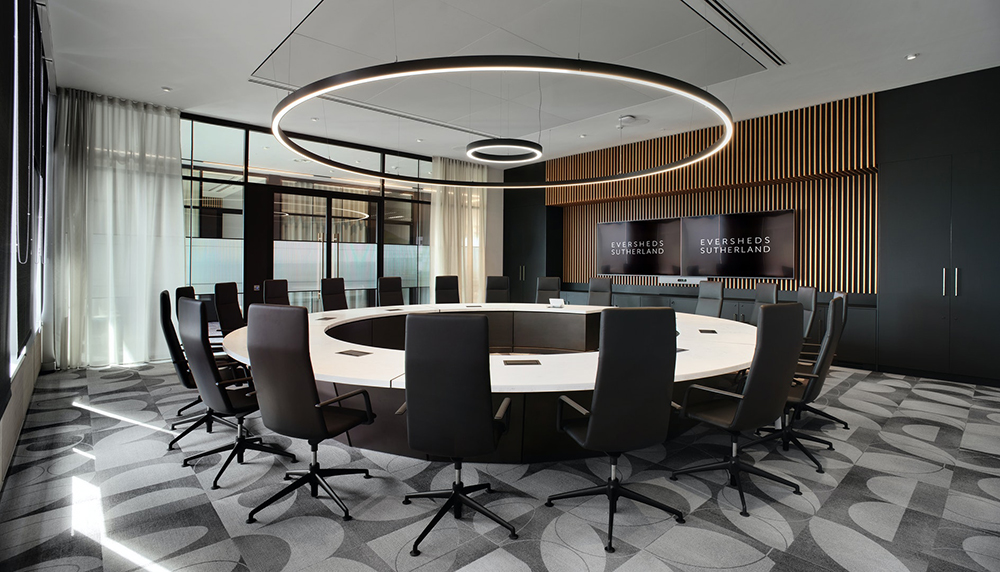
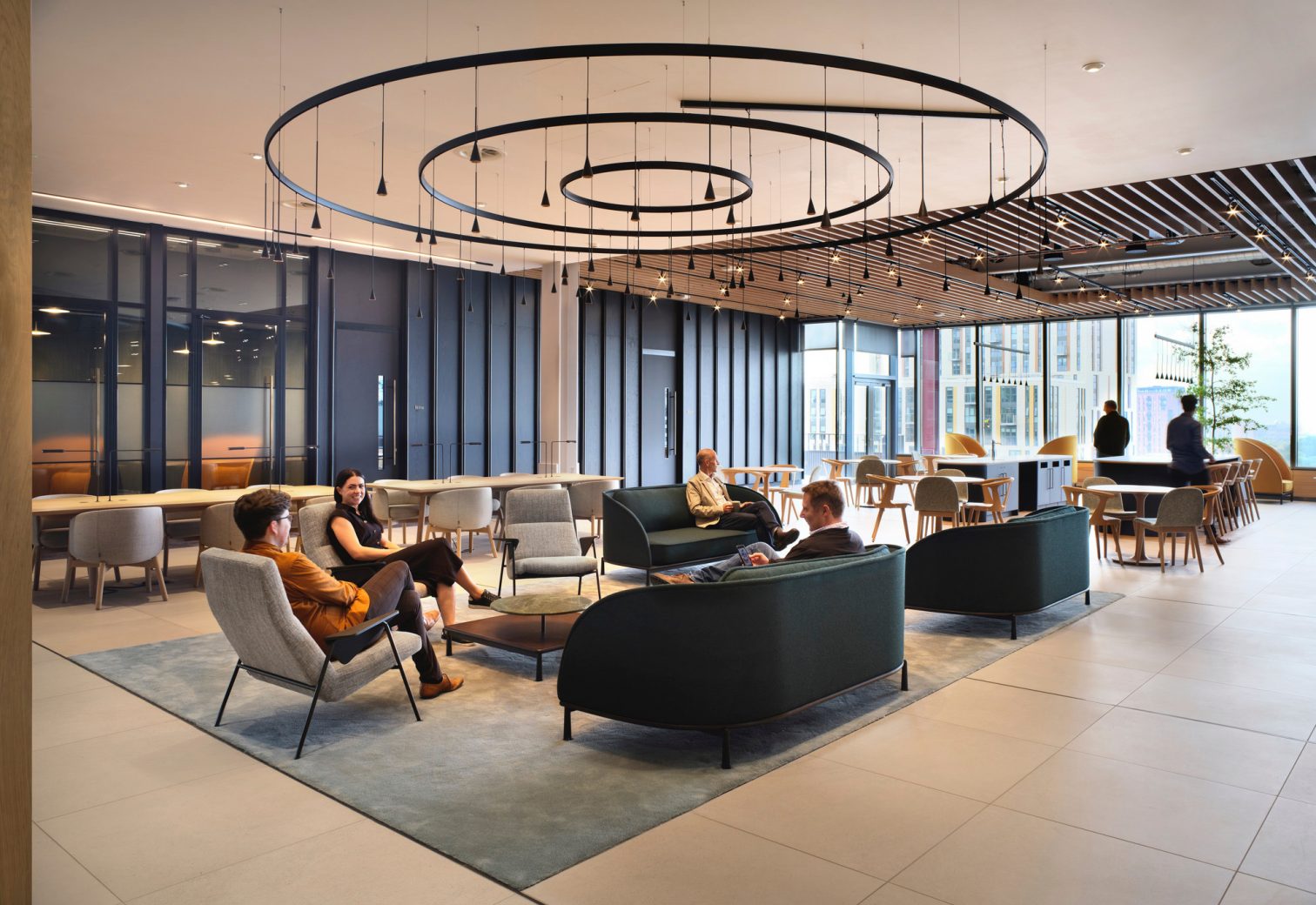
On entering on the top floor, we’re greeted with a bright communal entrance space with an impressive central lighting feature, flexible seating and a client refreshment point surrounded by meeting rooms and an event space running throughout the rest of the floor.
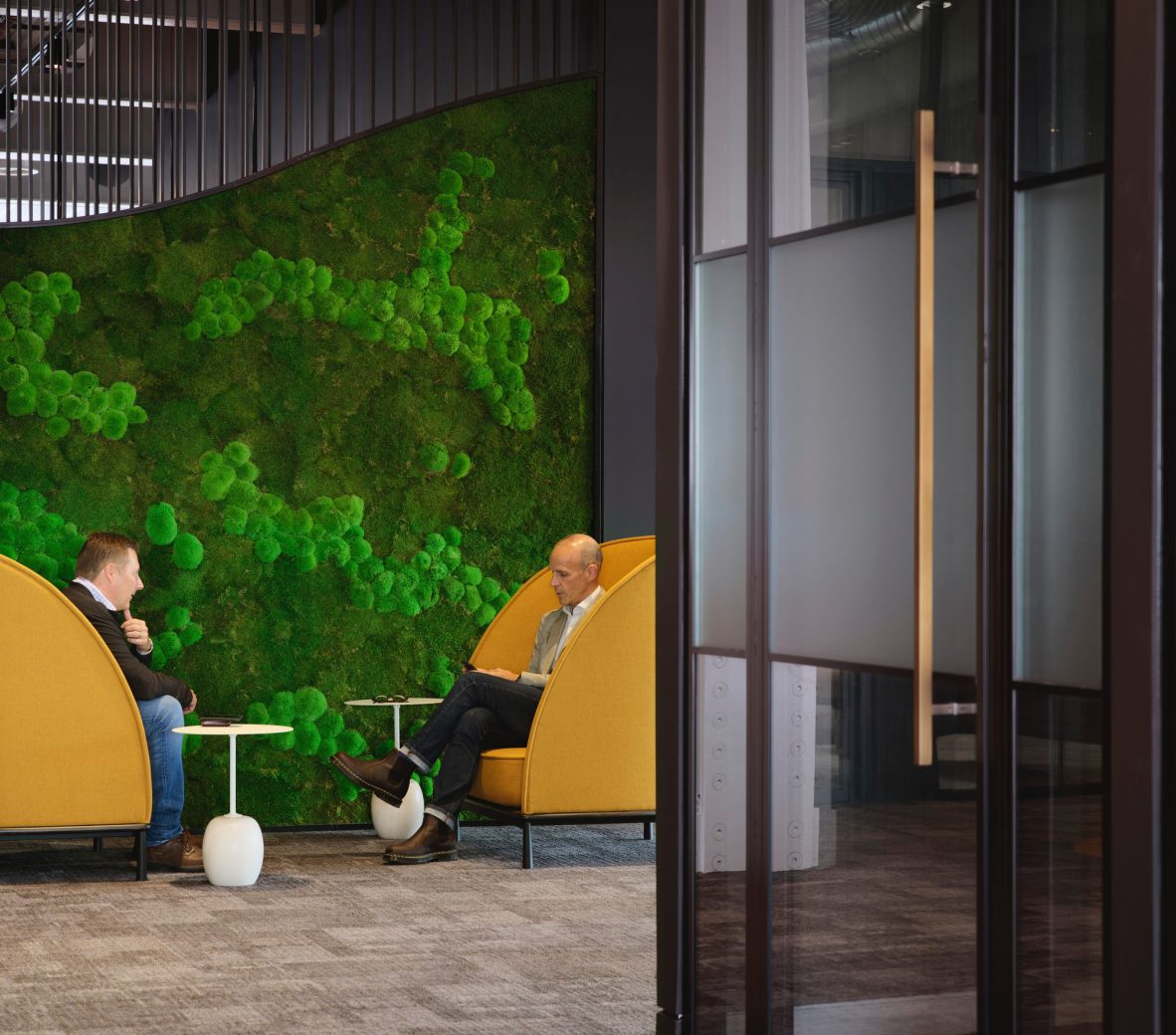
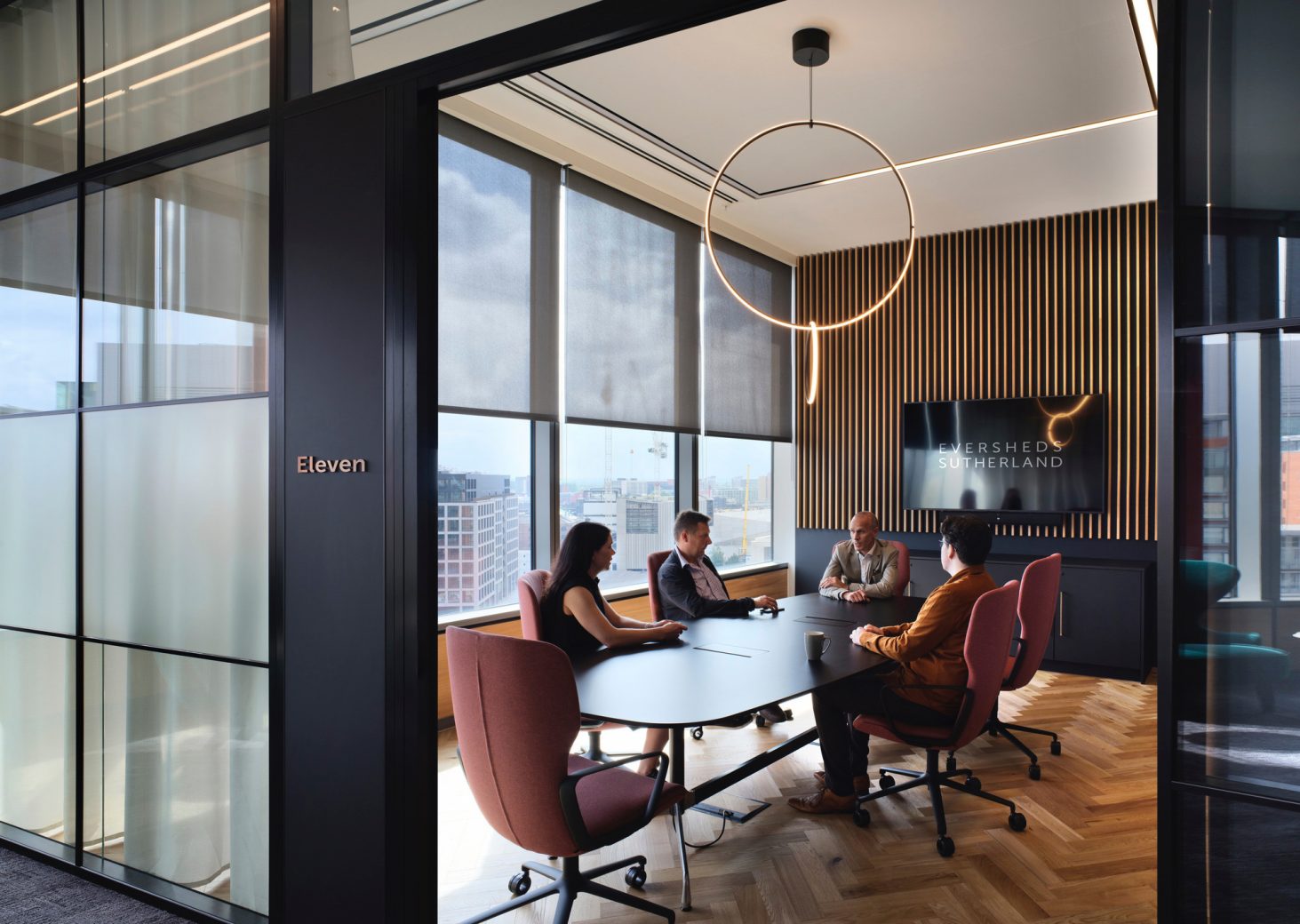
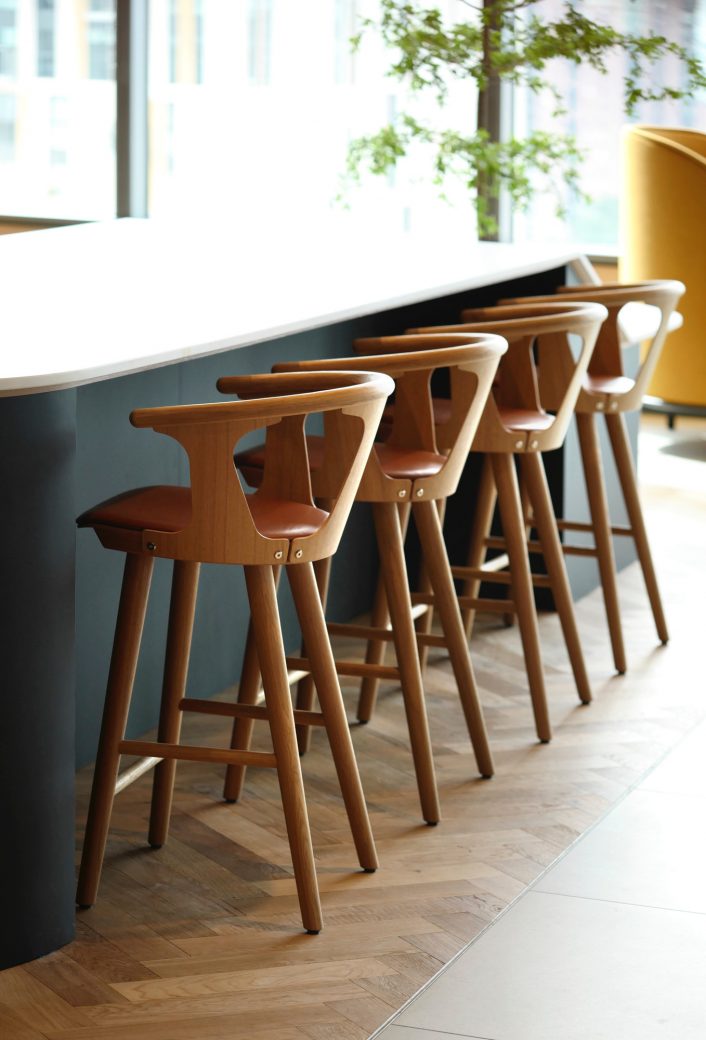
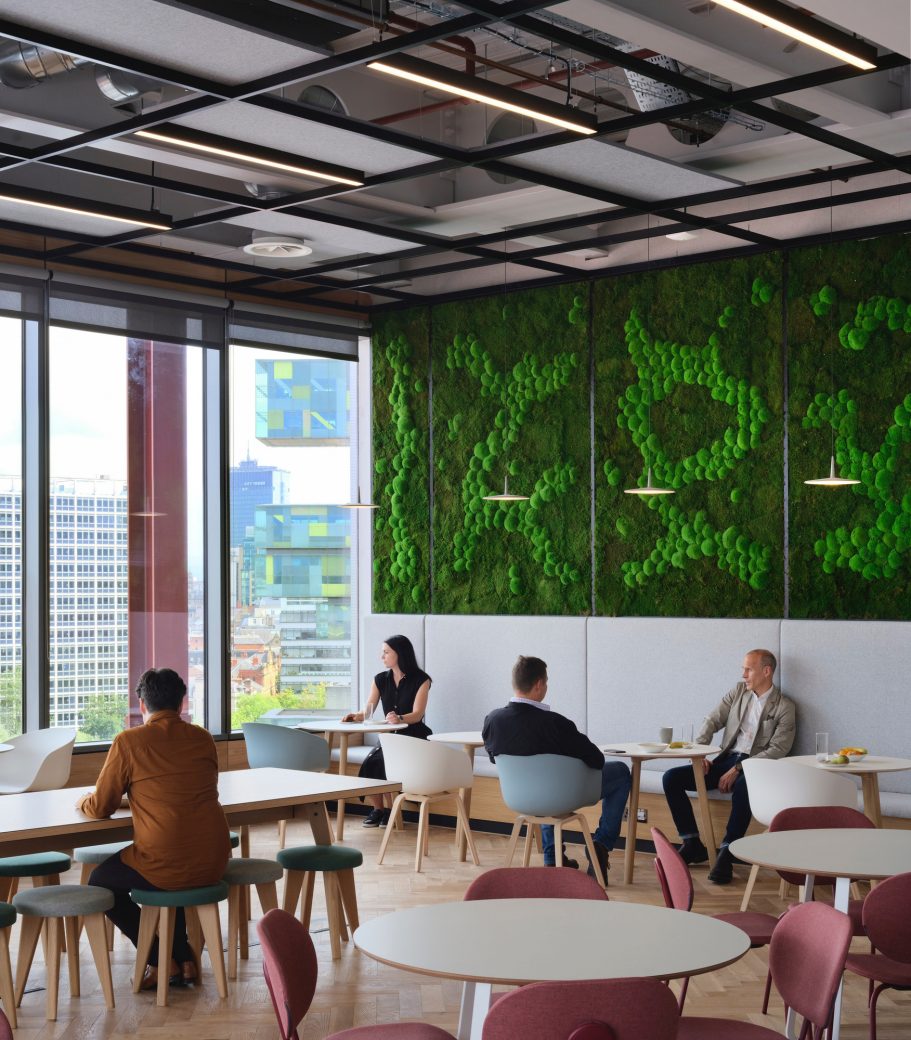
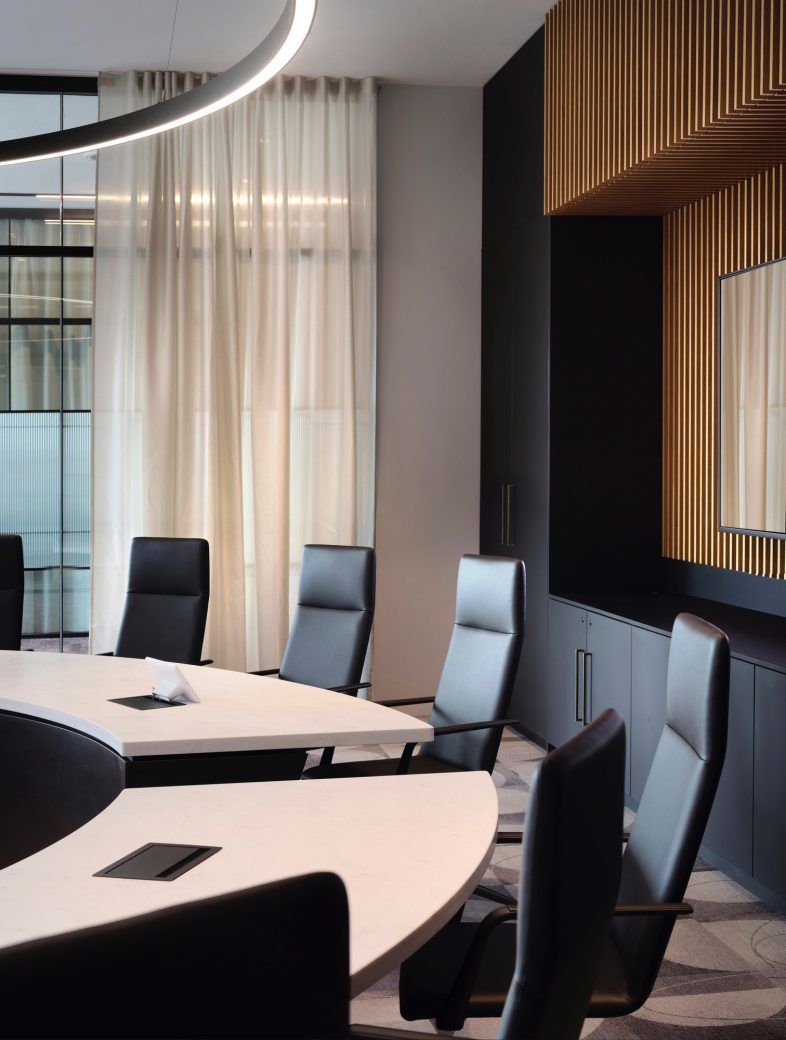
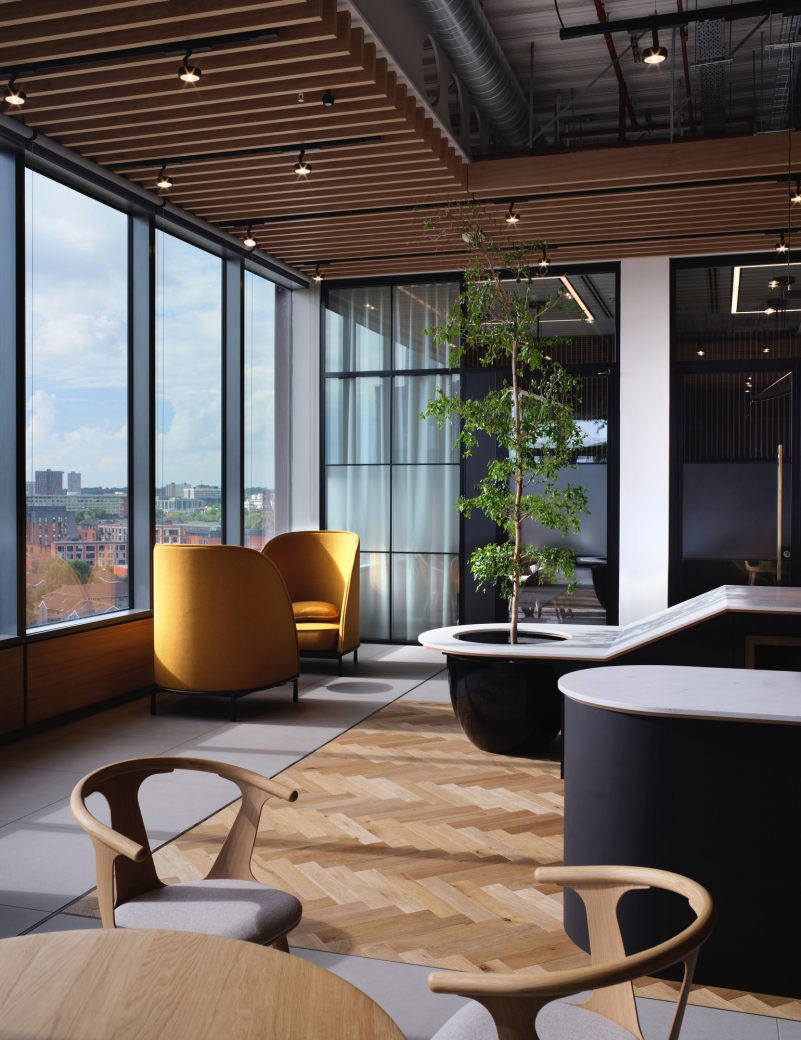
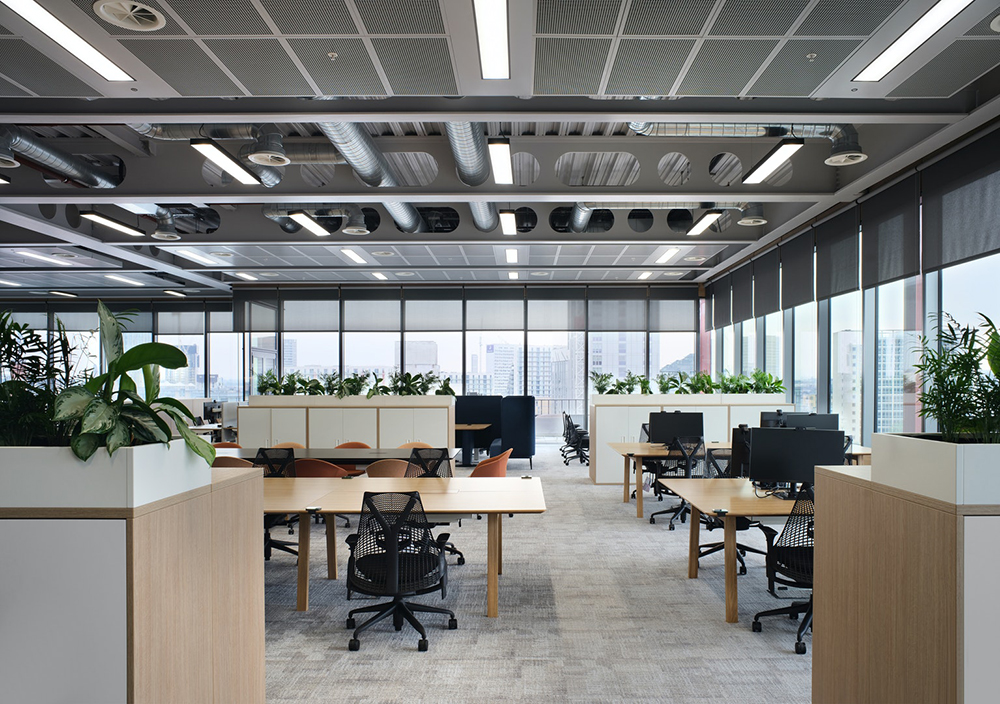
The design concept is corporate yet friendly and features elements from Manchester’s urban landscape and industrial heritage, with exposed ceilings, metals and neutral tones as a backdrop, incorporating the surrounding countryside with biophilic, natural materials such as timber to aid a sense of calm. The use of angular internal architecture to mimic the external façade is offset by softer, curved furniture and planting. Each meeting room uses this base design concept, while incorporating different elements such as lighting, furniture and flooring within each room to add interest. Extensive timber panelling, slatted ceilings and exposed soffit areas help define and give identity to different areas across the floors.
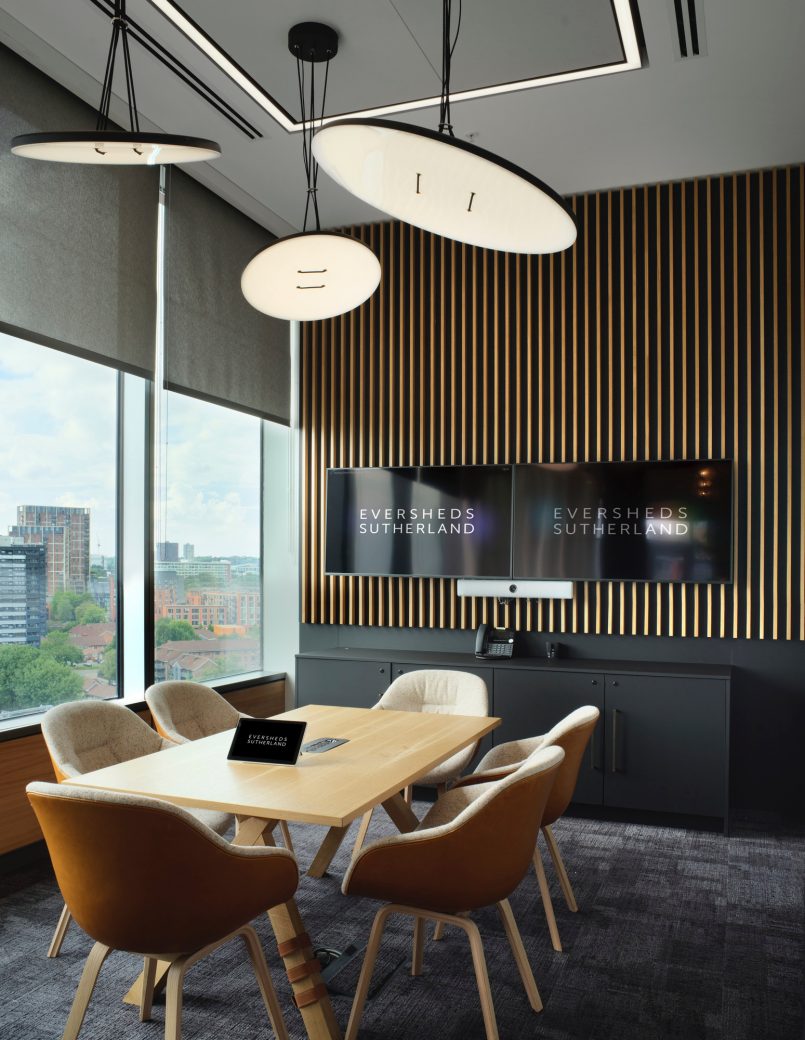
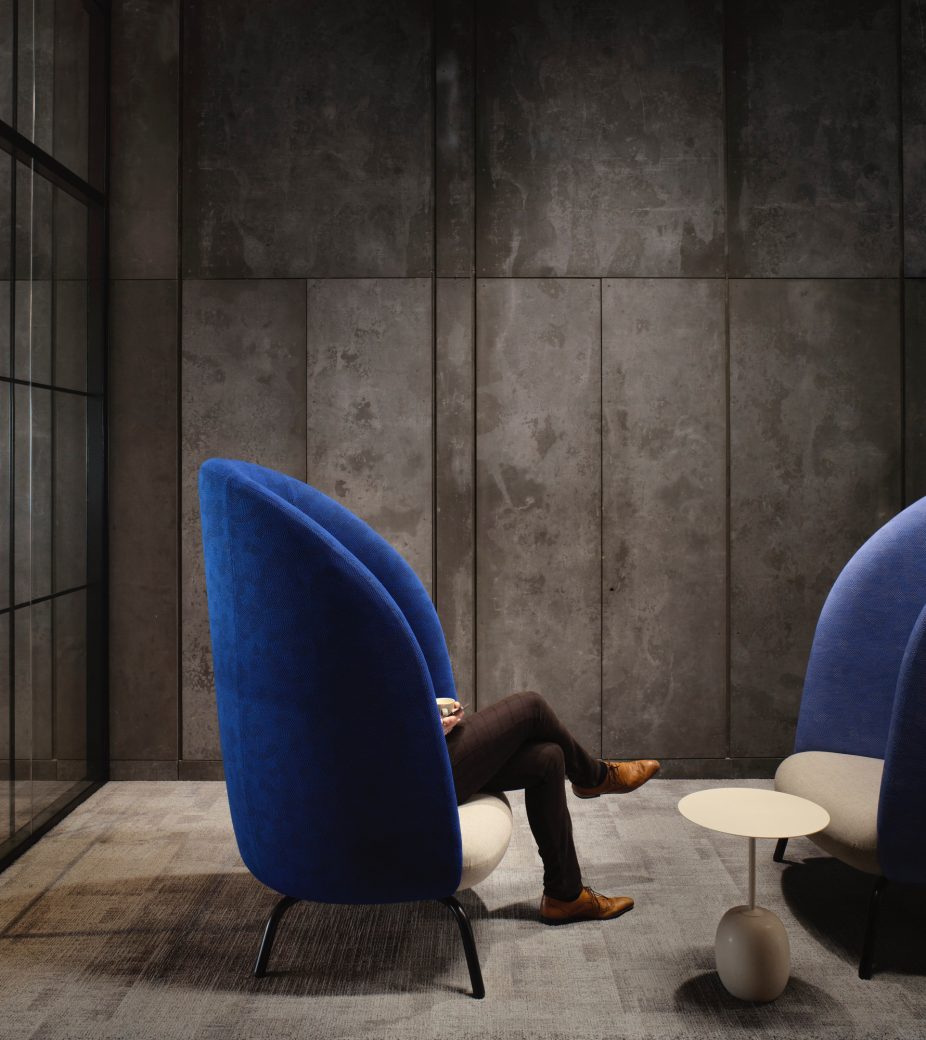
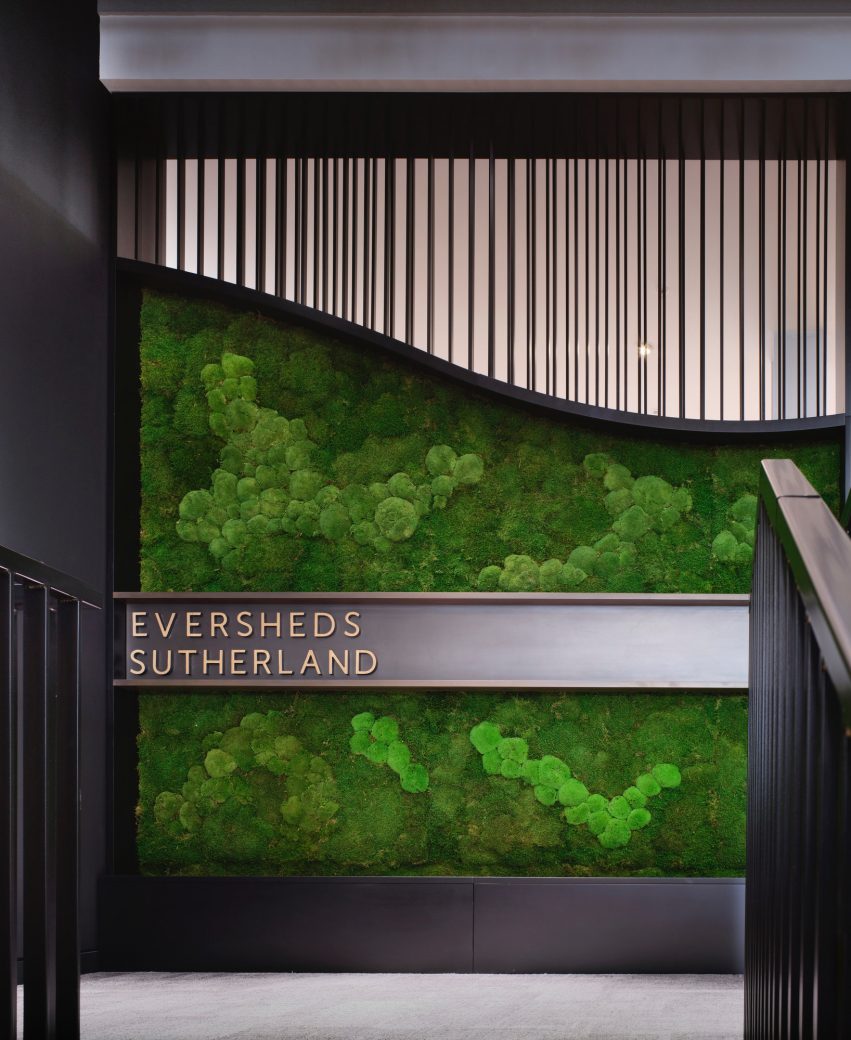
“We worked with the building – the internal architecture and the built elements are very masculine and angular,” says Chris Gibbs, Associate Interior Designer at BDP. “Manchester is surrounded by some of the most beautiful landscapes in the UK, and we’ve brought that into the space – very literally through the biophilia, but also in the FF&E, which has a soft, curved feel to it and creates a juxtaposition of the industrial and natural. There’s also a contrast between light and dark – a theme of black stained timber and very light oak running throughout the scheme.”
Full height windows around the façade allow natural daylight to flood the floors, and BDP brought all the internal rooms and pods into the middle of the space, allowing staff to work next to windows with plenty of natural light. Flooring has been used to create the concept of junctions and wayfinding throughout – evoking the junctions and the open spaces of a city – guiding visitors and staff through different ‘neighbourhoods.’
“Each group within the business was provided a ‘shopping list’ of work settings, and internal client engagement carefully considered the perfect balance of settings to match the various practice groups,” says Rachel Bishop, Associate Interior Designer at BDP. “This allowed each team to swap components, like building blocks, to tailor and personalise, for each practice group’s “neighbourhood”, which serves as a base for the team, while encouraging staff to use all areas of the building.”
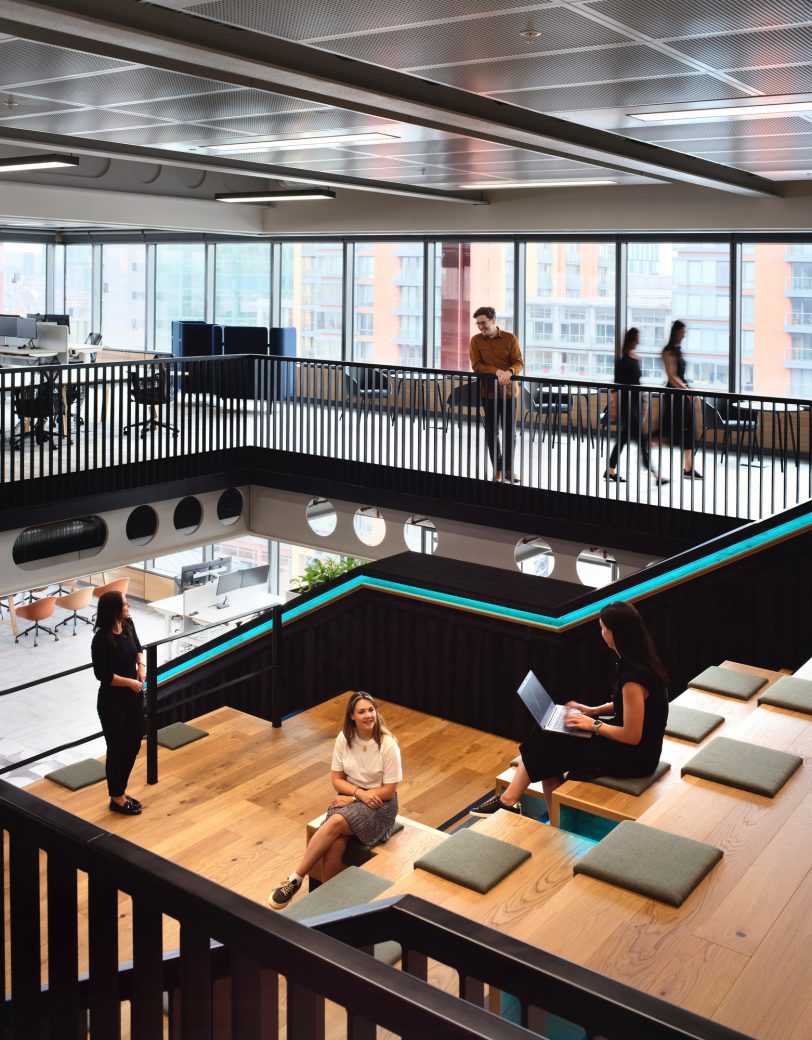
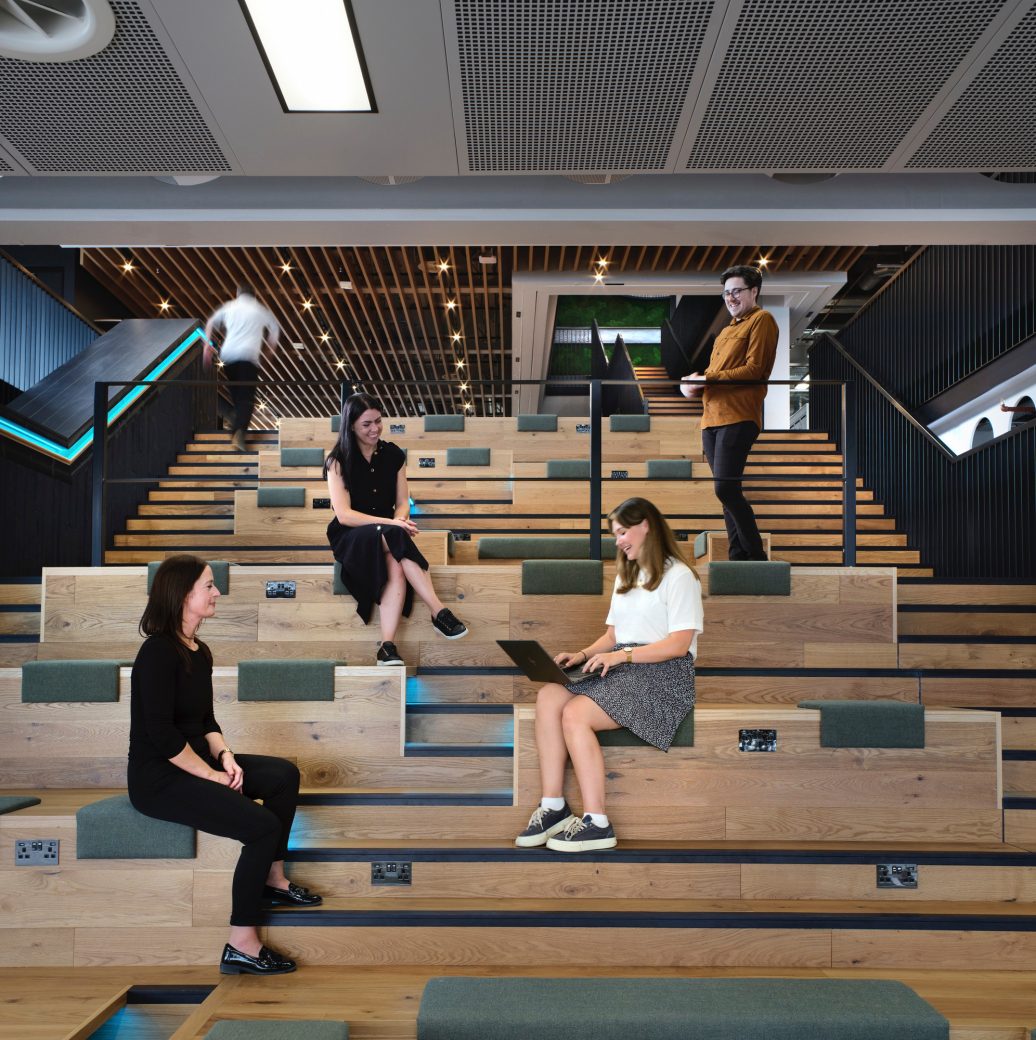
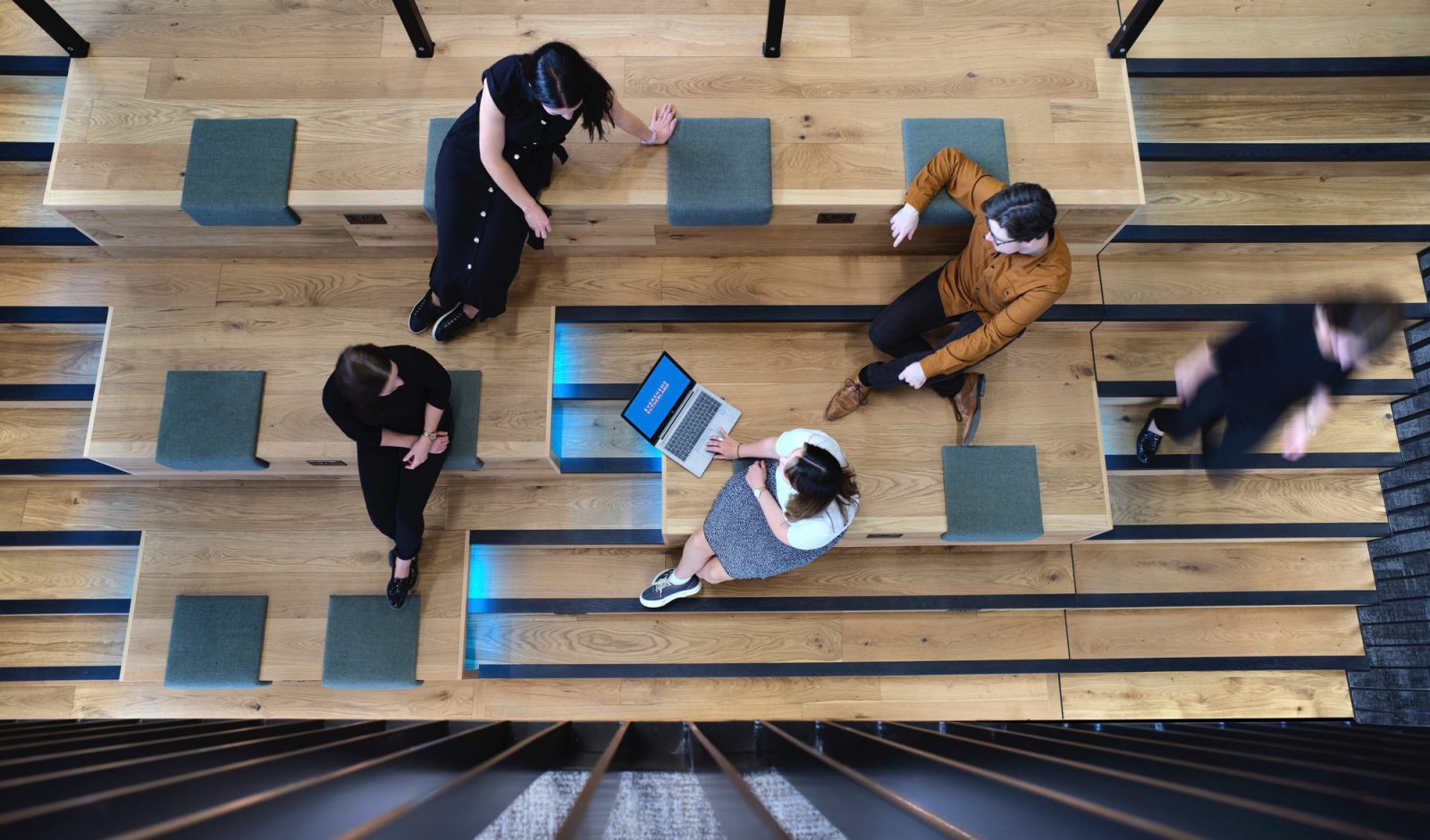
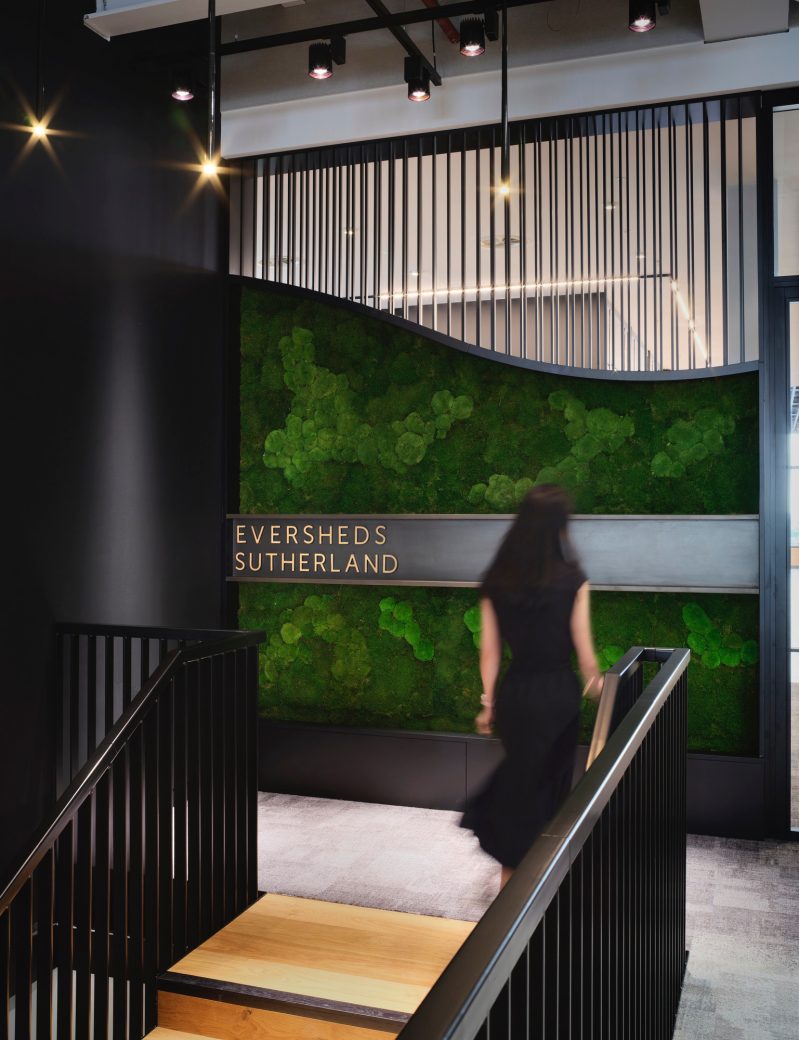
An impressive triple-height Spanish staircase links the three floors, which acts as a junction and serves as a destination for people within Eversheds Sutherland to gather to meet, connect and work – not only acting as an architectural link between the floors but representing a connection that mirrors the public realm spaces within the city. This also provided one of the biggest challenges for the BDP team – as with the base build still under construction, significant coordination was required to make the necessary structural interventions and maintain the building fire strategy.
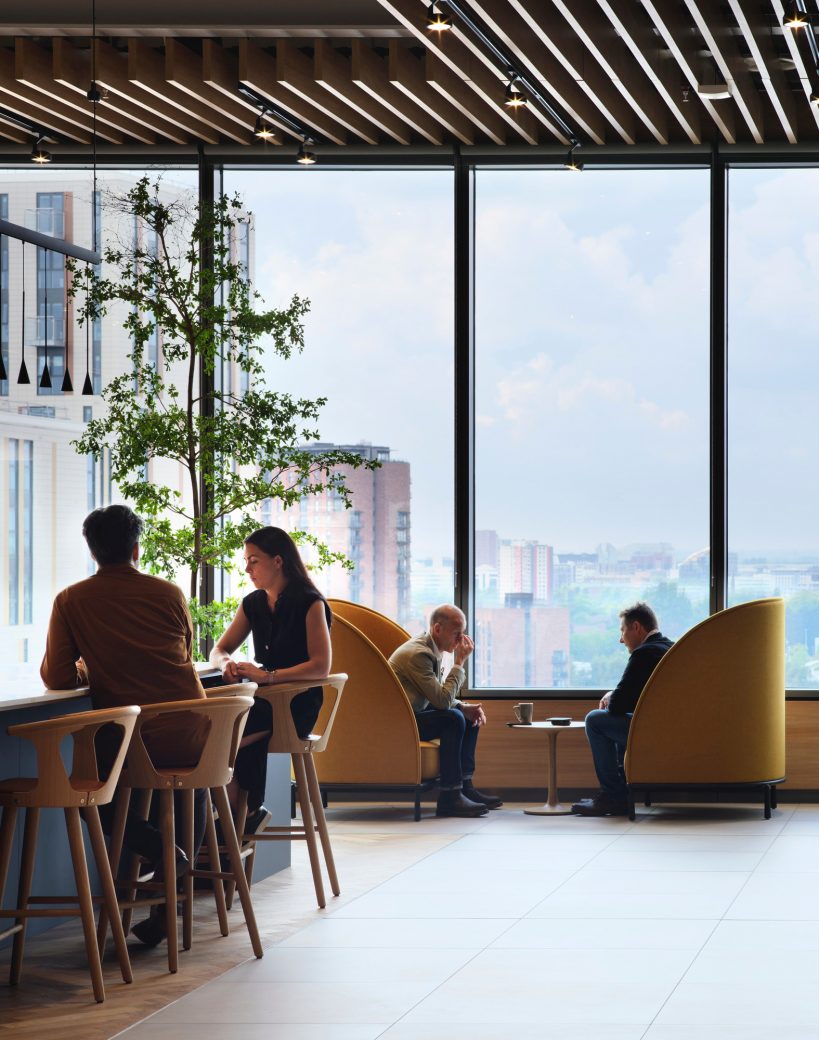
Across the working zones, substantial social spaces are designed to bring staff together and support wellbeing, with these larger community spaces offset by quieter single person booths that have been installed to provide people with somewhere private and relaxing, with views across the city and surrounding Pennines.
The building has been designed with WELL Principles in mind, and can be described as WELL-ready, but Eversheds Sutherland chose to defer certification and instead invest the accreditation costs into staff welfare and facilities.
Timber was procured with FCS or PEFC certification from sustainable sources, with the timber flooring manufactured within 20 miles of site. Carpet was specified with 70% recycled content and locally manufactured within 25 miles of site, and acoustic boards used within the scheme were recycled from plastic bottles. All desks were also sourced from a manufacturer within 25 miles of site – a conscious decision to not only support local suppliers, but to reduce the carbon footprint of the build and cut travel distances through the supply chain.
“Clients and our people have been blown away by the transformation of our working environment which supports our hybrid working approach.” adds Eversheds Sutherland’s Rachel Kerwin. The design of Two New Bailey – by incorporating spaces to collaborate, to meet, and to work – has delivered transformational change in the way employees and clients view and use the office and has set the standard for fit-outs across Eversheds Sutherland.
Project Gallery