Studio KKD gives a baroque listed building the royal treatment
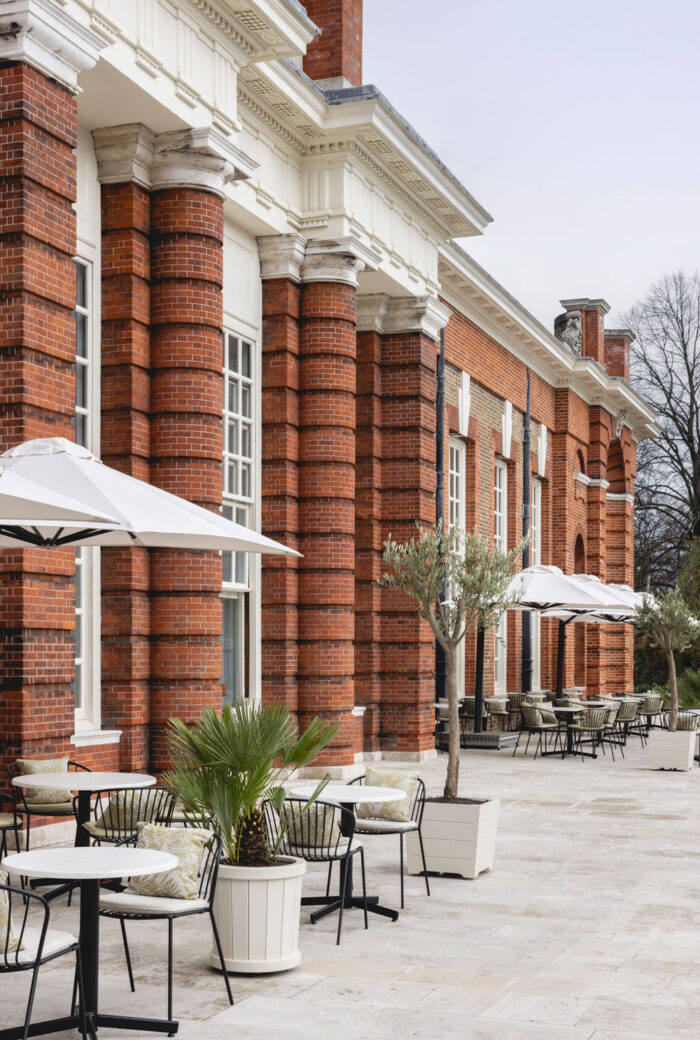
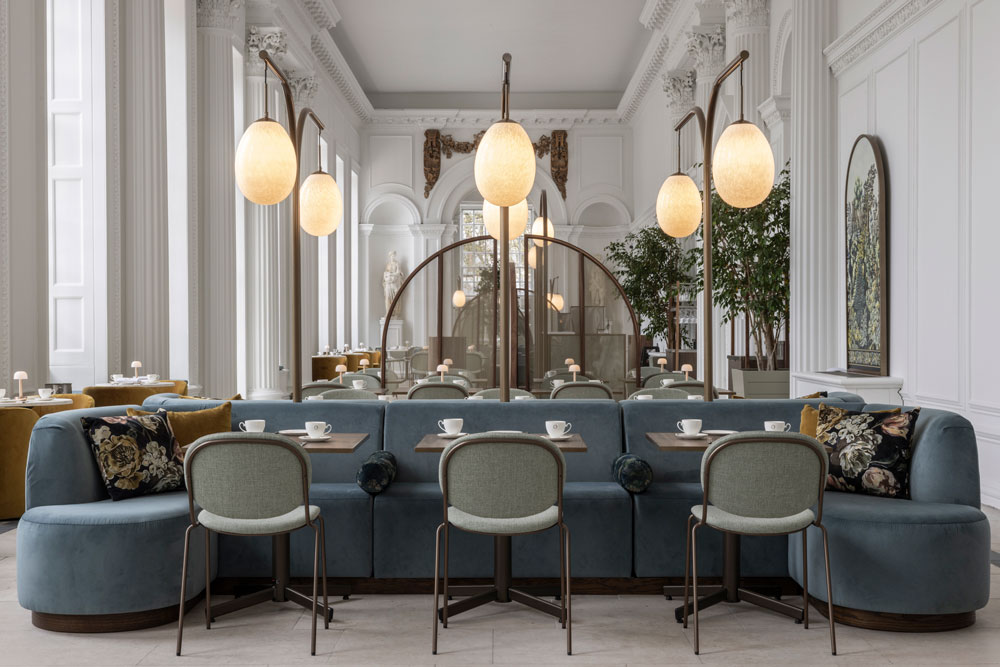
Located in the grounds of Kensington Palace, visitors to The Orangery can now indulge in afternoon tea within an elegant, flexible event space.
Photography: Billy Bolton
Designed on behalf of Historic Royal Palaces – the independent charity responsible for the public-facing State Apartments at Kensington Palace – the London and Dubai-based Studio KKD has completed its extensive restoration of The Orangery. Originally commissioned in 1705 by Queen Anne, the baroque building retains its original outdoor patio overlooking the surrounding Kensington Gardens, and now boasts equally elegant interiors carefully brought back to life with a soft, textured palette.
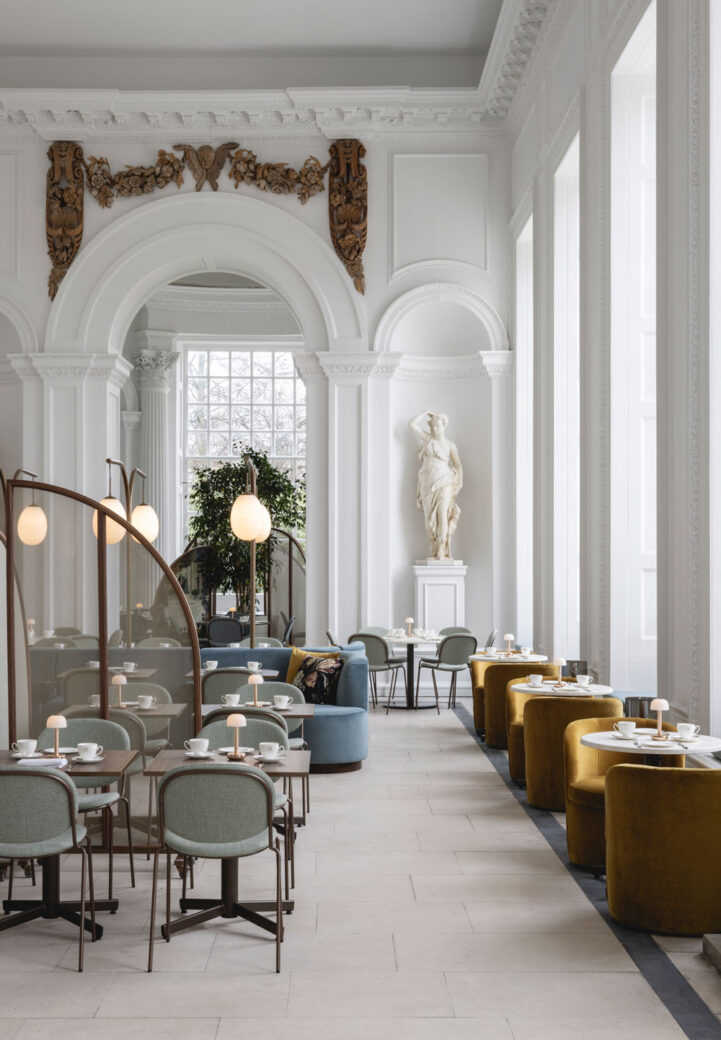
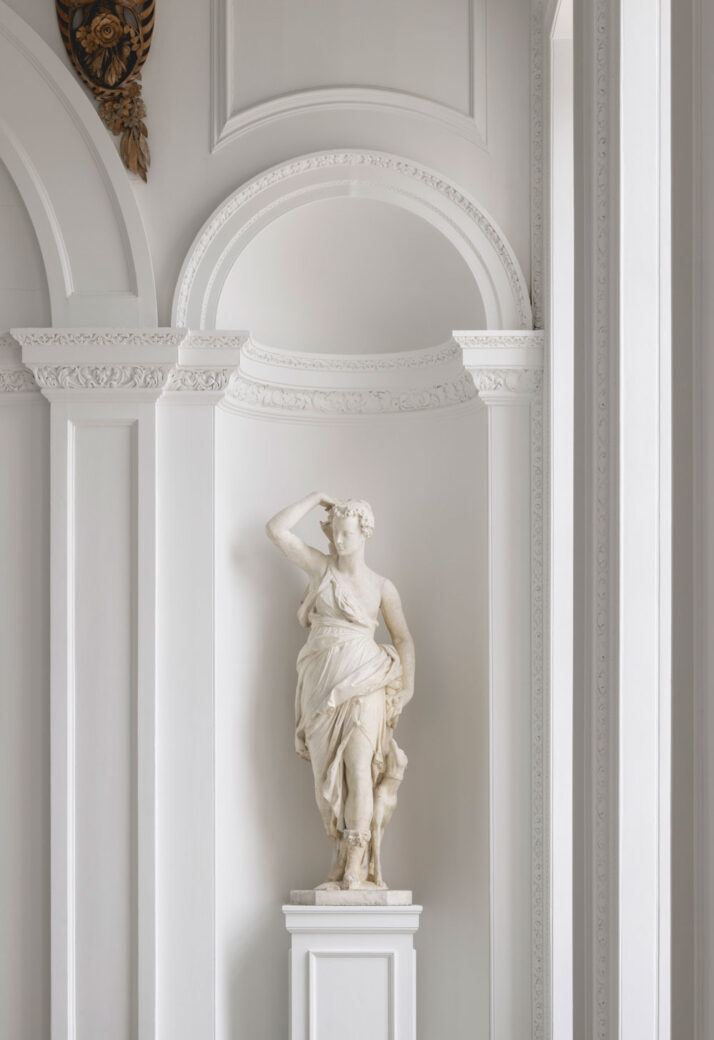
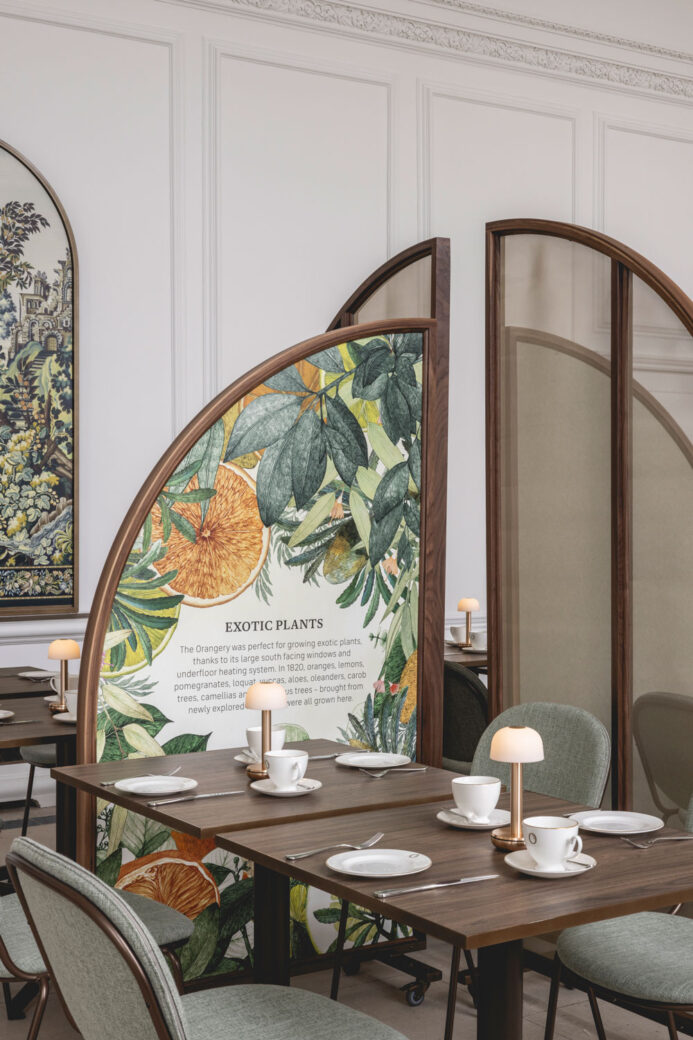
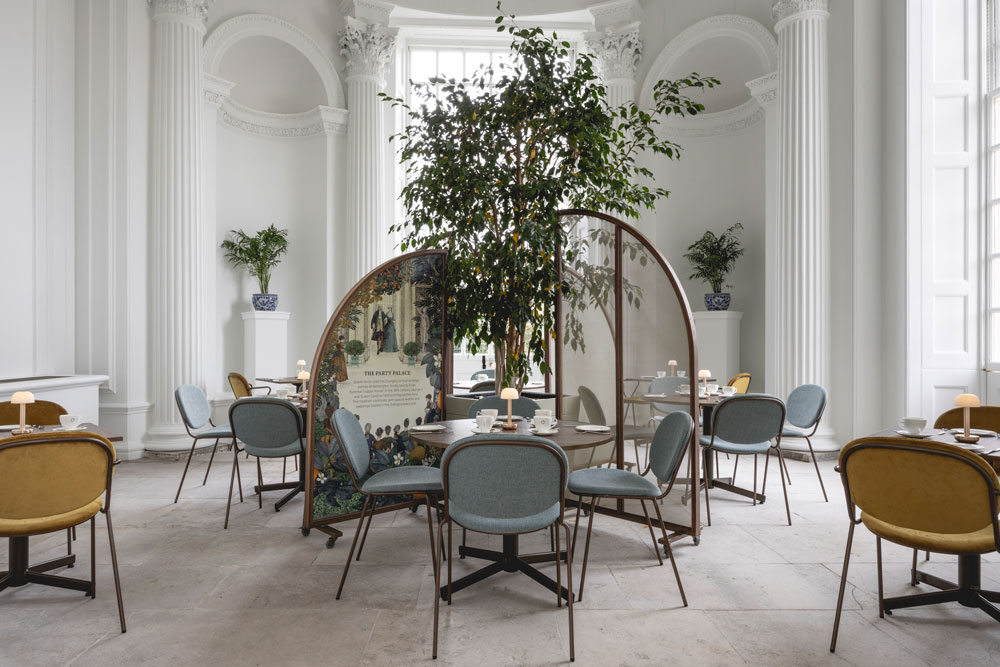
Studio KKD strove to update the historic building respectfully, maintaining and updating the interiors where possible, yet celebrating the best of the internal architecture. This allowed the studio to weave a historical narrative, with original fixtures such as the grand floor-to-ceiling windows and ornate, arched ceilings thoughtfully complemented by bespoke joinery and furniture. Decorative arched screens serve as dividers, allowing for flexible configurations for a multitude of social events, but also provide acoustic benefits to allow for more intimate conversations within the high-ceilinged space.
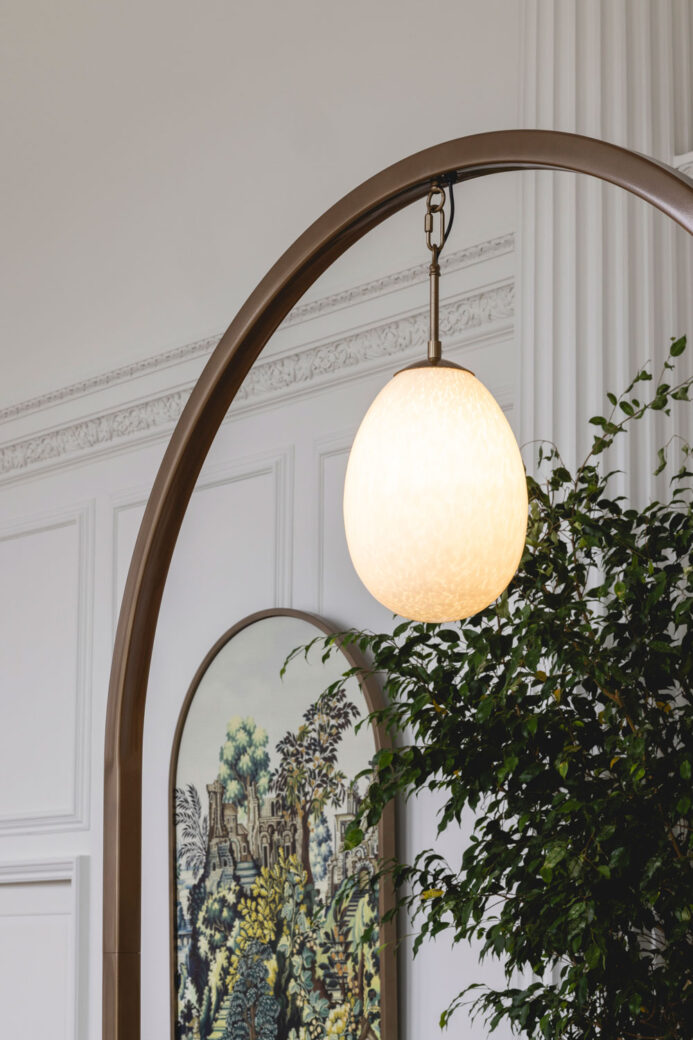
Subtle design references further nod towards the building’s history as a key fixture within one of London’s most majestic palaces. These include bespoke floor lamps by British-owned company Heathfield & Co, which display large, opaque pendants inspired by Queen Anne’s favourite pearl earrings.

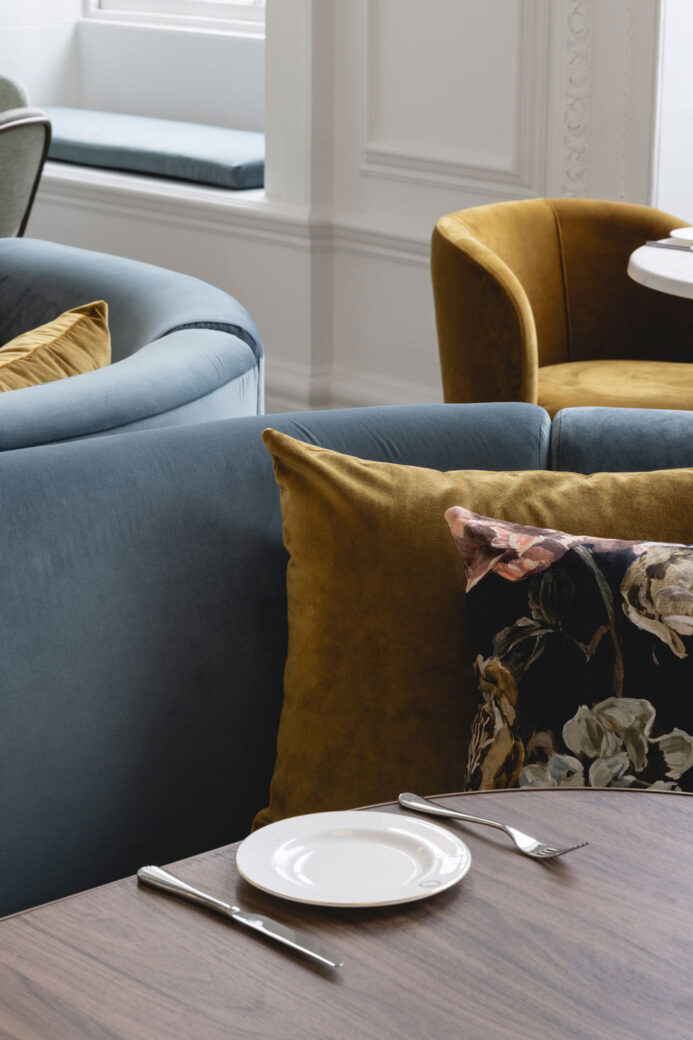
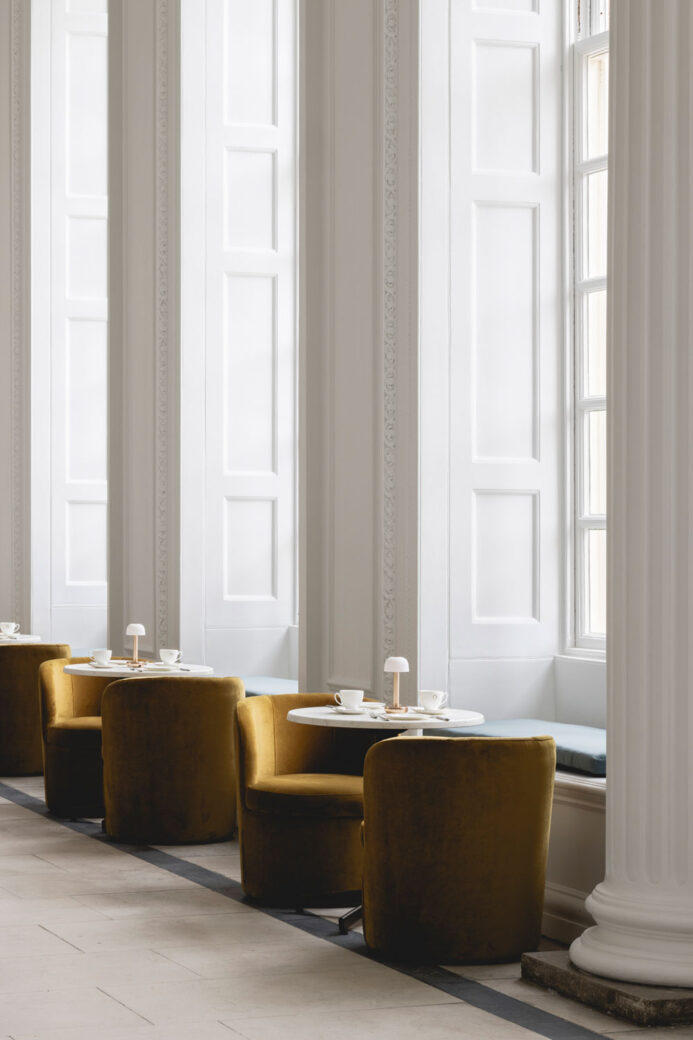
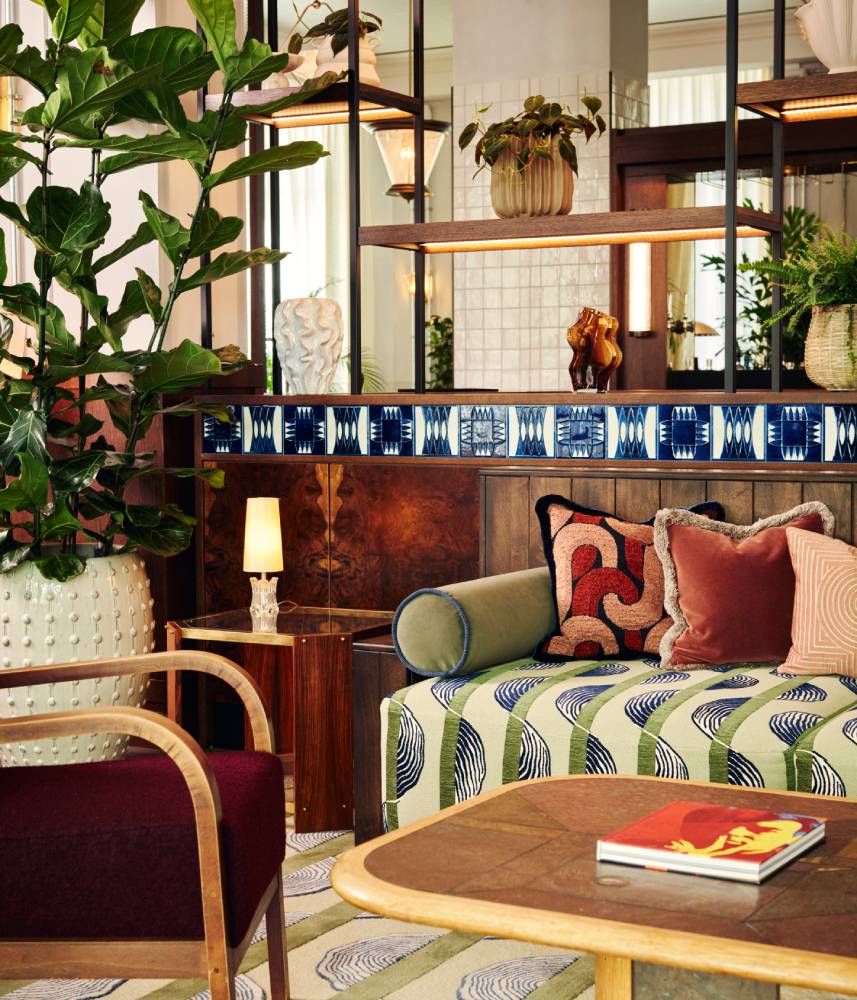
The muted blue and ochre yellow tones chosen for the plush sofas and dining chairs are echoed by Verdure Tapestry wallpaper by Cole & Son, which reinterprets visual motifs from a 17th-century work currently being displayed within the Kings Presence Chamber of Kensington Palace. As well as an array of indoor trees occupying key focal points throughout The Orangery, printed fabric designs by GP & J Baker (inspired by Historic Royal Palaces’ gardens) also introduce more colour, texture and a biophilic touch to the otherwise minimalist, restrained palette provided by the white panelled walls, sculptural columns and cream tiled flooring.
Project Gallery