Sam Jacob Studio revives 1960s soft-brutalist studios at the University of Kent
Leading with colour and a whimsical touch, the new teaching spaces for the School of Architecture, Design and Planning are inspired by modernist art and contemporary learning styles.
 Photography: Timothy Soar
Photography: Timothy Soar
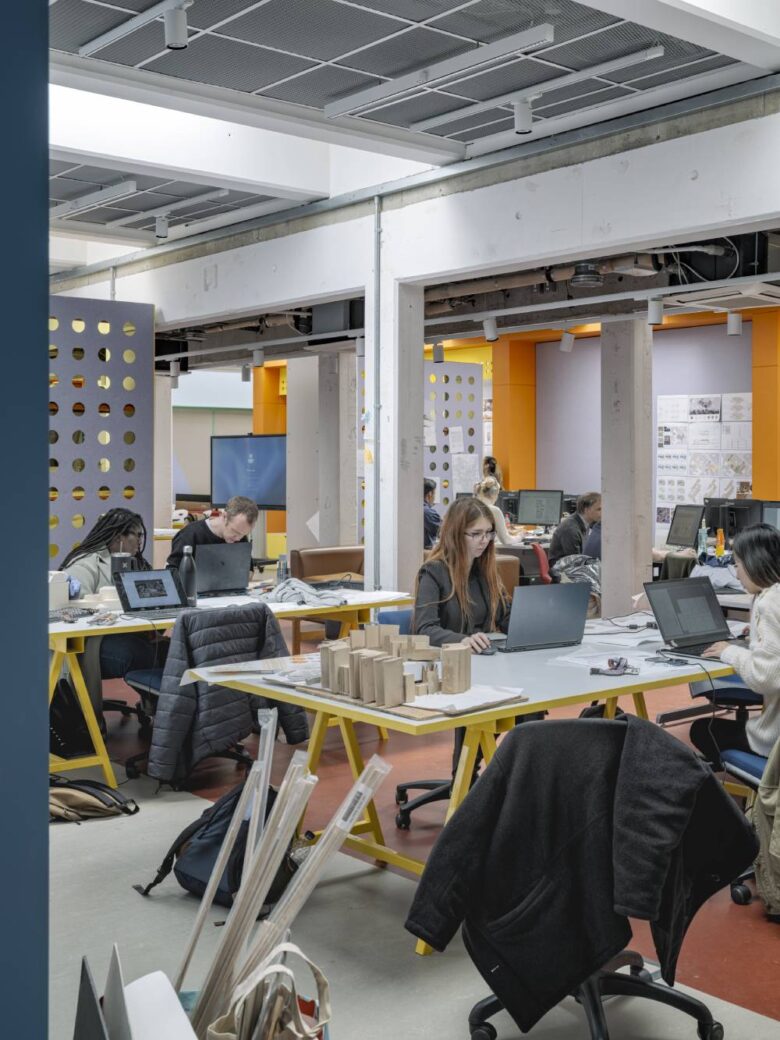
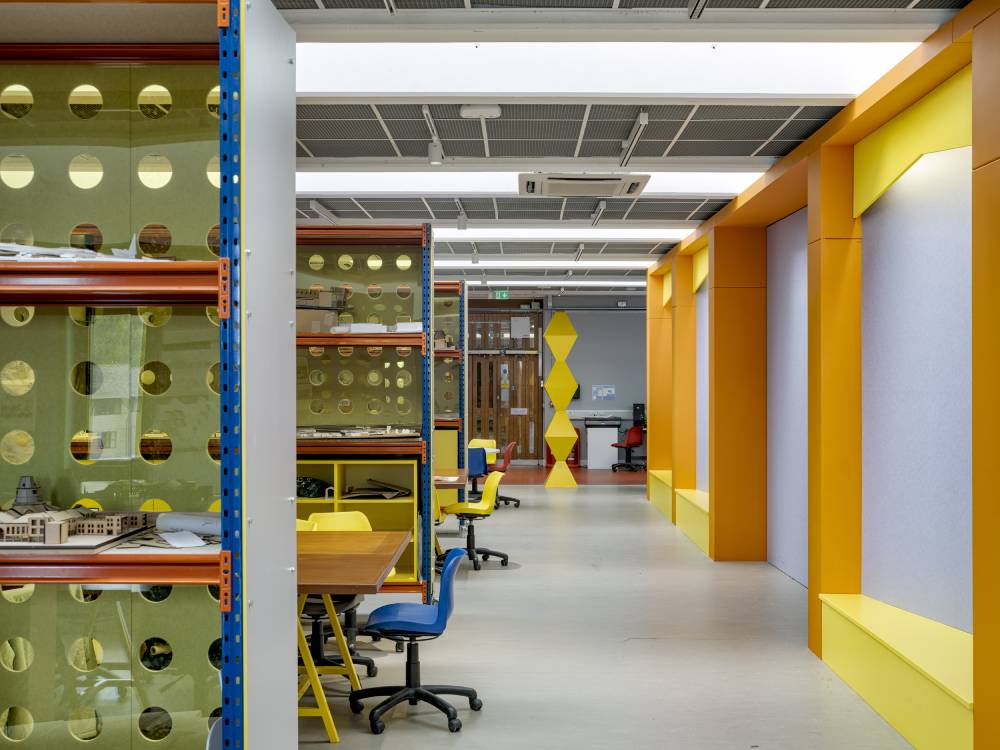
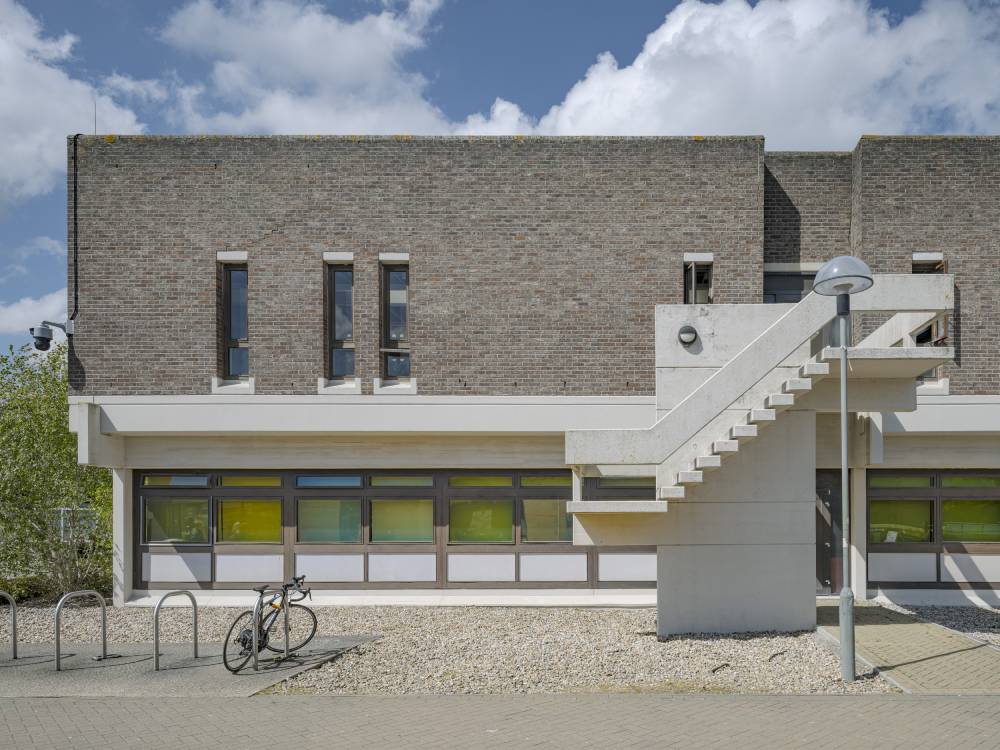
Perched upon a landscaped hill overlooking Canterbury, the Marlowe Building was originally designed by William Holford in 1965 to house the University of Kent’s physics department. Now, the soft Brutalist building – with its unassuming brick and concrete exterior – is home to a set of flexible, vibrant studios that comprise the new teaching and study spaces for the School of Architecture, Design and Planning. These colourful, adaptable classrooms are the vision of London architects Sam Jacob Studio, who consulted closely with students and faculty staff to create distinctive workrooms that were specific to subject, year and unit. Taking inspiration from the original architectural drawings from the 1960s, which bore the label ‘Permanent Experiment’, Jacob’s team set out to shape and reimagine studio culture with educational spaces that could truly sustain change.
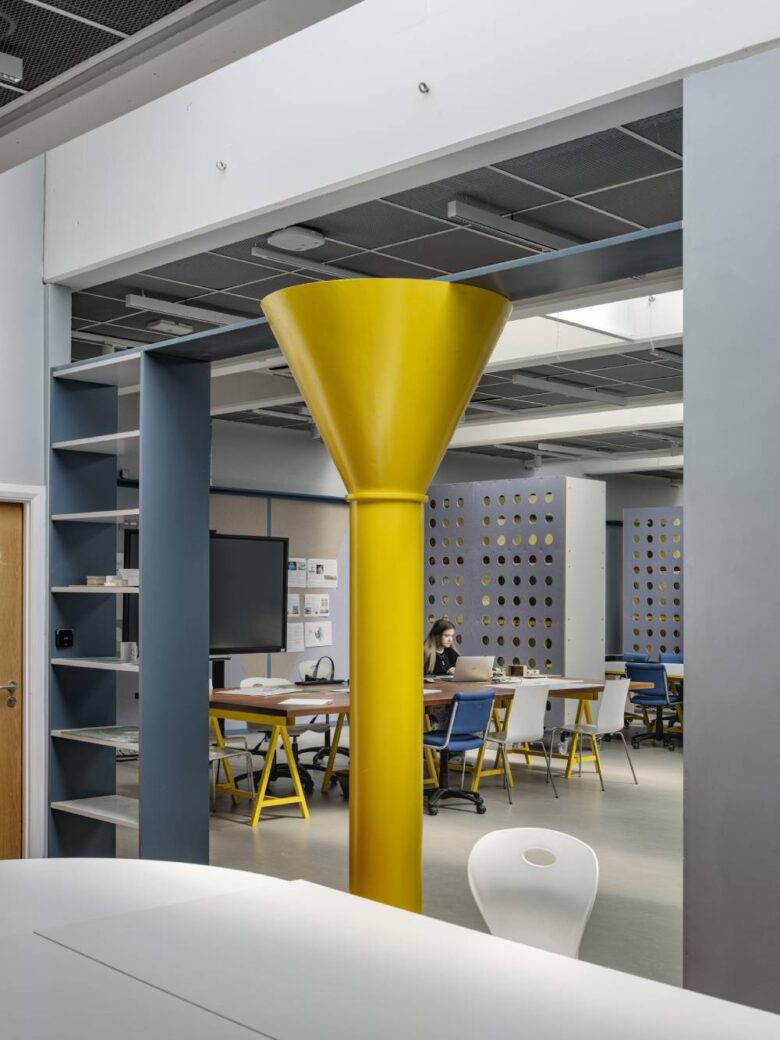
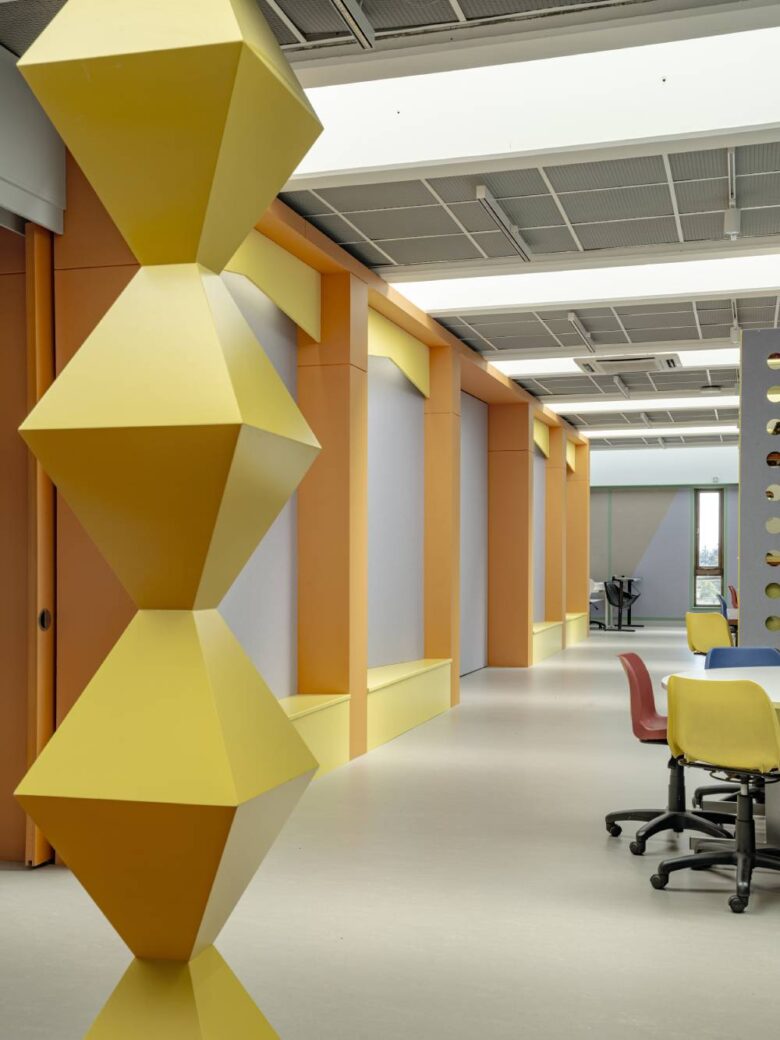
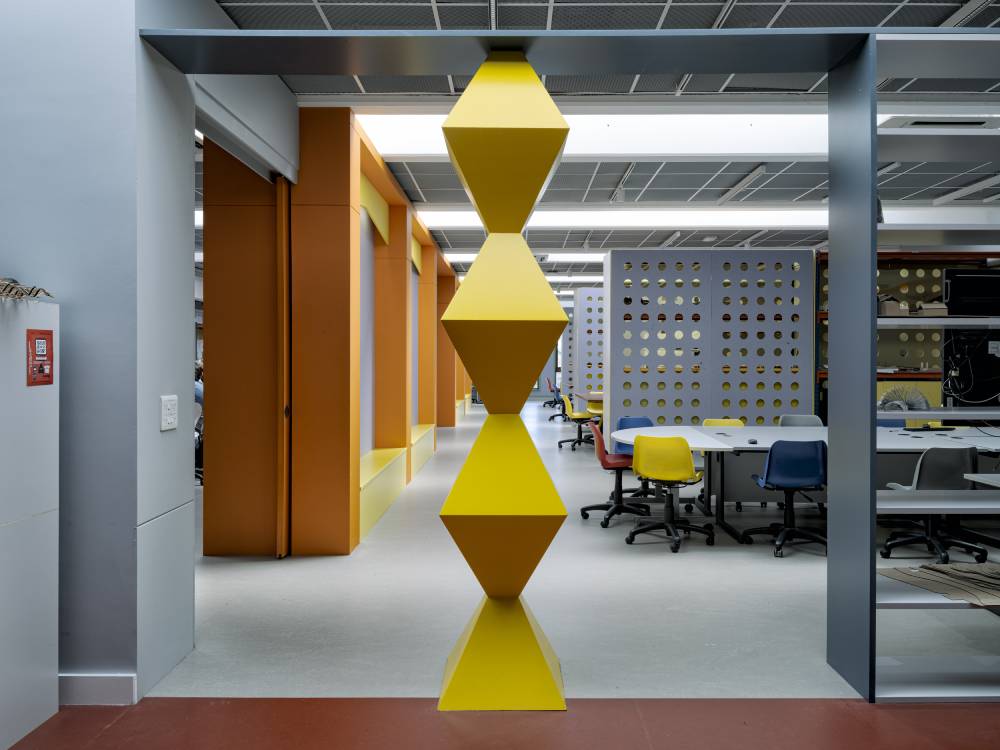
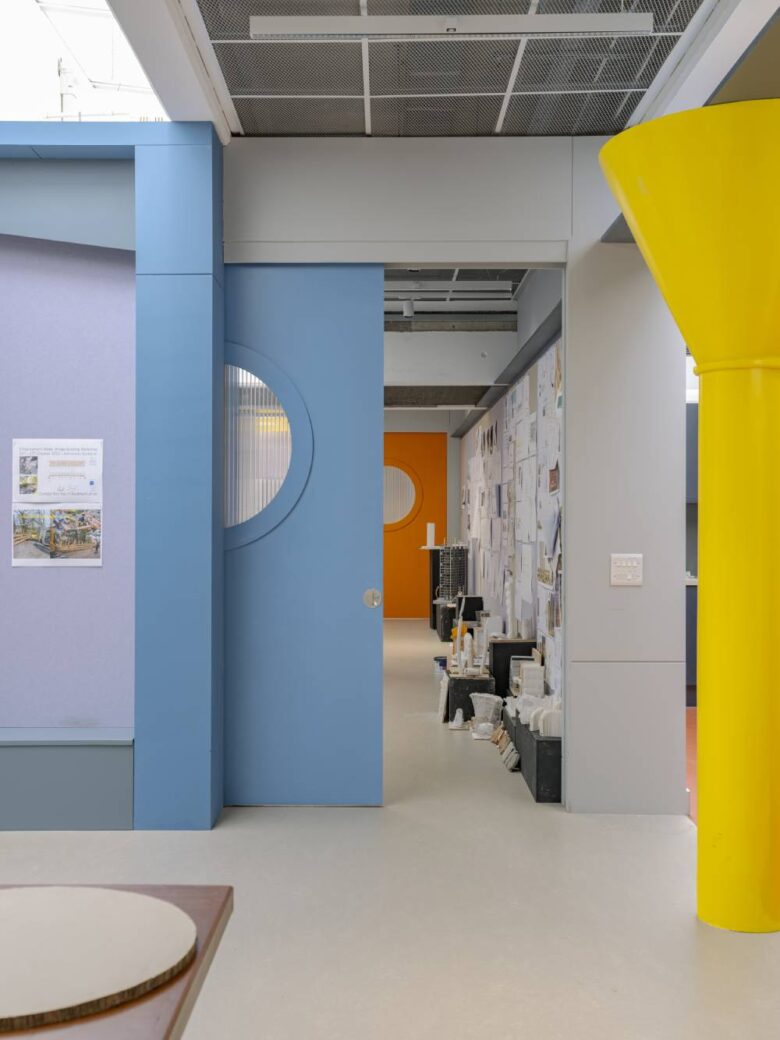
Also informing the project were famous artistic spaces including the Bauhaus school, Andy Warhol’s New York Factory and Paul Rudolph’s Brutalist Art and Architecture building at Yale University. Jacob saw each of these organisations as capturing the main focus of this project, described as “what happens between the logic of architecture and the happenstance of creative working”. The colour scheme, for instance, is taken from Swiss-French artist and architect Le Corbusier’s 1959 paint system, while the series of sculptural columns throughout offer more explicit architectural references: placed at the threshold of different workspaces, they act as 1:1 models of Canterbury Cathedral, the work of Romanian sculptor Constantin Brâncuși, and buildings by British architect James Stirling.
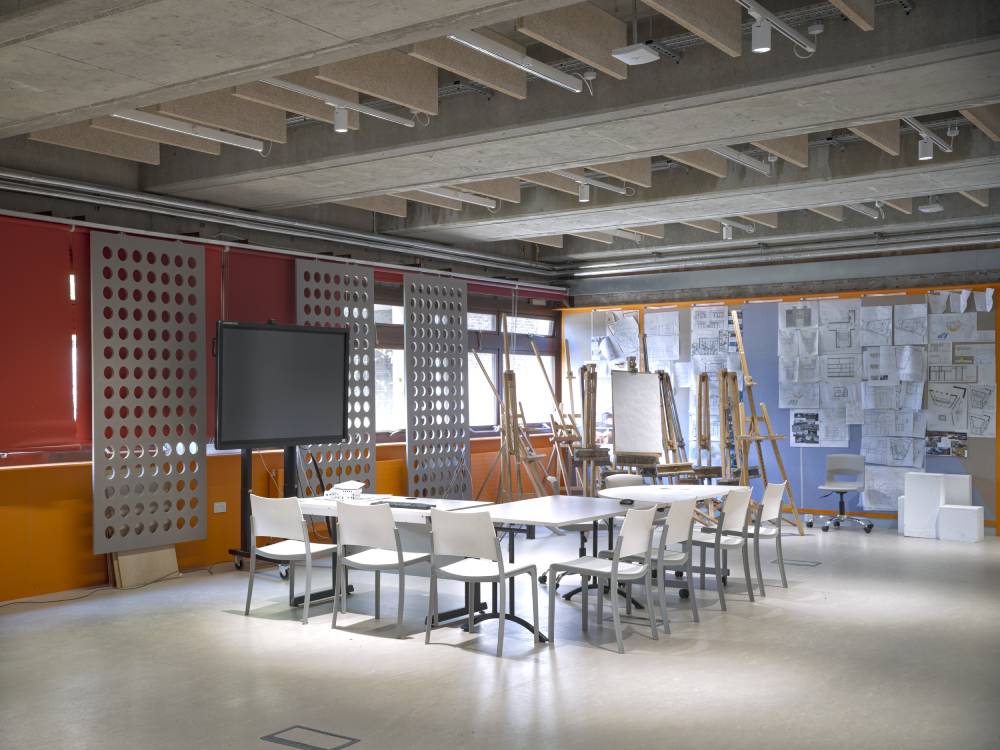
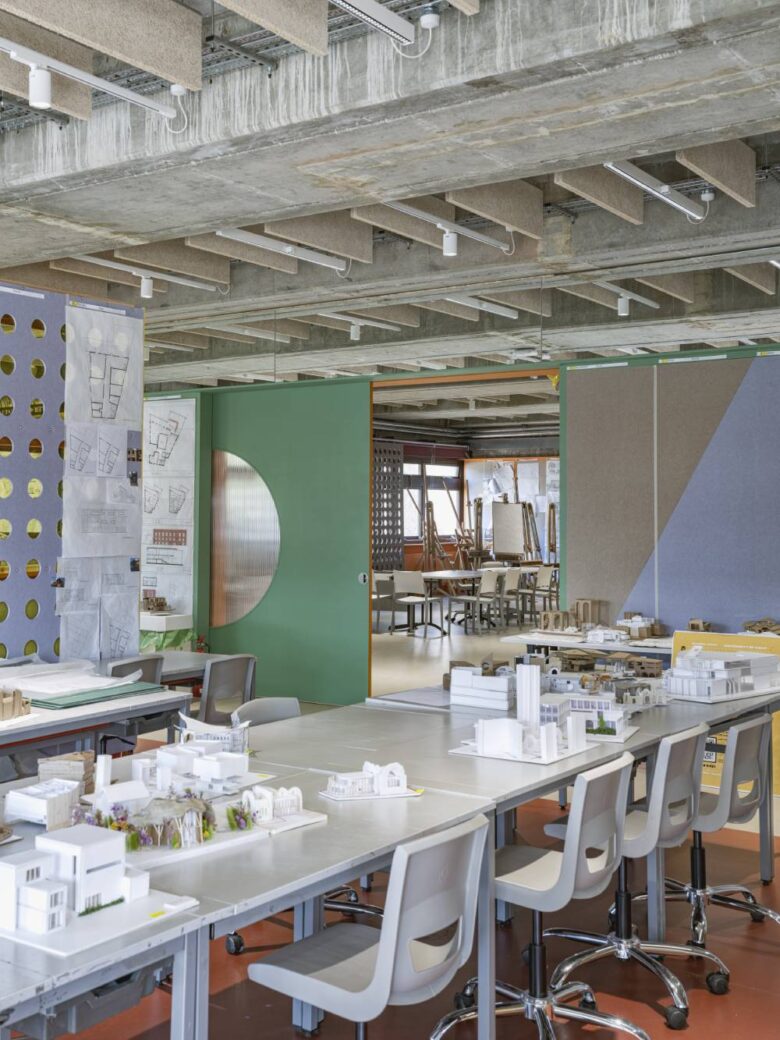
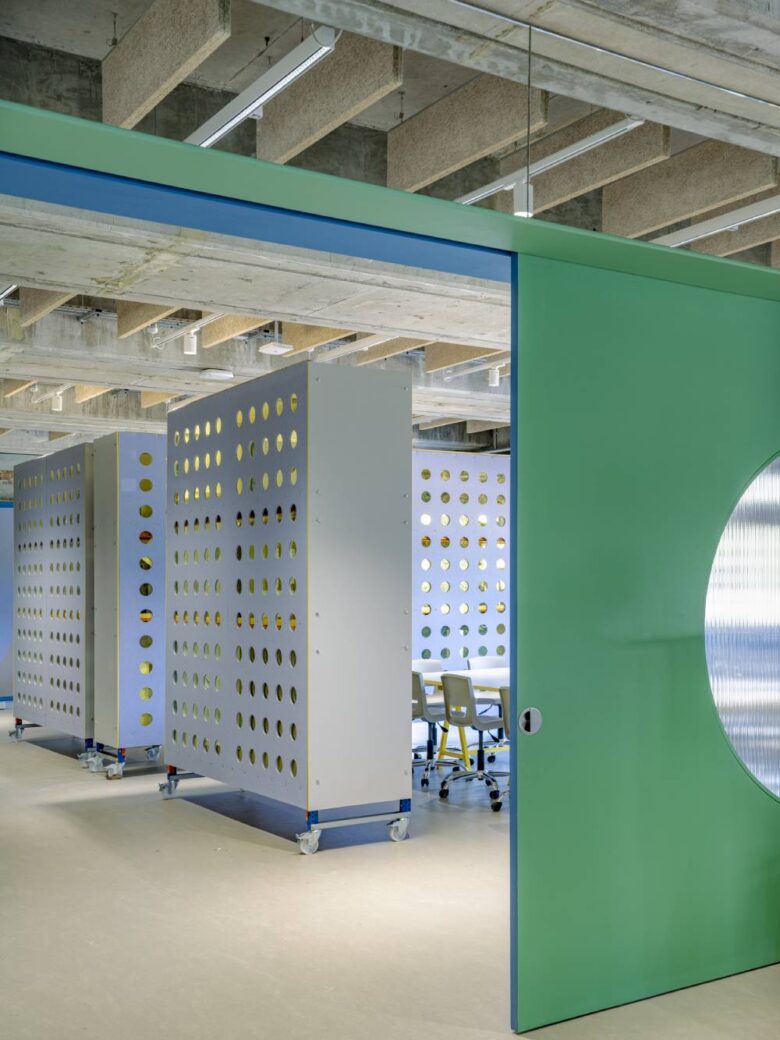
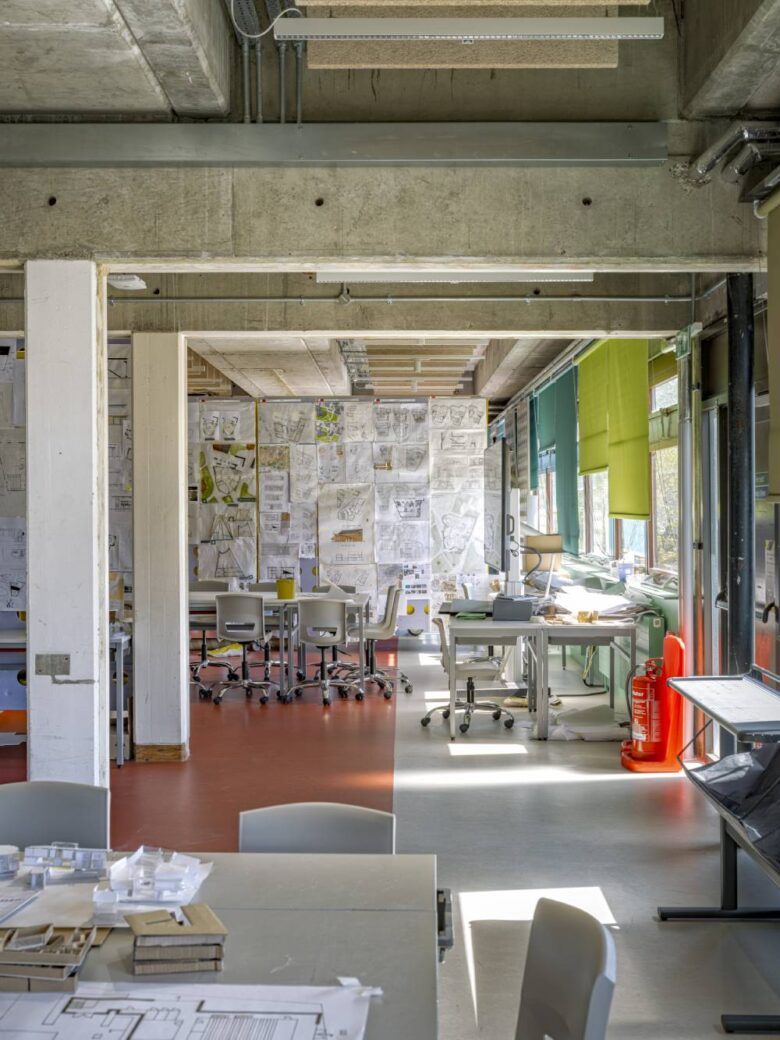
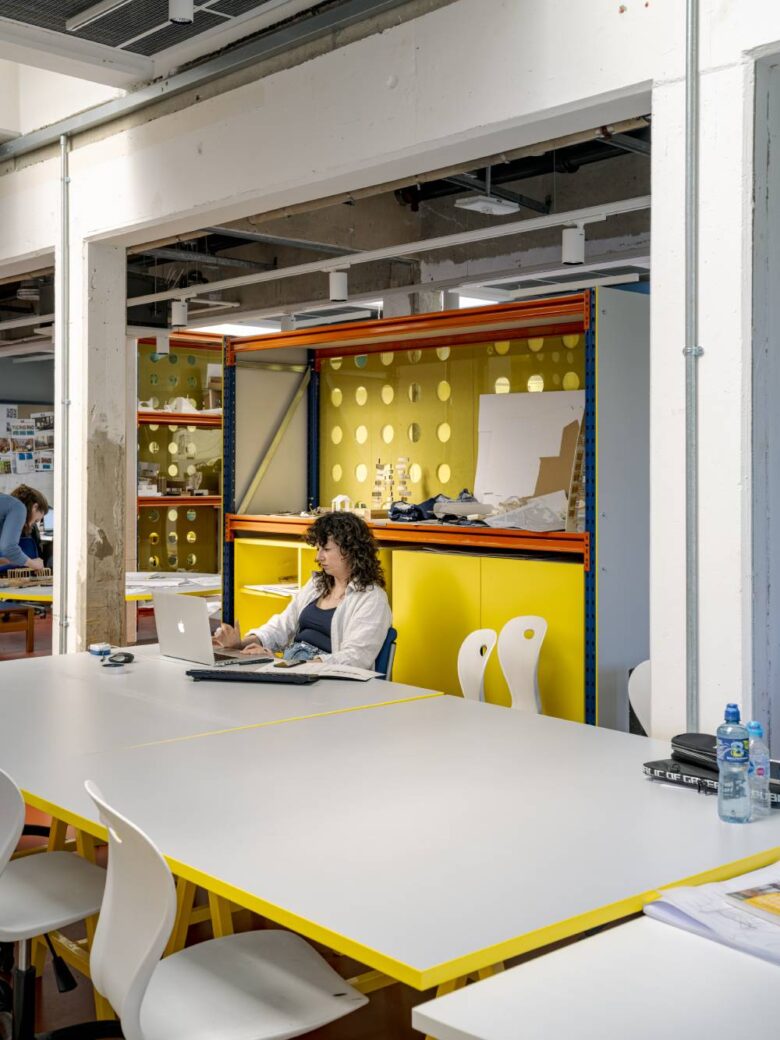
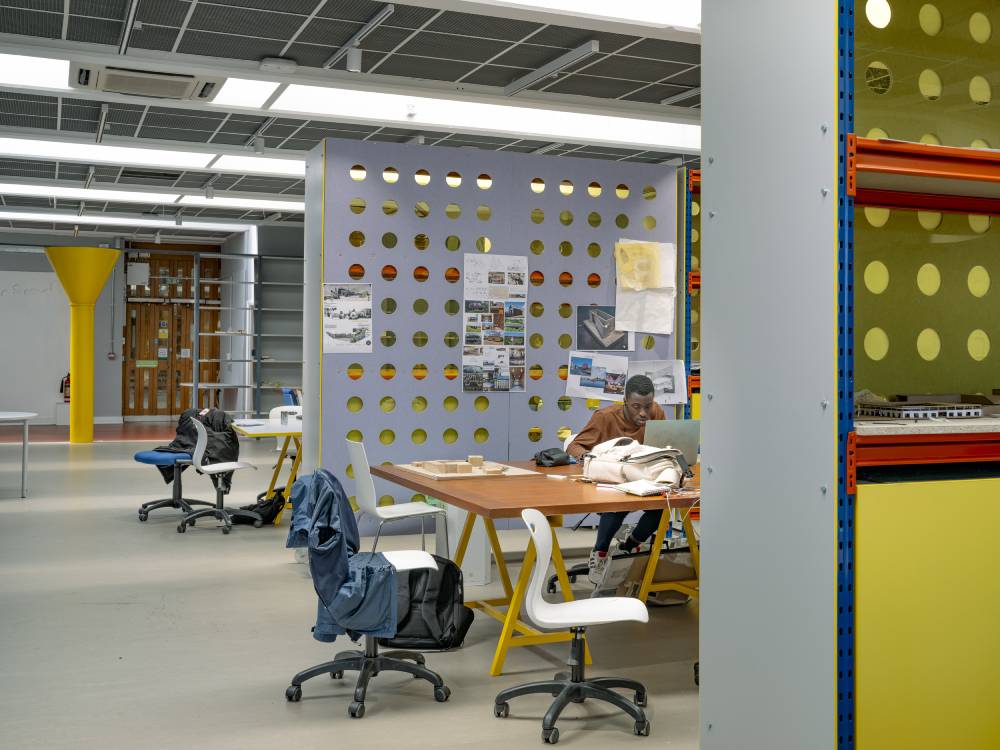
The interiors of the existing physics lab were first stripped out to expose the building’s Brutalist elements, including the concrete ceiling, metal beams and engineering fixtures. The design approach was then a minimalist one, only reincorporating walls that were absolutely necessary to the flow of each studio to account for a growing student body. These walls then became active spatial devices themselves through the addition of sliding doors and large polycarbonate portholes, as well as integrated workbenches, model plinths, storage drawers and lighting.
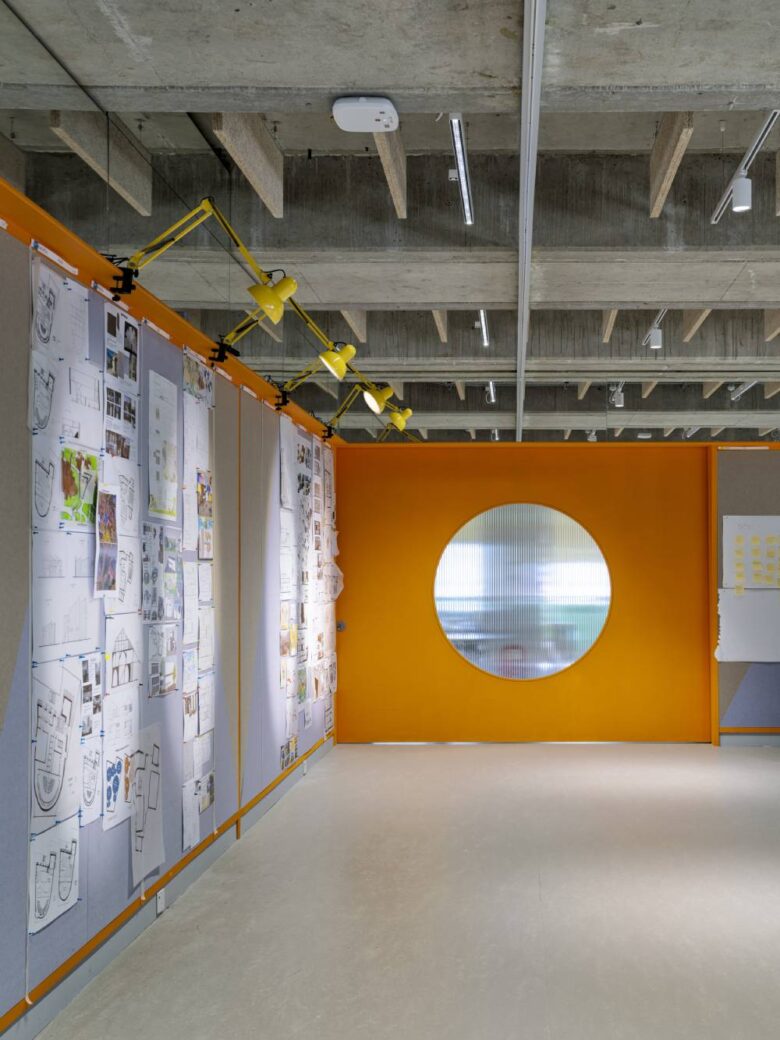
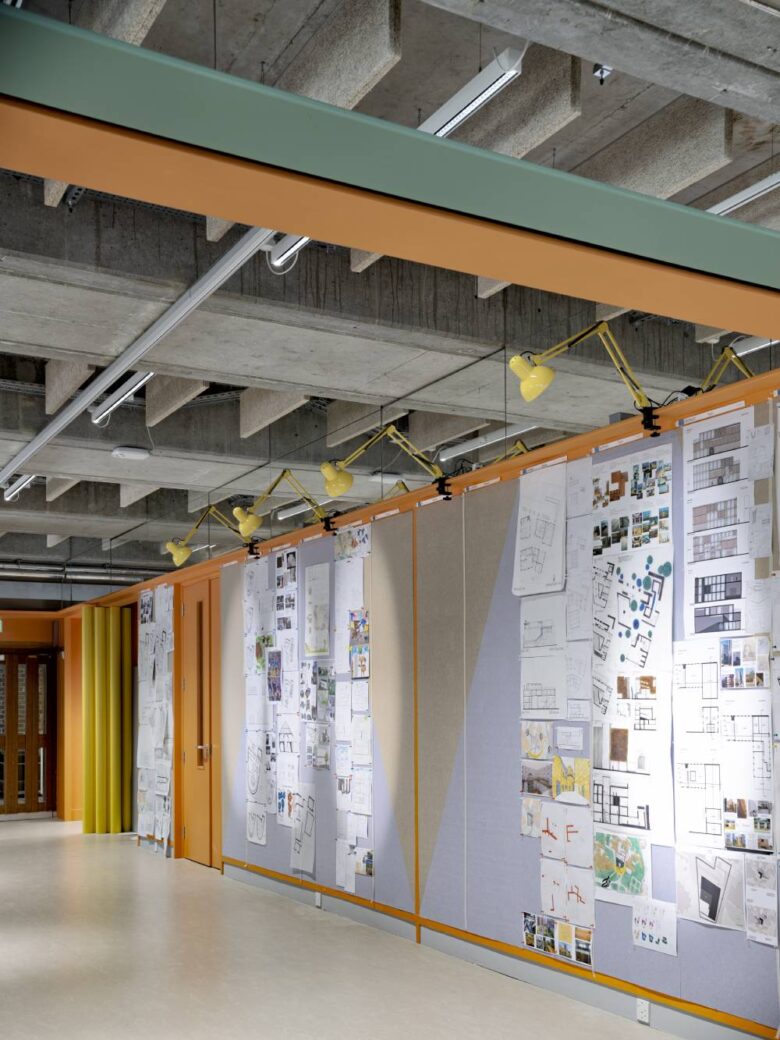
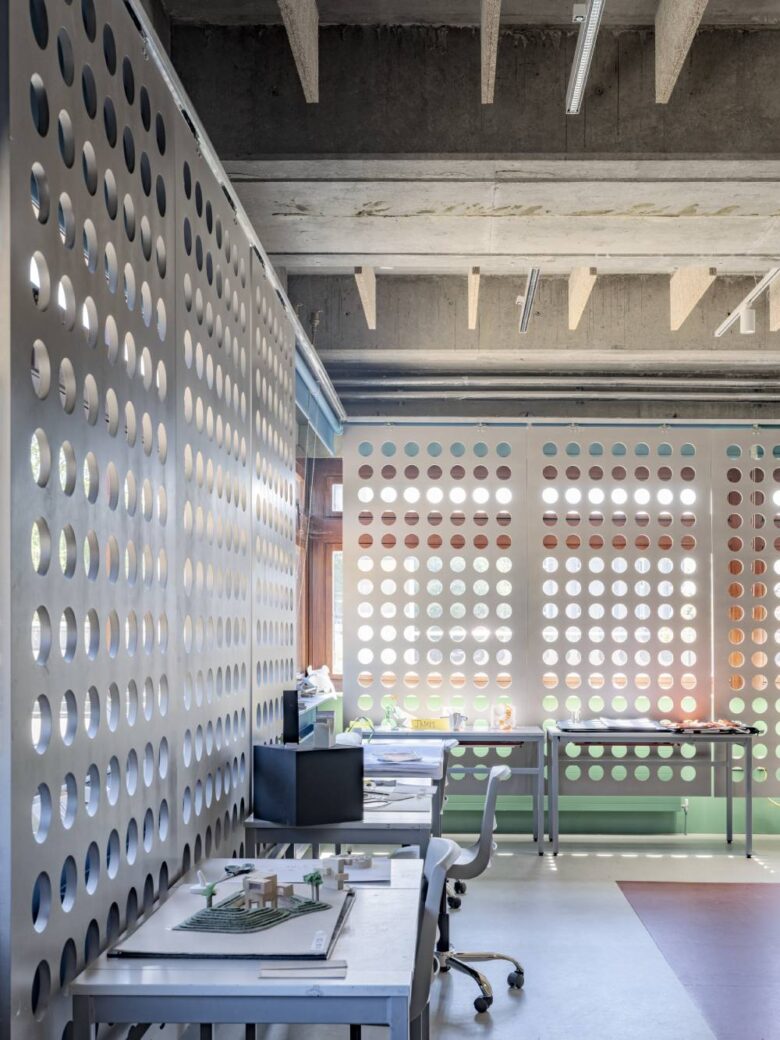
Alongside pivoted walls and colourful perforated screens, such multi-use partitions allow staff and students to tune adjacent spaces in or out when needed, such as holding small group seminars and workshops or offering a quiet room for focused independent work. Traditional pinboards were also implemented throughout each studio to easily accommodate collaborative work and creative brainstorming for students’ various architecture, design and planning projects. These adaptable features combined with the playful, vibrant palette of shapes and colours helps to establish the project as one that, according to Sam Jacob Studio, “recognises character, wit and delight as part of an essential role of architecture.”
Project Gallery