Masterpiece meets modernity at Amsterdam’s Tripolis Park
Abutting the monumental Tripolis Park complex, a new workspace by Concrete expands Amsterdam’s business district.
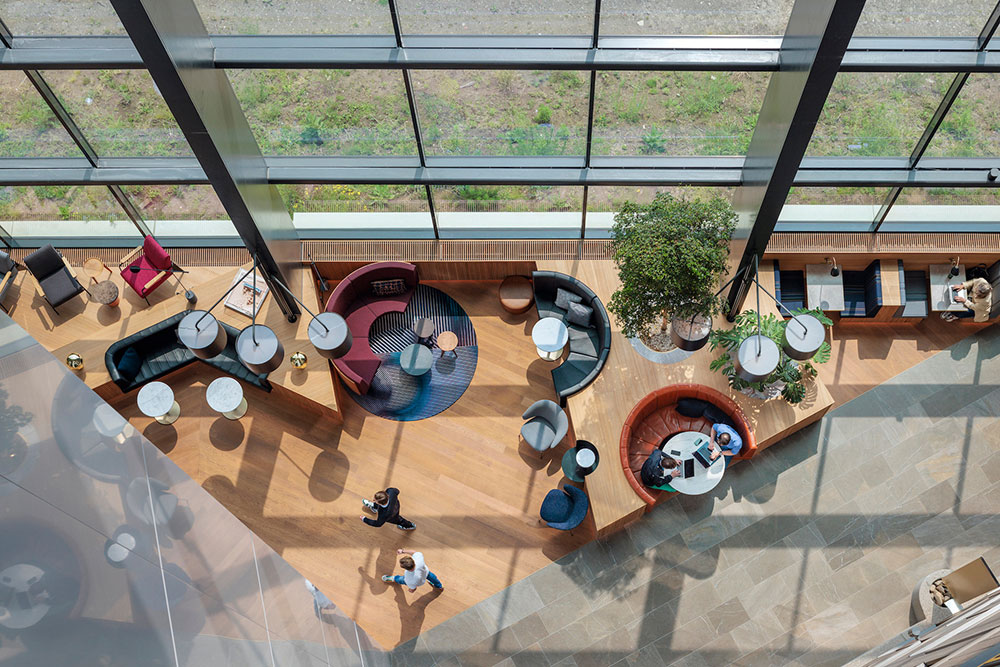
With architecture by MVRDV Architects for Flow Real Estate Development, a new landscraper, comprising seven storeys of curtain walling, covers the original architecture of Tripolis Park– a staple topography of Amsterdam’s business district. Providing a buffer zone between the office campus and the A10 motorway, the interior scheme by Concrete embraces both Van Eyck’s Modernist sensibilities and MVRDV‘s contemporary excellence.
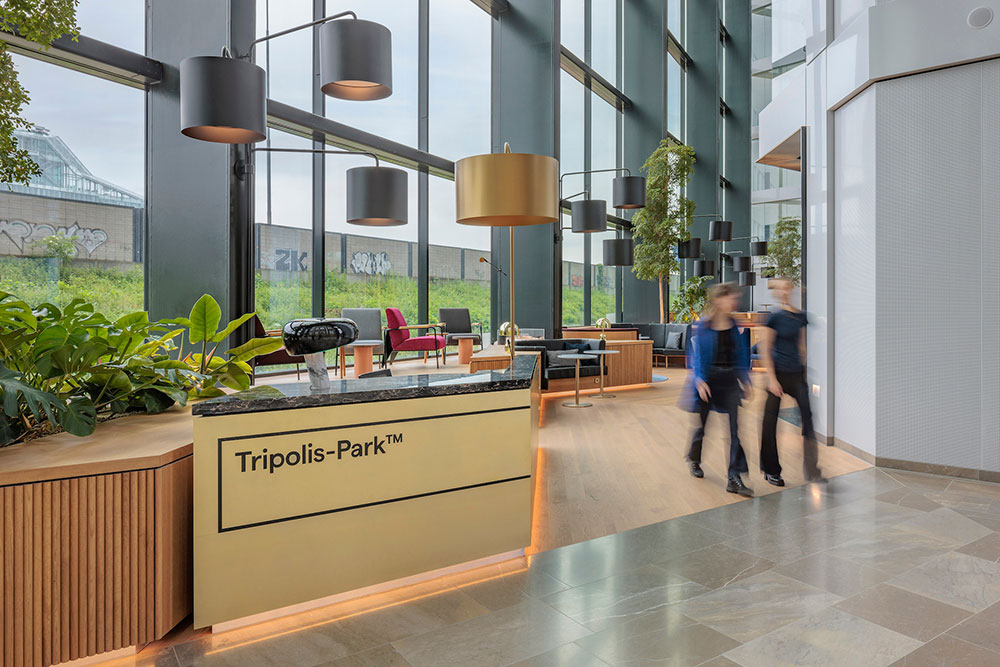
Aiming to introduce a human scale to the megalithic office campus, Dutch studio Concrete was responsible for the interiors of the new atrium, which sought to serve as a reception area, as well as a vibrant co-working lobby lounge for a modern-day workforce. Providing direct access to individual offices within Tripolis Park, the original structure’s iconic lift landing was also extended, creating a contrasting symbiosis between old and new.
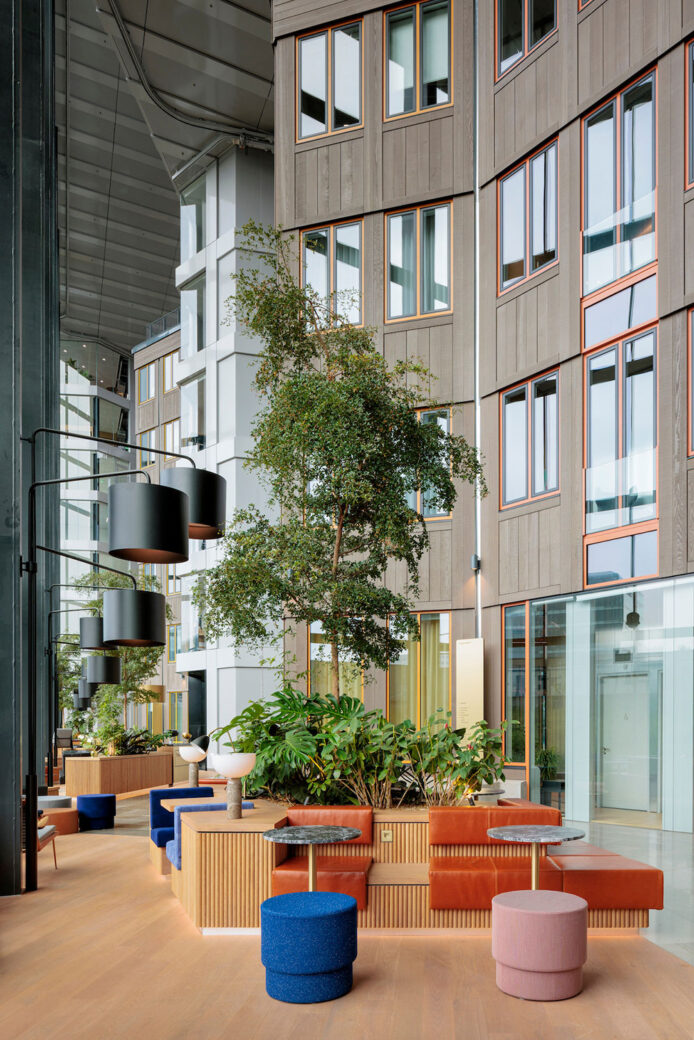
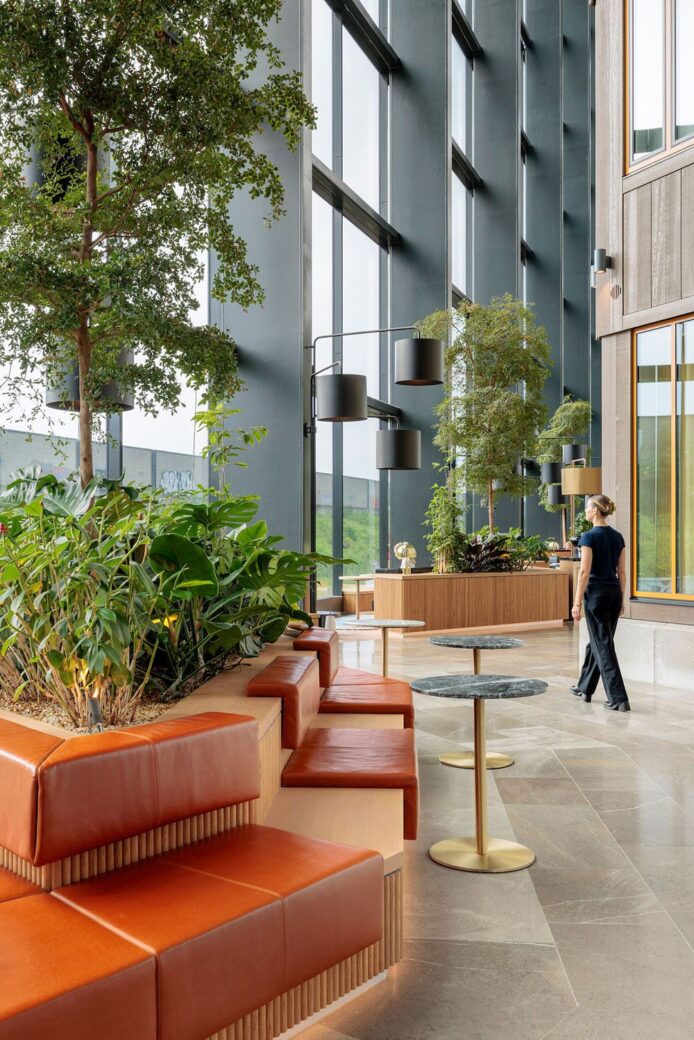
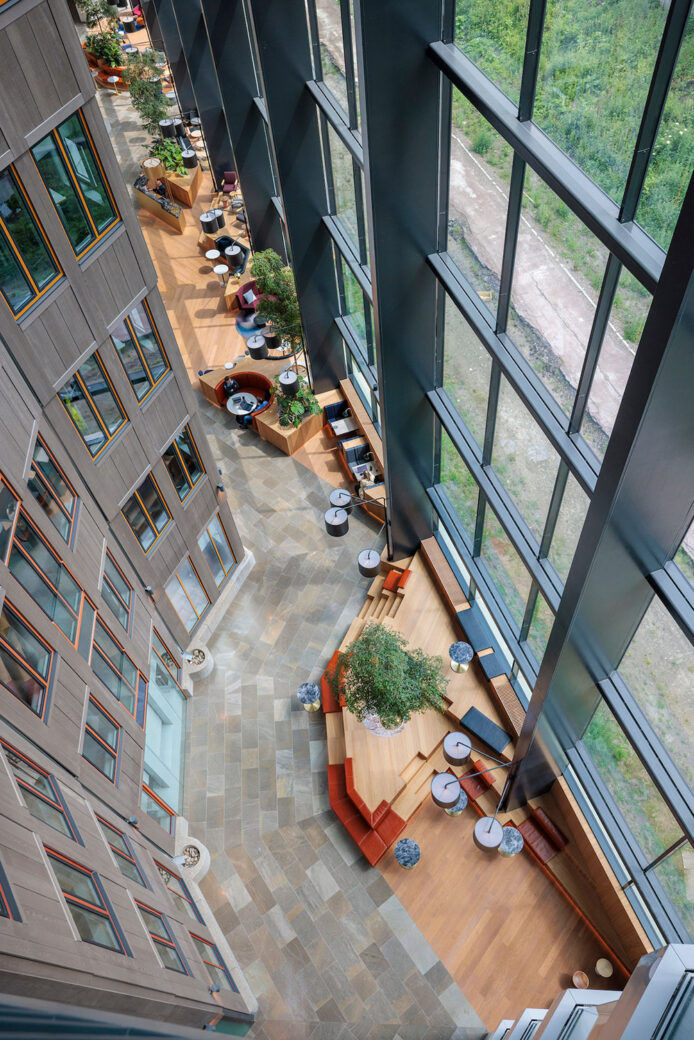
Establishing a grounding quality to a space dominated by hard external masonry was Concrete’s principal challenge. To overcome this, the studio designed a wooden interior landscape that stretched the full length of the public lobby, its shape heavily informed by its architectural surroundings. On one side, bespoke carpentry mirrors the geometry of the Van Eyck architecture, whilst the other side aligns with the slope of the neighbouring roadside, creating a complementary offset throughout.
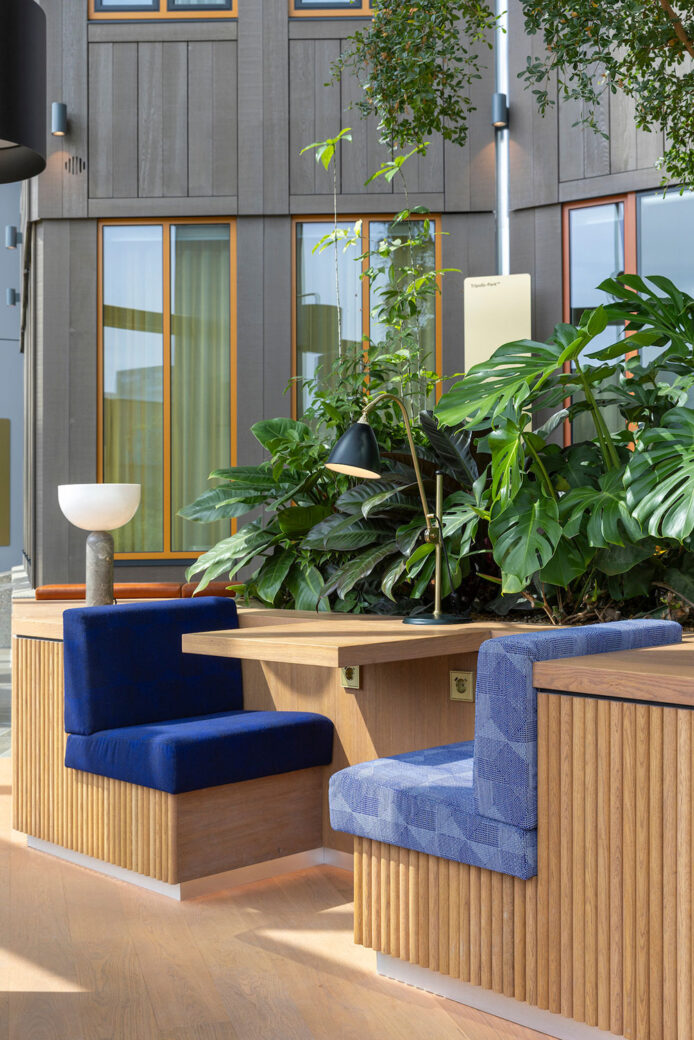
Carefully carved into the timber expanse, an array of seating configurations accommodates the various needs of users, offering places to dwell, work, wait and meet. These range from more secluded seating in the lower part facing the glass façade to benches around embedded communal tables and tribune seating on the highest part of the block, which offers a vantage point over the full atrium.
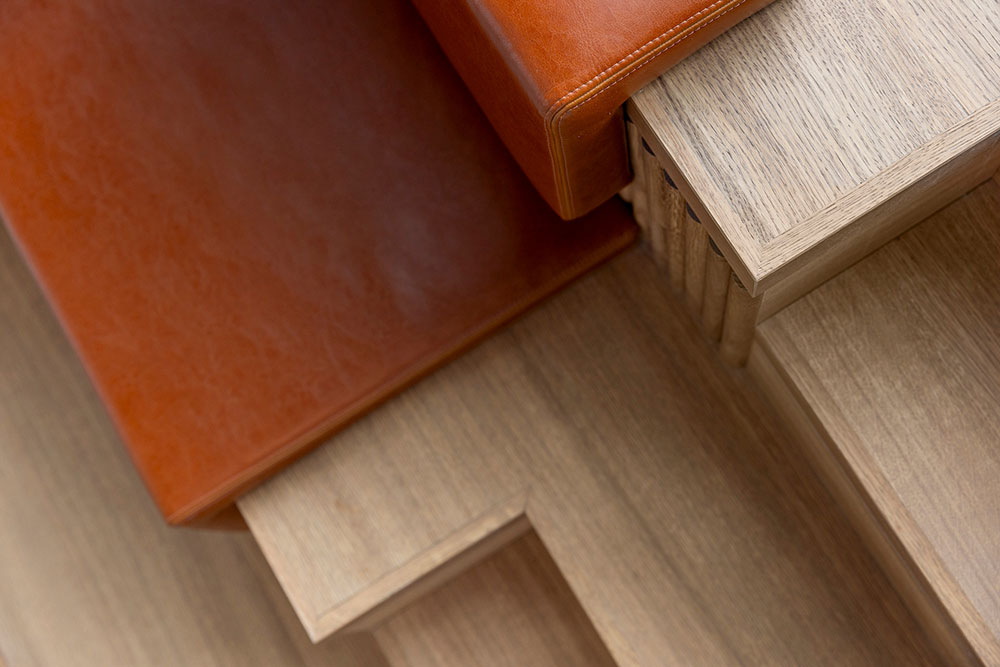
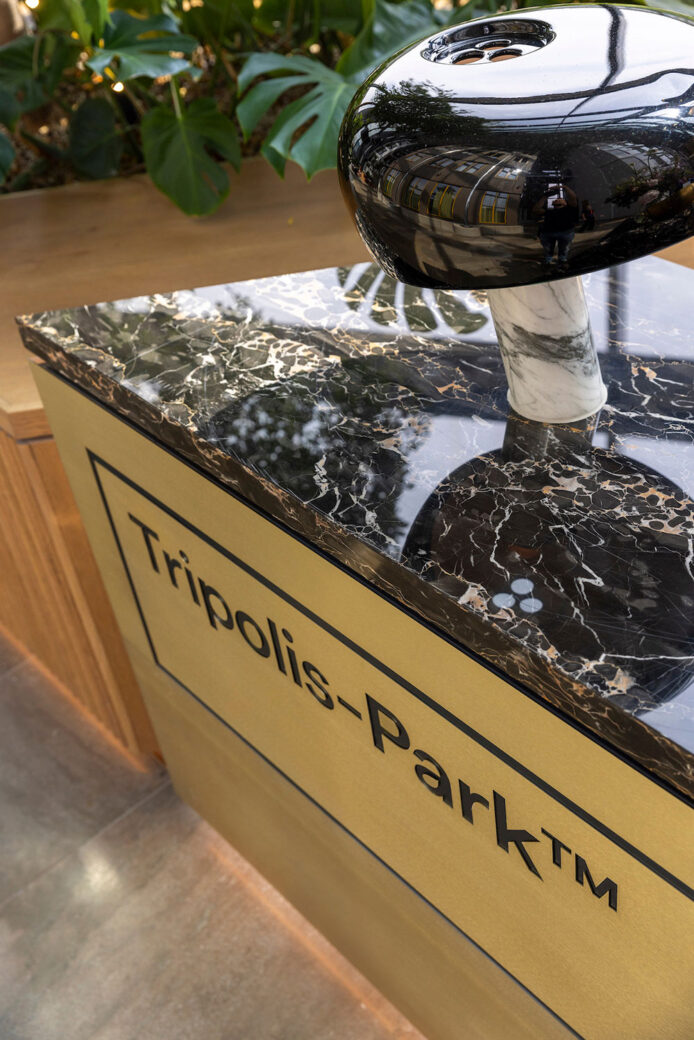
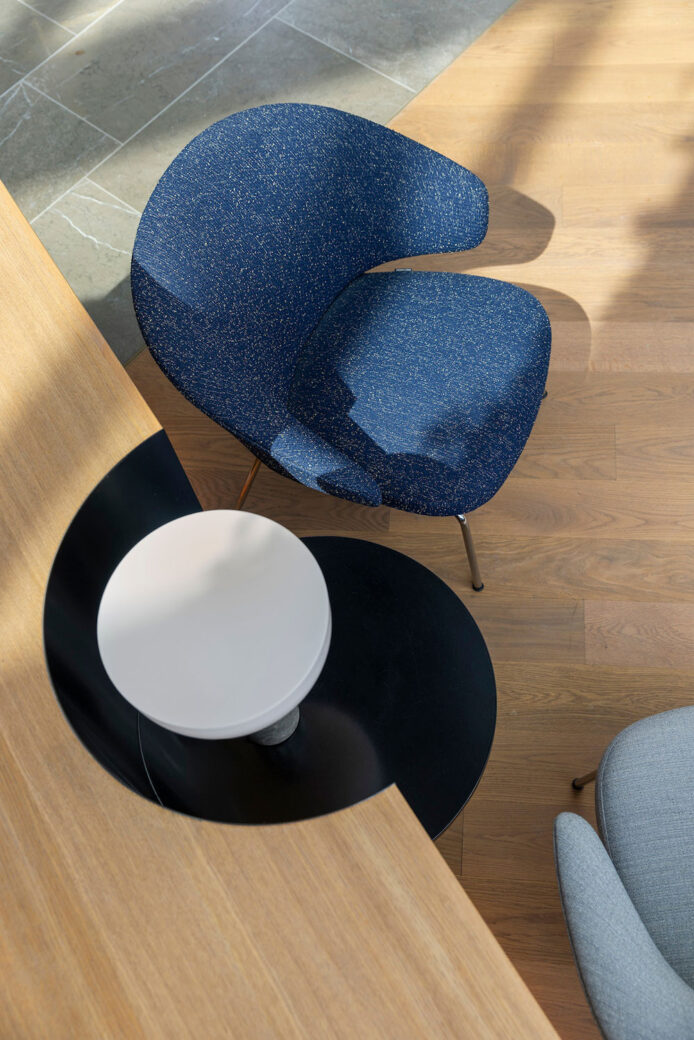
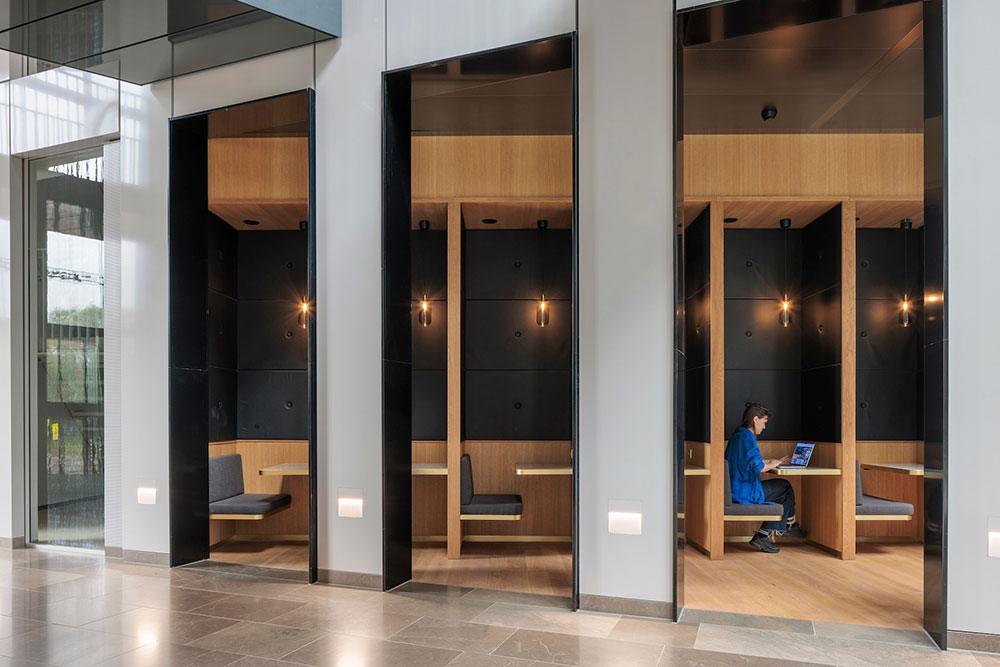
While the wooden mass is striking in its grandeur, the designed details, such as custom joinery, stone inlays and colourful upholstery, unfold upon closer inspection. Out of obvious view, two clandestine work niches are available for those undertaking focused work or study. Four large trees unify the timber terrain as one, further enhancing the human scale and breaking up the immense height of the atrium.
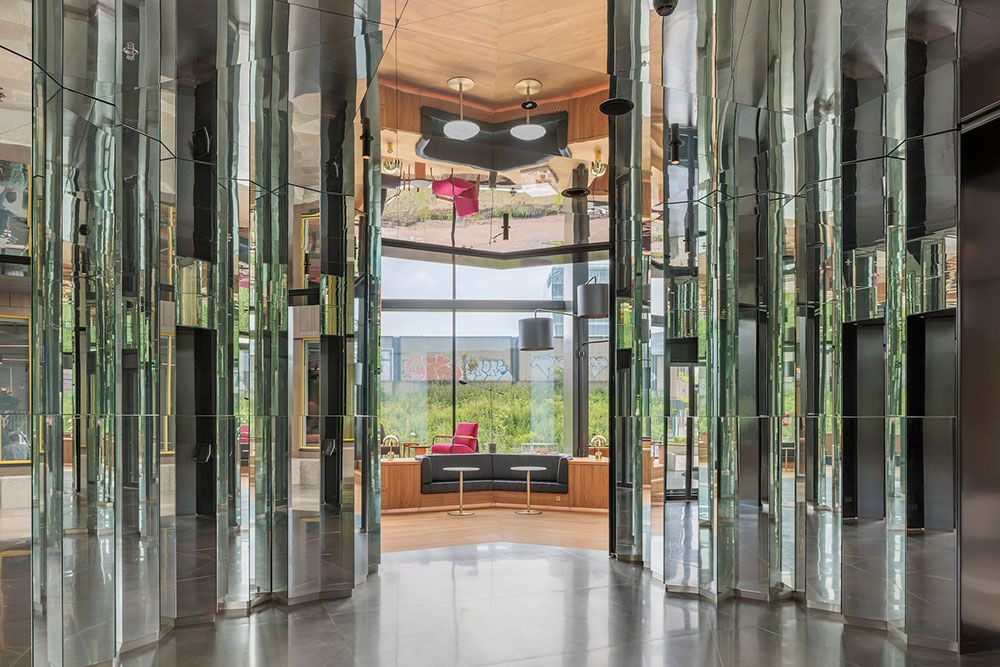
Also designed by concrete, an angular-shaped central lift sits in stark contrast to the organic shape of the wooden landscape nearby, but works harmoniously with the robust Tripolis Park’s previously external elevation. Low ceilings in the lift carriages are countered with angled mirrors, creating the illusion of double height through reflected images. Lookout points are scattered between mirrored surfaces, ensuring a visually connection between carriages; an analogue communication between employees clocking into their respective workplaces.
Project Gallery