Let there be light: how design can tackle the windowless box
We explore how these often-maligned spaces can provide a conduit for ingenuity and creativity.
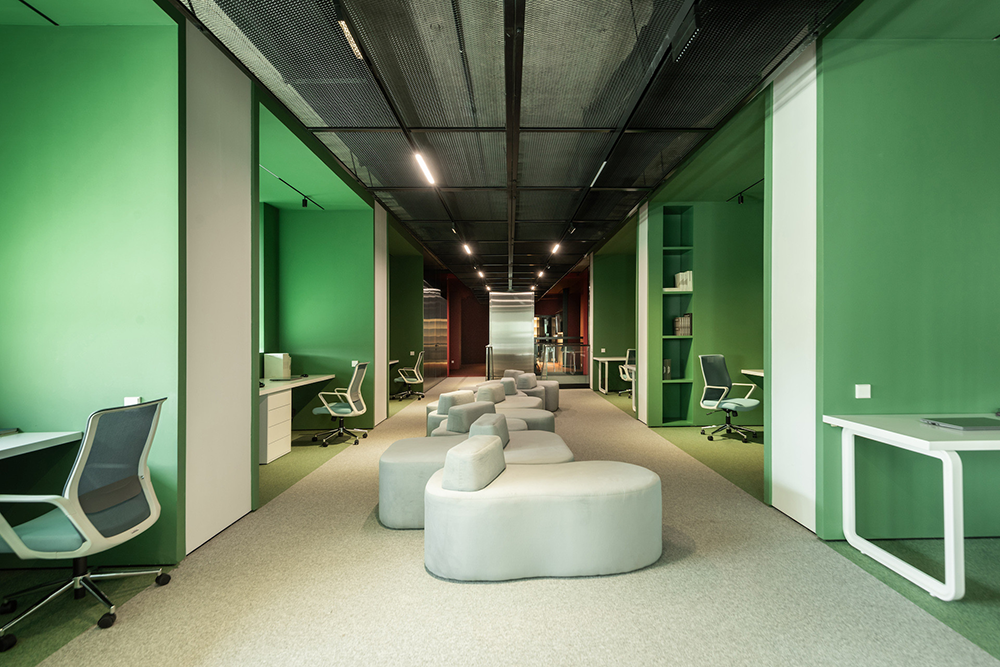 Kvadrat Architects Kazakhstan – Desks and Cubicles
The concept of windowless spaces may conjure up somewhat dystopian visions of dark, imposing concrete boxes, but lack of natural light can, itself, be a conduit for design ingenuity; a challenge to be creatively overcome. This is particularly true in the realm of adaptive reuse, where older and listed buildings feature windowless environments that necessitate repurposing. Whether to convey a futuristic, ultra-minimalist aesthetic or simply for cutting building costs, others believe the windowless box will become a key part of our architectural future – even within new builds.
One such feat of engineering is the Vertical Glass House by Chinese architects Atelier FCJZ, a structure that, despite its name, resembles the afore-mentioned concrete cube from the outside. An urban housing prototype, it provides lessons into how future commercial spaces could be considered. The interior surprises with multiple storeys made entirely of tempered glass, completely shutting out the outside world, save from the sky above. Initially submitted to the annual Shinkenchiku Residential Design Competition in 1991, the project was finally realised in 2013 and flipped the classic, modernist glass house 90 degrees. This intense focus on privacy can be seen as a cultural idiosyncrasy throughout much Japanese architecture, where the insular aesthetic can actually be credited with offering users an immense feeling of freedom.
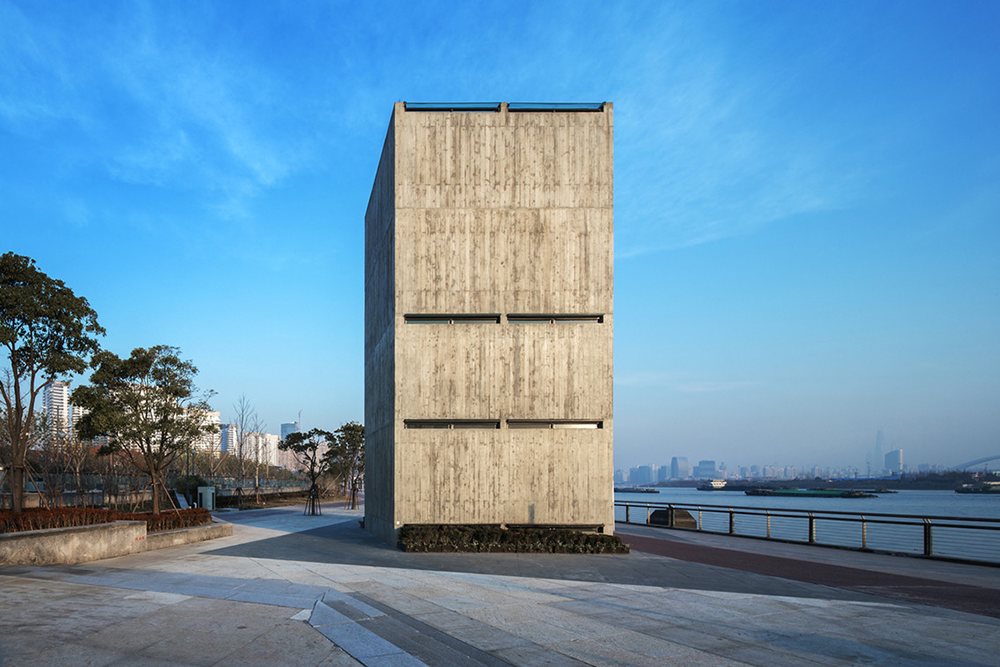 Vertical Glass House Exterior – courtesty of Atelier FCJZ
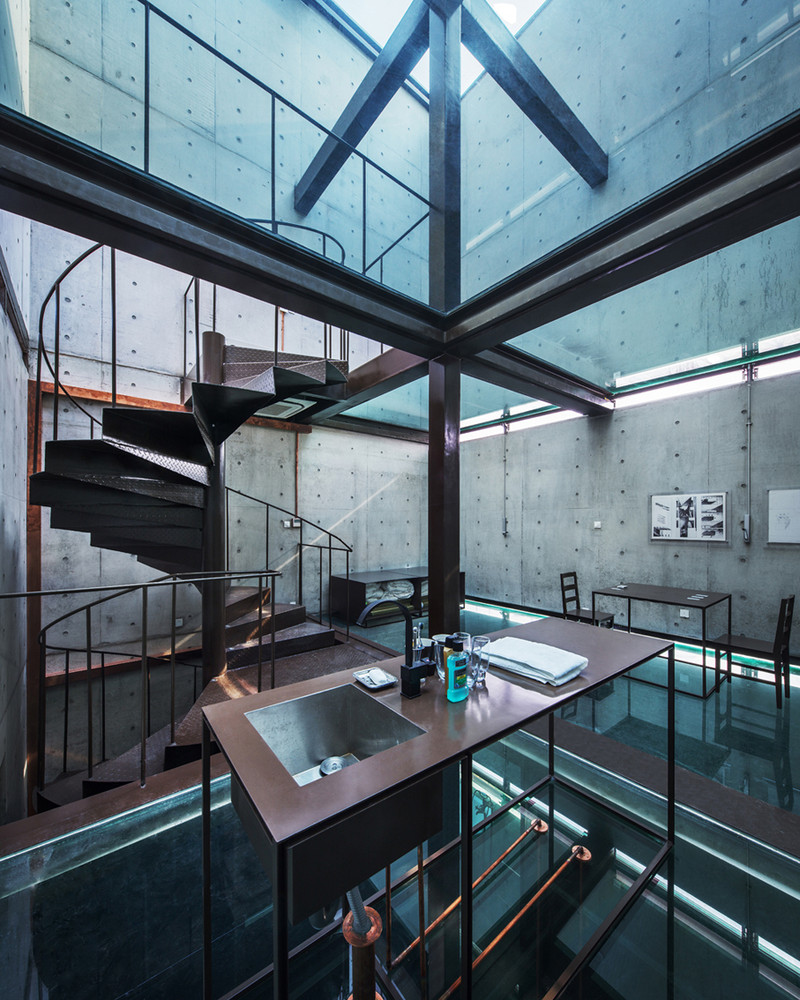 Vertical Glass House Interior – courtesty of Atelier FCJZ
At Manchester’s Hotel Gotham, a grand former bank turned 5-star boutique hotel, designers butted against listing status. In the belly of this striking Art-Deco building is a core of spaces that, for commercial viability, had to be transformed into guestrooms – but which lack access to natural light. Transforming a ‘problem’ into a selling point, this is now the ‘Inner Sanctum’, comprised of five suites which are among the highest-priced. Here, black leather-clad walls are illuminated by recessed lighting fixtures and one giant ‘wonderwall’ screen, where images of the city skyline or films about each suite’s eponymous character are displayed by a ceiling projector.
Rather than adapting to it, MVRDV’s The Imprint in Paradise City, South Korea, purposefully opted for a windowless façade due to the proposed theme park and nightclub within not requiring any natural light. Given a blank canvas to work with, MVRDV imprinted the doors and windows of neighbouring buildings onto the façade, creating an almost cartoon-like exterior with the illusion of a lifted curtain inviting visitors inside.
 MVRDV's The Imprint, Paradise City Seoul
Similarly to Hotel Gotham, a Kazakhstan office recently designed by Kvadrat Architects also emulates external windows, aiming to replicate natural sunlight with artificial sources. Large lighting panels on the ceilings illuminate meeting rooms and the main office space, reproducing the changing colours of the sky. In the bathrooms, backlit translucent canvas sits in place of mirrors above the sinks, while stall doors are made of frosted glass to diffuse light throughout the space.
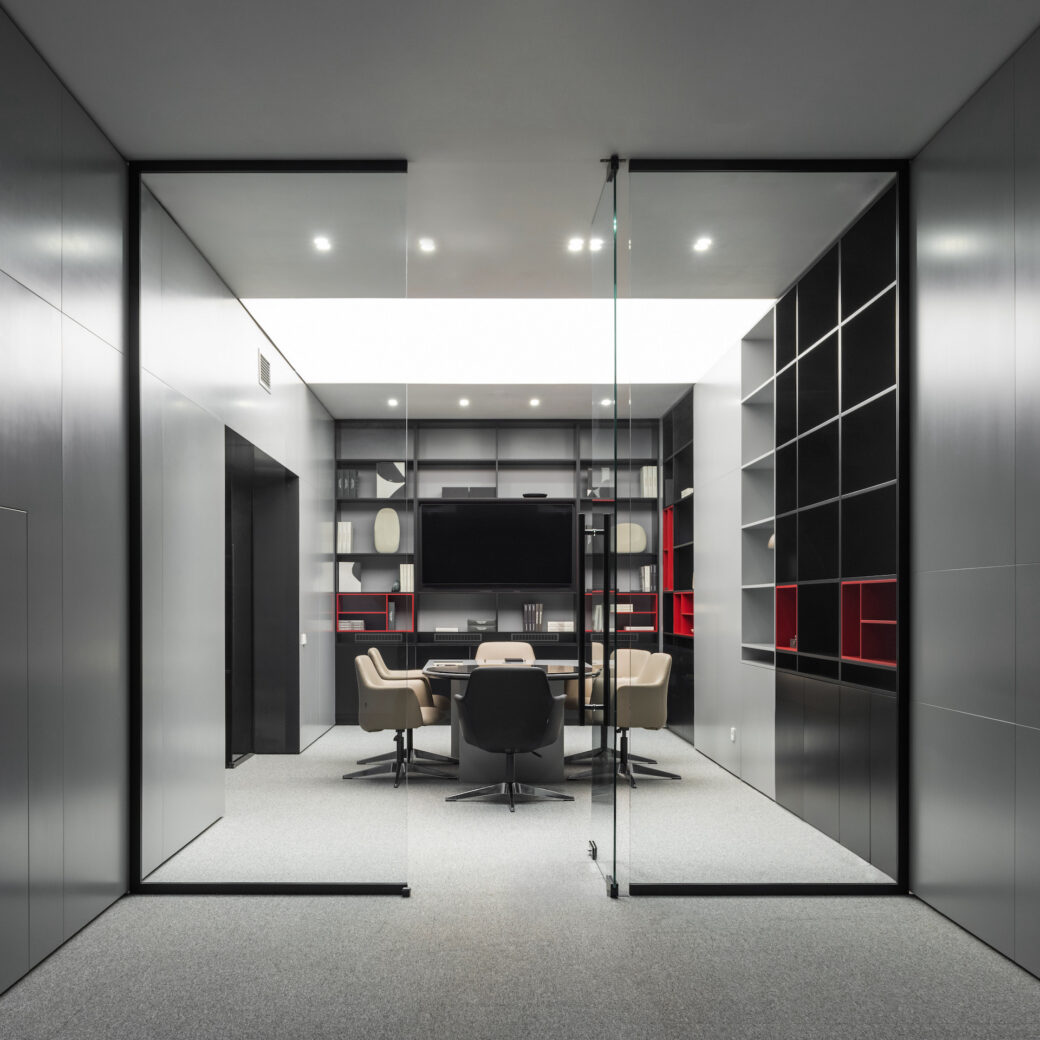 Kvadrat Architects Kazakhstan Office – Meeting Room
However, not all windowless structures are as highly stylised or thoughtfully considered, leaving them trailing behind. In 2021, the now-cancelled proposals for a windowless student dormitory in Munger Hall were hugely controversial, even prompting an architect from the University of California committee to resign in disagreement. The small rooms with no natural light or ventilation struck many as a disturbing look into America’s public sector, as well as flying in the face of sustainable architecture.
Combined with the growing awareness of how important natural light is to our mental and physical health, the idea of the windowless box therefore remains a controversial one for now, when considered within modern construction and spatial planning. But in the drive to meaningfully give existing buildings a new life, it’s also an obstacle that designers and architects will increasingly have to grapple with; finding ways to bring light into the otherwise lightless.