The year in conversations: Our 2024 interviews
As 2024 draws to a close, we reflect on 12 months of compelling conversations and round up the featured interviews from a year in print.
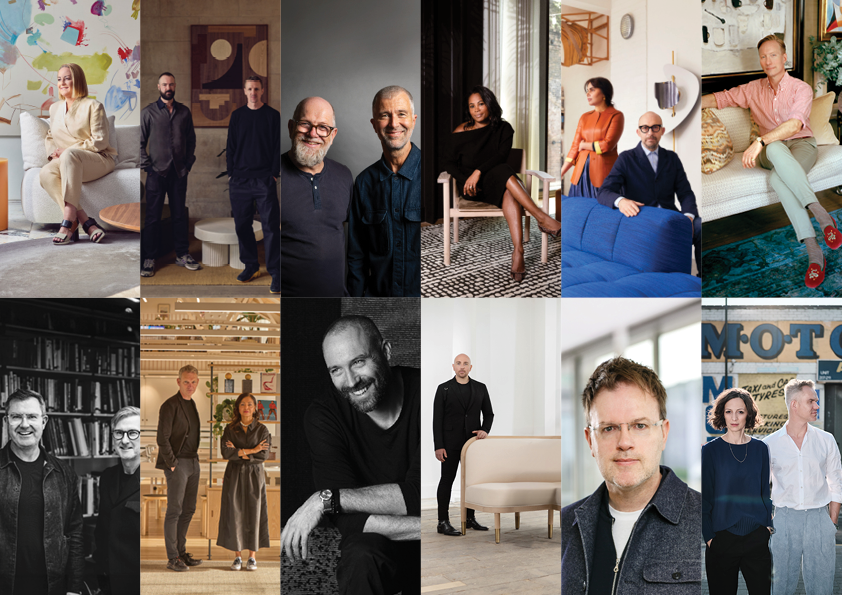
One year and six issues later, we’ve had the pleasure of sitting down with some of commercial interior design and architecture’s leading figures, from new faces making their mark on the industry to established designers sharing lessons learnt from storied careers. We take a look back at 12 months of compelling conversations and round up the featured interviews from a year in print.
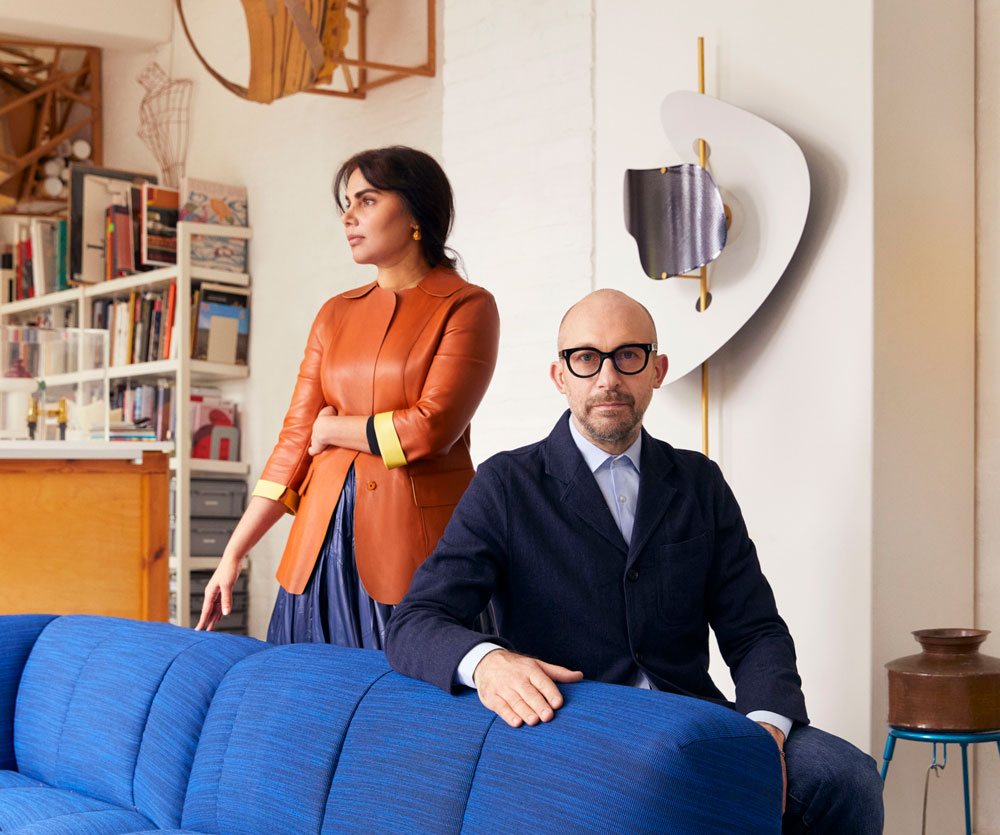
Sum of both parts: In conversation with Doshi Levien
Meeting as design students at London’s Royal College of Art in 1995, Nipa Doshi and Jonathan Levien established their eponymous studio in 2000, and although from very different backgrounds, both share a similar appreciation for making and design due to a close relationship with craftsmanship they experienced from an early age. For Levien, life began in Scotland next door to his parent’s toy factory, while Doshi, born in Bombay and growing up in Delhi, had a “very Bauhaus” education at the National Institute of Design. This cross-cultural perspective has guided the studio’s ongoing collaborations with the likes of Moroso, Cappellini, Kettal, Kvadrat, B&B Italia, Hay and Arper – Doshi’s natural inclination towards visual culture aligning perfectly with Jonathan Levien’s exacting technical skills.
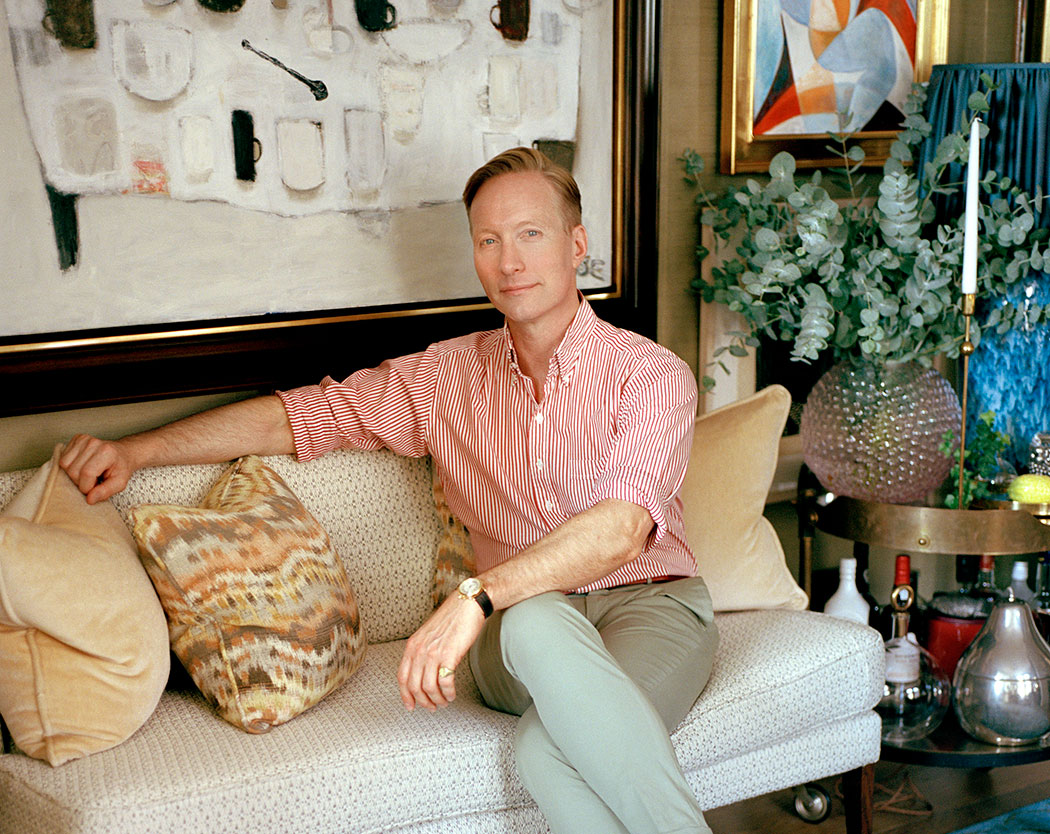
It’s all about beauty: In conversation with Martin Brudnizki
Though he’s from Sweden – a country known for its pared-back sensibilities – Martin Brudnizki is arguably cut from a different cloth, a bon vivant whose ornately decorated country pile is the darling of Instagram. Brudnizki’s spaces are, then, far from ordinary; provocative and impossible not to have an opinion on. He riles against the ‘fine’ and the ‘nice’, both words accompanied with a disdainful eyeroll. Across his professional career he’s developed projects that are as much talking points as environments – from seafood joint Scott’s and members’ club Annabel’s to Soho Beach House Miami, three projects he spotlights as among his most formative. “Beauty can be seen as frivolous or that to be interested in beauty means you’re not serious. Beauty became an ugly word,” he explains, running through a list of classic design and art movements, where form took precedence over function. “But, for me, it’s all about beauty. Design is about creating the fantasy; it’s an emotional state.”
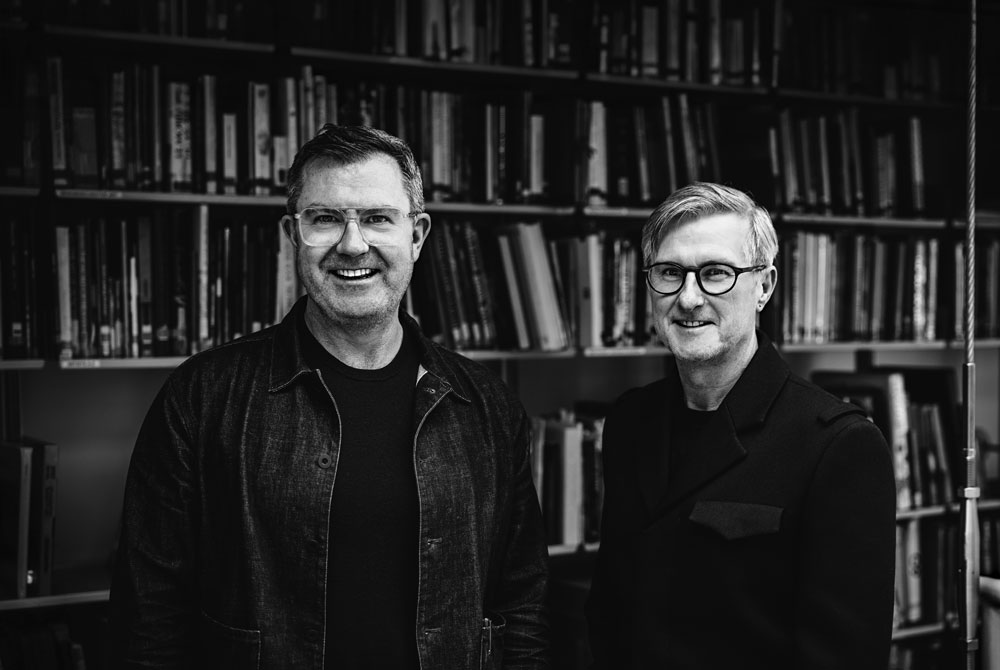
The test of time: In conversation with David Collins Studio
“Luxury doesn’t have to be quiet, but it does have to be memorable,” says Iain Watson, David Collins’ co-founder and CEO, surveying the lounge at Nobu Hotel London Portman Square. Alongside chief creative officer Simon Rawlings, Watson joined us in issue #231 to discuss the work, legacy and future of a studio that, next year, celebrates its 40th anniversary. In those four decades it has devised and realised some of hospitality and retail’s most enduring and iconic spaces – from The Berkeley’s Blue Bar and The Wolseley to store interiors for Alexander McQueen, Vivienne Westwood and Jimmy Choo. Now a practice synonymous with statement-making timelessness, both Watson and Rawlings have forged long-lasting careers with the studio; Watson working with the namesake David Collins on its inception and Rawlings joining in 1997, appointed creative director a decade later. Watson’s CEO title came with the untimely passing of Collins in 2013; a Dublin-born titan of the design world whose legacy lives on in the spaces – and the experiences – he created.
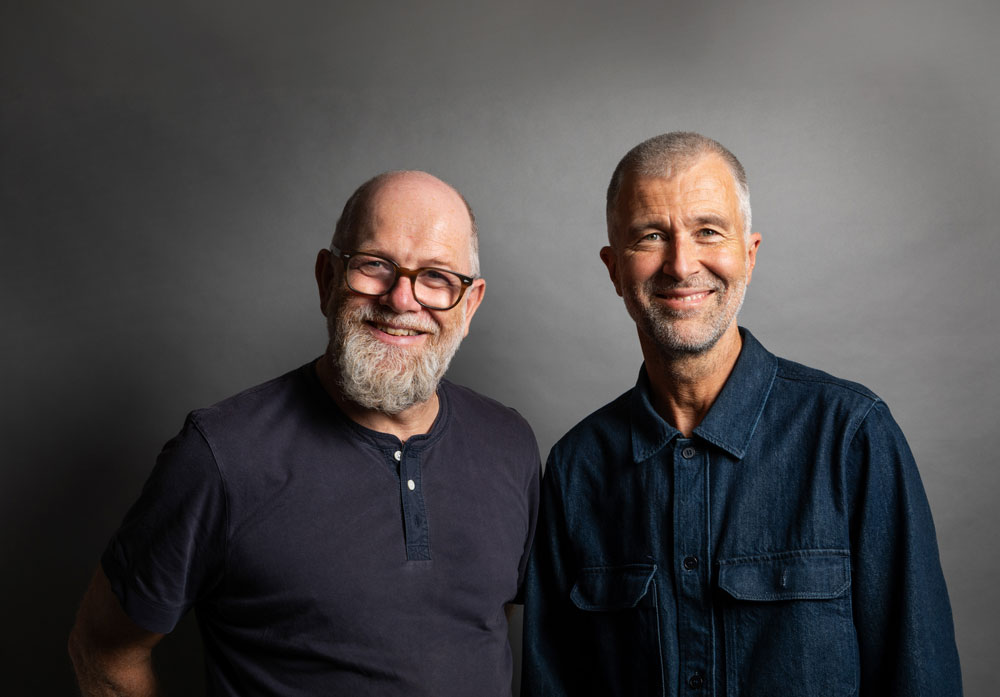
For a better world: In conversation with Pearson Lloyd
After years of absorbing their creative parents, Luke Pearson and Tom Lloyd met in the early 90s at Royal College of Art, both inspired by the European-centric blending of furniture and product design. Their ambitions grew with time and, after working across the UK and the continent, the duo launched Pearson Lloyd in 1997; a sense of social awareness and problem-solving design positioning them as one of the most respected studios in Europe. Now working across furniture and product design; aviation, transport and healthcare; and with the likes of Senator, Steelcase, Modus and Flokk, a thread of ambitious relevance and quality has ensured continued success and the studio celebrated its 25th anniversary in 2022. “In the early days, our clients seldom broached the subject of planetary impact, but fortunately, that tide is turning,” says Pearson. “Today, many of our clients are mindful of the broader implications, yet, certain materials and processes that are ‘anti-circular’ still lack viable alternatives – we find ourselves designing products for a circular future that has yet to materialise.”
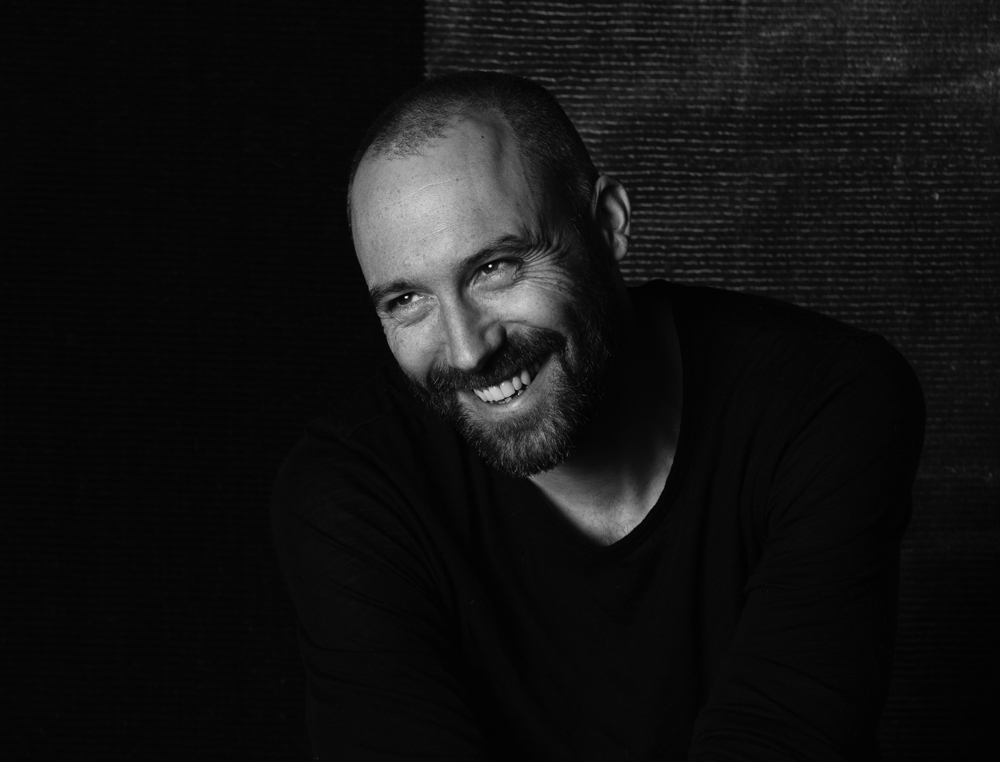
Not the end of the world: In conversation with Ruud Belmans
A week after this year’s somewhat rain-soaked Clerkenwell Design Week, WeWantMore’s co-founder and creative director Ruud Belmans joined us virtually from the studio’s Antwerp office in issue #232. After years of successful freelancing, working seven days a week with no sleep caught up Belmans and his best friend and business partner, Thomas Vanden Abeele, and they founded WeWantMore in 2006. With a network of international clients across hospitality, retail and workplace, the studio focuses on the fully experiential, from branding to spatial design, and now houses two teams – one dedicated to interior design, the other to branding. “In the beginning there were no limitations. We didn’t have a branding team and an interiors team; it was all about the design language. The tools are different, of course, but the principles are the same whether you are designing an interior, branding, a product: proportions, colour use, contrasts. No discipline is my own,” he laughs. “I don’t feel like I am just a product designer, or interior designer.”
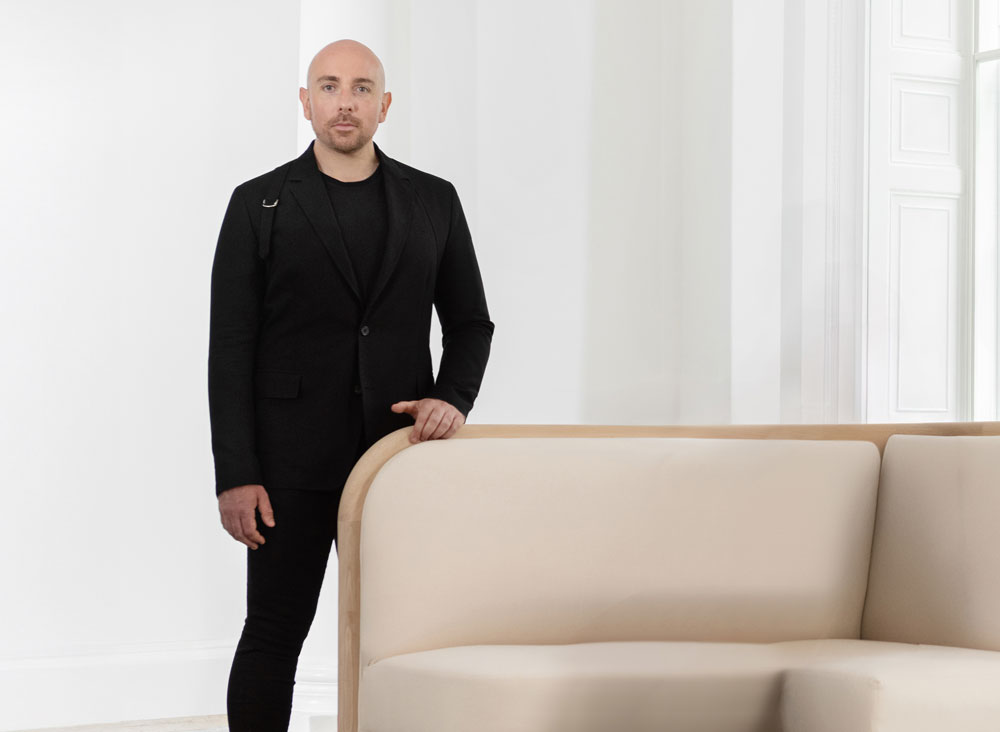
A most hospitable man: In conversation with Shayne Brady
Co-founded by Shayne Brady and Emily Williams in 2013, Bloomsbury-based interior architecture and design studio BradyWilliams undertakes a mix of hospitality projects and upscale, mostly London-based residential ones. Our wide-ranging conversation takes in his formative influences, his career to date and BradyWilliams’s hospitality projects in particular. Brady, who’s also a guest judge on BBC series Interior Design Masters, is given to emotional, effusive language. He’ll often say he’s “obsessed by” something rather than simply saying he loves it. This warm delivery is mirrored by one of the studio’s key aims – to create spaces that make an emotional connection with a venue’s clientele. Brady met Williams during his time at London practice RPW Design, where they worked together on The Hyatt Capital Gate Exhibition Centre in Abu Dhabi and hotels Aloft Abu Dhabi and the Mandarin Oriental Hyde Park – now, their eponymous studio strives to create spaces that make people feel unselfconsciously comfortable: “People don’t necessarily know if they’re in an environment they like but they certainly know if they aren’t,” asserts Brady.
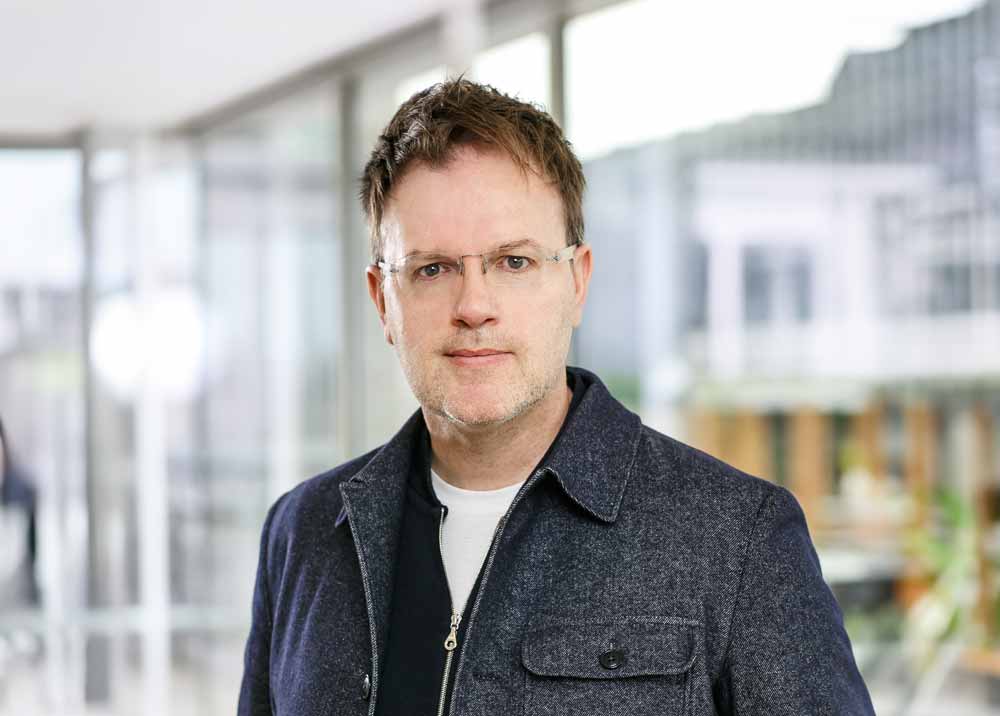
Building stories: In conversation with John McRae, Orms
Originally from oil-rich Aberdeen, McRae recalls his English teacher as the first to set him on his current path, recognising his talent for art and design and guiding him to a trainee architectural technician position straight after school. 26 years later and McRae is a trustee and a director of London architecture firm Orms alongside Colin McColl, Simon Whittaker and founder Oliver Richards. The studio’s projects span workplace, hospitality and public sector – most notably in recent years the much-lauded The Standard hotel in King’s Cross, which saw Orms mastermind the transformation of the 1974 Brutalist Camden Town Hall Annexe into the hotel group’s first UK property. The conversion of the former office block to modern hotel played to Orms’ strengths as masters of refurbishment and renovation, and opened the practice’s eyes and mind to “proper interior design”, as McRae attests, working alongside interior designer Shawn Hausman Design.
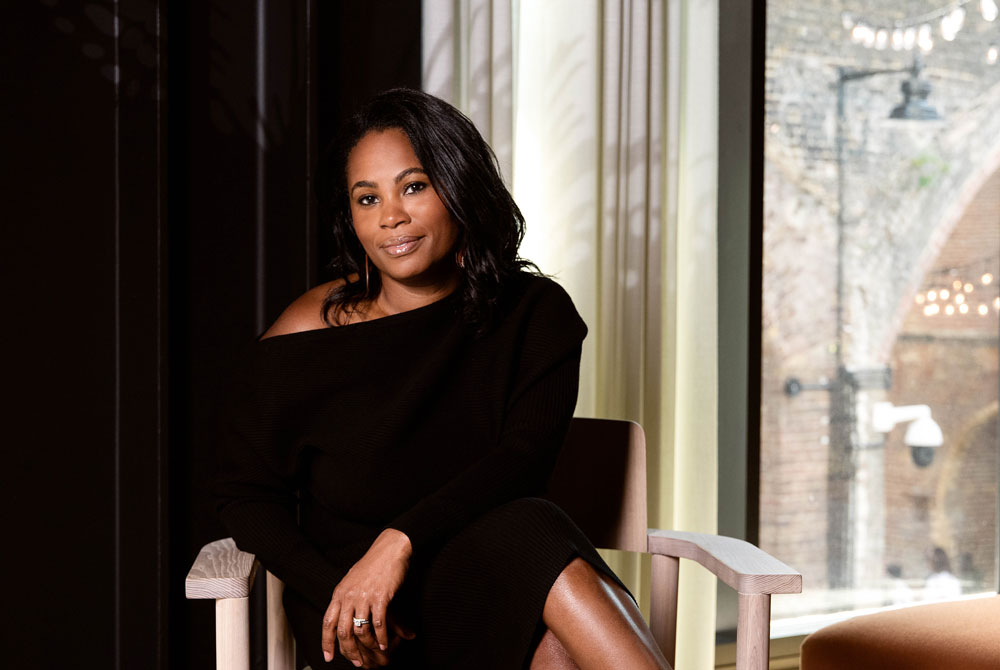
Everything different: In conversation with Toni Black
Warm and down to earth, Black is far from the pretentious, too-cool-for-school types who are easy to come by in the creative industries. “For me, design shouldn’t be snooty – Blacksheep doesn’t turn our noses up at things, we’re here to learn, develop and understand,” Black says during our conversation at the studio’s onsite cafe. “Taking away that level of formality to understand a client and have conversations is key. We haven’t got egos over here. It’s not about what we want, it’s about working together to create something magical.” Adopting this relaxed, open-minded approach to design has allowed Blacksheep to work on an impressively rich variety of projects since its founding in 2002 by hospitality savant Tim Mutton. This includes creating an opulent, marble-lined restaurant for a Kazakhstan outpost of the Ritz-Carlton; refining the fit-out of over 200 branches of burger chain Five Guys; giving a rustic revamp to Quattro Passi al Pescatore, a revered seafood spot in Sardinia; and developing a cartoonishly playful visual identity for the Cardo Brussels Hotel.

Down to a fine art: In conversation with Double Decker
Specialising in art curation for the hospitality sector, the colourful chaos of Soho is where inspiration starts for Double Decker founders Melita Skamnaki and Wilhelm Finger, working with artists from around the world to curate, source and commission for an international portfolio of clients and projects. Friends for many years, Skamnaki and Finger met at Kingston University, eventually launching Double Decker in 2009. Their different cultural backgrounds and varied experience complements each other in business and in life – German-born Finger working as an art director in fashion publishing and the music industry, and Skamnaki, born and raised in Greece, with a background in copywriting and creative direction. The pair’s ultimate goal is to create a story; something to explore, using art to layer new narratives on top of a scheme’s interior design. An academic background and respect for art history makes it easy for them to create collections that go beyond trends, crafting the unexpected for a category of luxury guests that have seen it all.
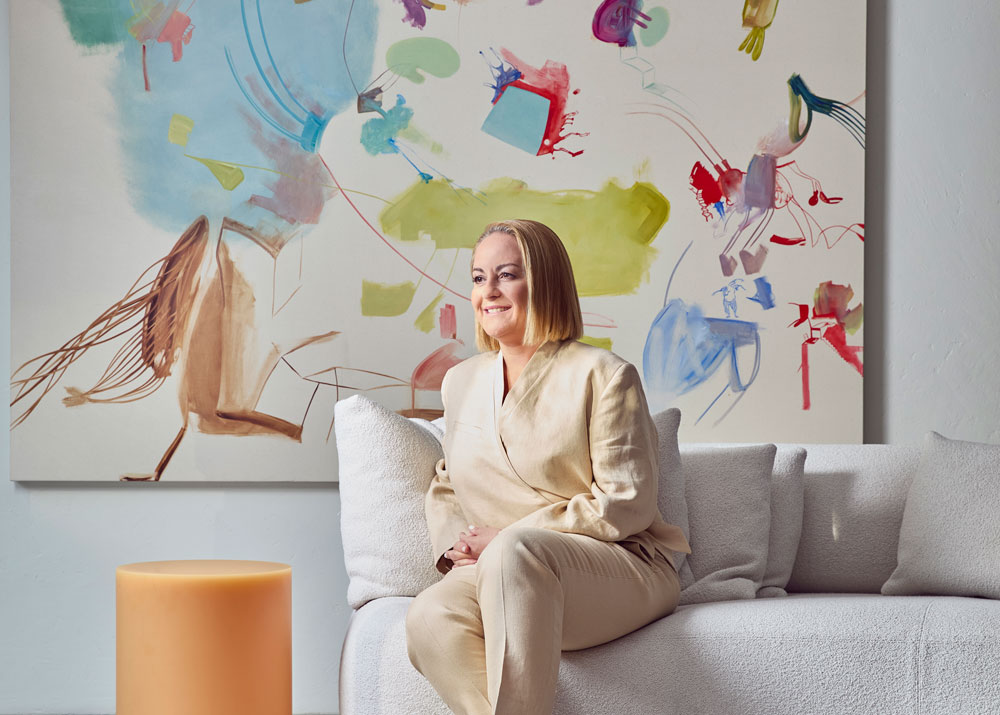
Where it took her: In conversation with Rachel Basha-Franklin
In 2002, designer Rachel Basha-Franklin decided to up sticks from her native Australia and move thousands of miles across the world to London. It was a daring choice that turned out to be hugely rewarding – just five years later she was able to establish her eponymous design practice, which has since masterminded some of the capital’s most exceptional workspaces. One would have a hard time finding aesthetic parallels between them: the interior of 25 St James’ Square is decked out with the same rich materials found in a private members club, while the headquarters of insurance firm Velonetic (inside the iconic Lloyd’s building) has a futuristic mix of modular stainless steel elements and LED lights. “Our approach is very much about the site, the building and its location… We don’t do cut, paste, repeat,” Basha-Franklin says. “It’s been my dream to connect the best of what people have at home or in a hotel to their office so that they feel valued and actually want to come into work. It’s an opportunity to turn people’s everyday life into an elevated experience.”
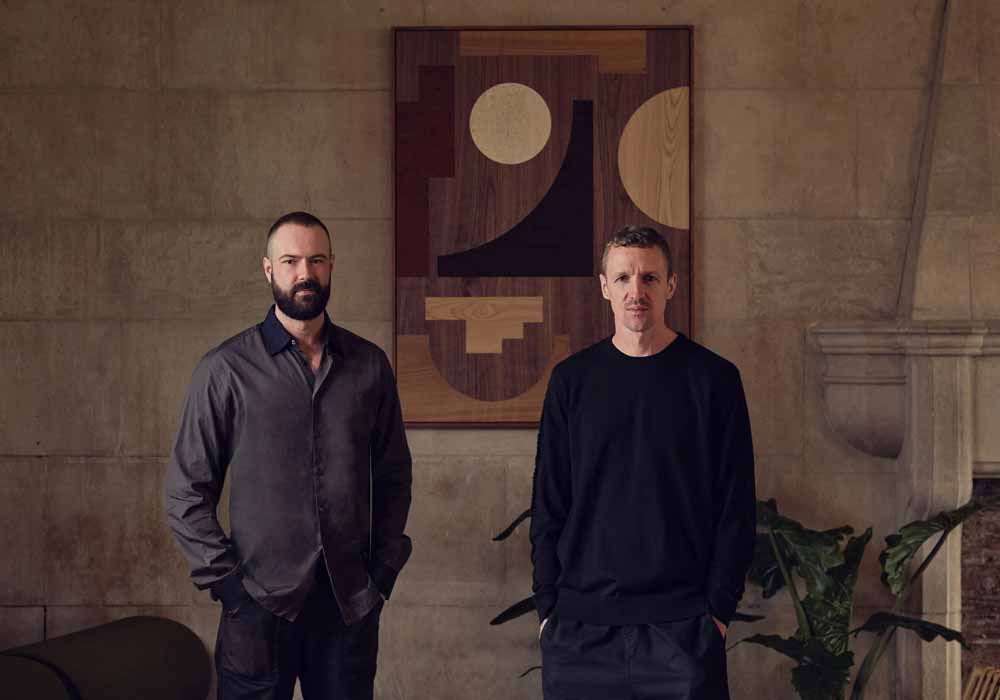
Sense of craft: In conversation with A-nrd Studio
As many of our readers will attest, putting together a design scheme is no small feat –juggling a sea of parts to be managed, sourced and amended. Add to this designing and commissioning bespoke furniture and lighting from scratch, and you require a very special type of person. A-nrd’s Alessio Nardi and Lukas Persakovas are two such types. Studying product and industrial design in Italy and London, Nardi spent his formative years working in product design and installation, joining Lee Broom where his appreciation of interior design and craft began to evolve. Persakovas had a similar start, born to creative parents in Lithuania, with education in industrial design, also shifting from product to spatial design. Meeting at Uxus and working together on large scale retail and hospitality projects such as Bloomingdales and Tate Modern’s retail store, Nardi launched A-nrd in 2015 and invited Persakovas to join as creative partner three years later.
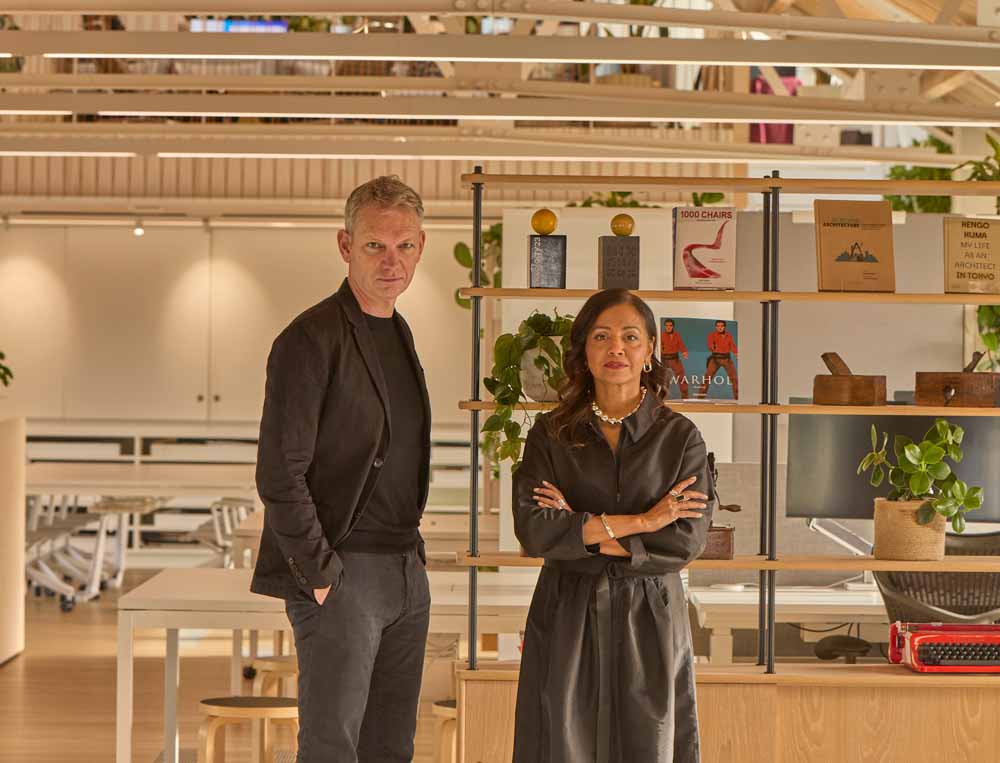
A human touch: In conversation with IA Interior Architects
With managing director Tim Hardingham and design director Prabha Jackson, we gathered in the ‘Shed’, a wooden meeting room at IA Interior Architects‘ London studio in the heart of Clerkenwell, a space designed to entice the IA team back to collaborate together in person post-COVID. For Jackson, a first-generation Brit, design was an unusual industry to get into when she started 25 years ago. “I was breaking new ground in terms of the work areas that [people with an Asian background] were going into, exploring something different,” she says. “I still feel like there isn’t enough minority representation in workplace design and construction.” It’s this diversity Jackson and Hardingham are keen to foster as leaders of IA Interior Architect’s London outpost, now 28-strong. “That’s one thing we really celebrate about our studio, the diversity: people, age ranges and demographics, from Europe to North America. I like to think that there’s somebody represented from all around the world.”