The Spoken Word
M Moser’s Steve Gale says writing is redundant. We’re not sure if that is good or bad news for our editorial team!
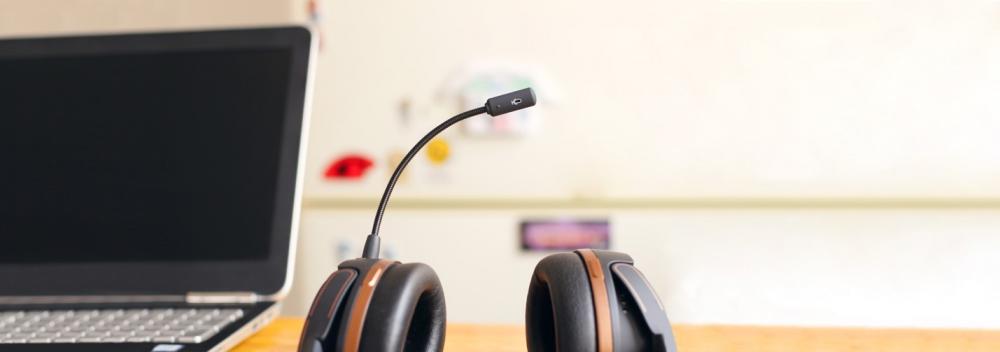
We are all slaves to our keyboards, but maybe not for much longer. What will this mean to the places in which we work?
I am sitting in the garden (it’s a bank holiday Monday) recording these words on my QWERTY keyboard like almost every English speaker who wants to compile anything legible. But there is another way. By speaking to my laptop, I can successfully write and edit anything I want with a basic speech recognition app. This miracle would have remained undiscovered had I not broken my arm three years ago.
I used to think that language was both the written and the spoken word, but linguists put me straight – language is actually speech, text is just a proxy. It is a brilliant artifice which can freeze speech for later reference.
We love our texting devices and the demand is not going away. The convenience of near time (not real time) conversation is invaluable in emails, messages and chat rooms. Text is the quintessential medium when you are not actually speaking to another person. Being able to read will always be a core skill, but the need to actually write words will diminish to almost zero.
The implication of voice recognition is being felt everywhere because of the processing speed and power that we all have access to, combined with apps that use machine learning and are beginning to look like artificial intelligence.
What if you never had to touch a keyboard in order to write? Would you bother to learn to transcribe your thoughts on a lettering machine devised more than 150 years ago? There has been a two-generation evolution from handwriting to keyboard typing, and the next stage is the transition to voice transcription. They will use voice only – with the lecturer, interviewee, and themselves directly transcribed as they speak, like the TV news subtitles that appear as a real-time ticker-tape. Anyone can do it without tuition – and it’s faster. These things evolve quickly.
This is not new stuff. To quote William Gibson, ‘The future is already here, it is just unevenly distributed’. The Blade Runner scene where Harrison Ford used his voice to control his computer is no longer science fiction.
The need to actually write words will diminish to zero.
People respond to texts with voice recognition as they drive their car. Hours of unproductive time in check-in queues, cars, trains and planes are being put to use. Complex PC applications can find instructions and routines with a simple voice request. Video conferencing can be configured by stating your name. Lifts, air-conditioning and window blinds can be controlled without fiddling with menus or dials. So what does this mean to the workplace?
With my broken arm in plaster, I stayed at home for a week or two to avoid disturbing colleagues while I spoke to my laptop. If keyboards and physical controls disappear, the noise disruption will go up a notch, and the open plan office will need to adapt. People will not tolerate more disturbance. Quiet working is already the single biggest challenge in the modern workplace.
There are ways around this problem. Call centres already routinely use headsets to control the din of mass communication, and many office workers regularly wear headphones to control outside noise. But more interesting is the possibility for the convention of separate rooms for meetings and conversations to be reversed.
How about reserving insulated spaces for production and remote communication, while the open space becomes an agora for general conversations and spontaneous interactions? The sort of noise that distracts open plan workers could then be the healthy sound of knowledge exchange, the normal buzz of the office, while speaking to devices (no longer laptops), and phones is off to one side, or regulated by noise cancelling headsets. This might place centre stage the innovative interactivity that many businesses crave, with recording and editing done elsewhere, even off-site, and keyboard free.
The power of speech is back on top. Ever since Hal, the super-computer in the film 2001, answered back, the real possibilities have slowly surfaced. Alexa, Siri and Cortana are only the beginning. Shakespeare works on the radio, but try turning the sound off in the film version of MacBeth – all meaning evaporates. To welcome speech back into the world of work we will need to accommodate the death of the keyboard, dials and remote controls.