
Interspecies design: creating spaces for people, and beyond
Should we be taking an interspecies design approach, building public and commercial environments fit for more than humans?
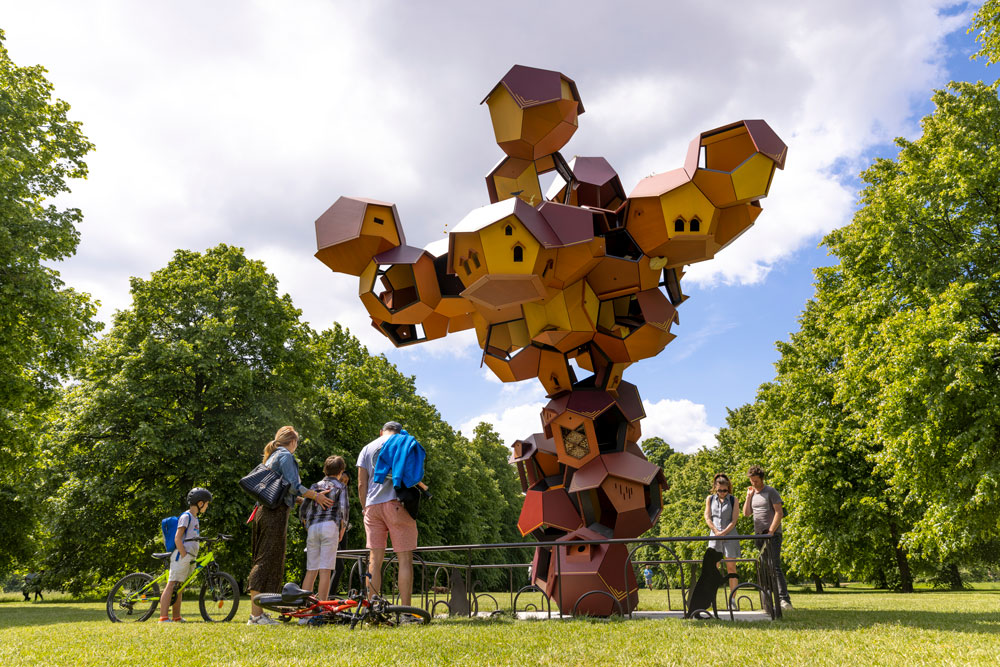 Tomás Saraceno's Web(s) of Life exhibition at Serpentine gallery
This article first appeared in Mix Interiors #228
Words: Rima Sabina Aouf
Last summer, London’s Serpentine Galleries ran a landmark experiment. It turned off its air conditioning for the comfort of spiders. It used only the intermittent energy from solar panels for energy, so as to avoid the habitat destruction in parts of the world where lithium is mined to make batteries for energy storage. And it turned one of its galleries into an indoor-outdoor space, opening up one wall of French doors to Hyde Park beyond, while installing sculptures made especially to invite birds, squirrels, insects, dogs and other non-human visitors inside.
These changes were part of an exhibition by environmentally focused artist Tomás Saraceno titled Web(s) of Life, and they marked the first time that a cultural institution has altered its interior environment explicitly using a new approach, coming to be known as interspecies design.
Log in to Mix to view this content
To access this content please sign up or login to your account.