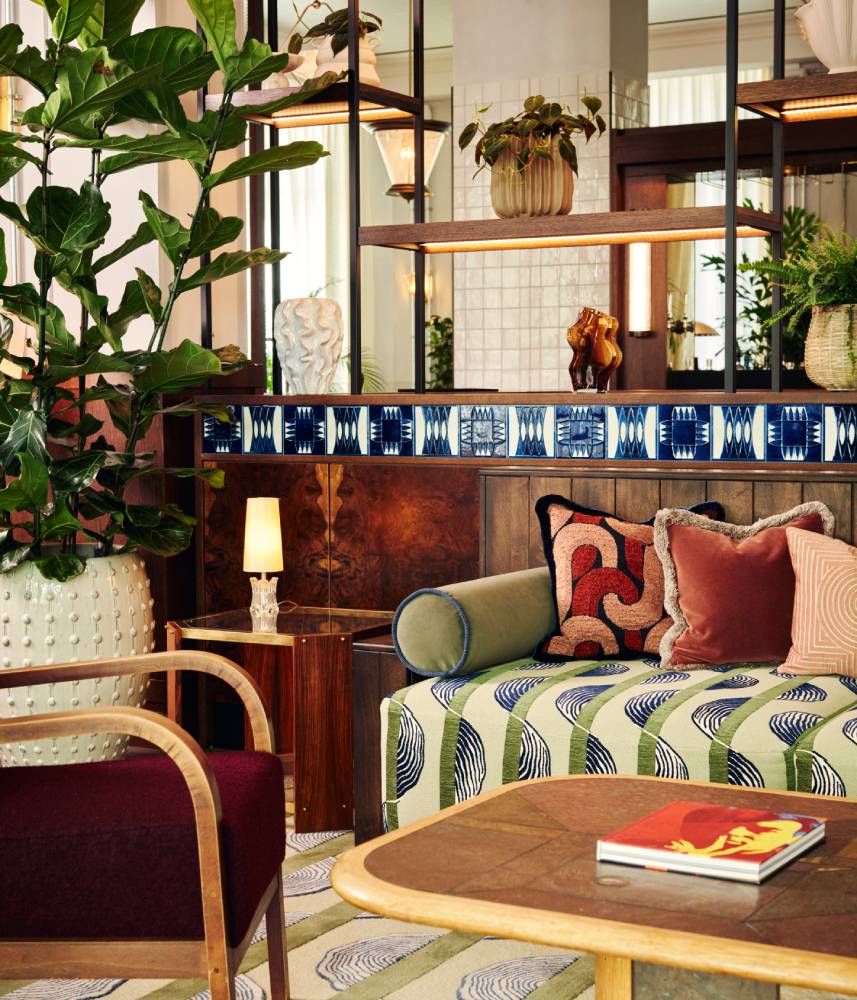
In conversation with: Sheila Bird Studio
Mix meets Sheila Bird Studio’s Atul Bansal and Jon Humphreys, to chat about their philosophy, projects and designing spaces with soul.
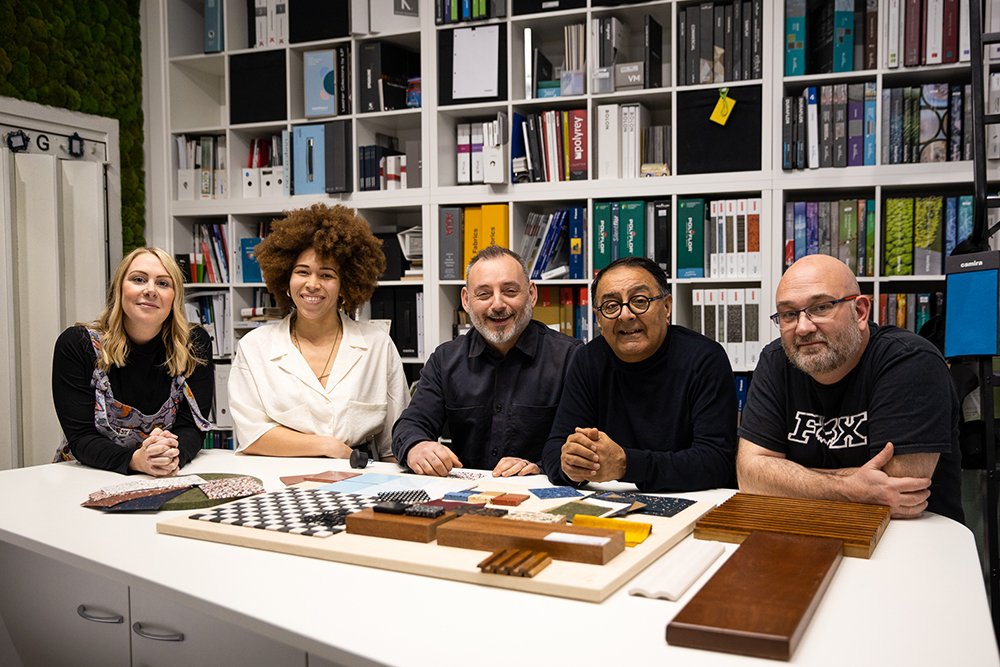
Sheila Bird Studio is a design practice working where architecture, interiors, brand storytelling and space activation meet. It designs places that energise; instilling a sense of ownership so that strong communities can form. Its team see themselves as facilitators: guides on a design journey of discovery for clients tired of beige walls and rows of desks.
Atul sets the scene: “No is not a word we use. Everything is possible. Don’t think of the reasons why you can’t do something, think of the big idea.”
“Our philosophy is quite different to other designers, in terms of how we think about projects,” says Jon. “It anticipates change. Most interior designers are given a box to decorate, but hardly any of our jobs are like that.”
“Nine times out of ten, our clients don’t know what they want,” adds Atul. “So, they ask us because they think we know. And we do know, because they want to tell a story. We don’t design offices, we design spaces that people inhabit. We’re doing parts of the story that perhaps interior designers never did before. We always used to sit in the middle of a big sandwich, of developer and architect, who decided what they wanted to do and then asked us to help with interiors. At the end, they’d go to some branding company who created a brochure, website and launched it. We don’t sit in the middle anymore. We do the branding before we do anything on site. As a result, the purpose of what we’re trying to create is not dictated by something that otherwise comes at the end.”
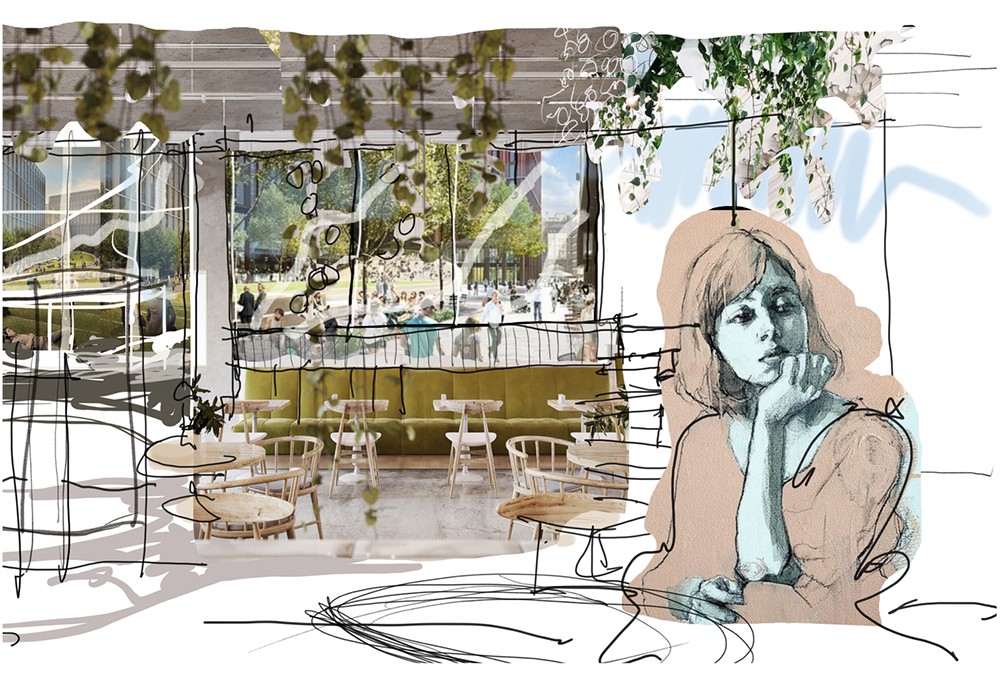
In its own collateral the studio describes its work as: ‘Spotting market opportunities for community building and putting together teams of collaborators to harness those opportunities.’ A process it neatly terms, ‘joining the dots.’
The pandemic hasn’t changed the studio’s thinking, but now the doors that they’ve always tried to open are much easier to push. “What we’re experiencing now is builders and developers saying, ‘Well, I’ve got no idea what I’m building anymore. I don’t know what I’m providing to the market’,” says Atul. “They’re asking us to get involved in that conversation before they decide what it is. That’s a big change for us. It’s really exciting because we’re not trying to unpick something that’s awful. Now buildings are getting designed with a purpose and personality from the outset.”
“Previously it was stack ‘em high and stack as many people in and it just doesn’t work anymore,” says Jon. “People are starting to be more vocal about it, expressing that they don’t want to be in a certain kind of space anymore; that they want something different. That creates a much more public dialogue about what people actually want.”
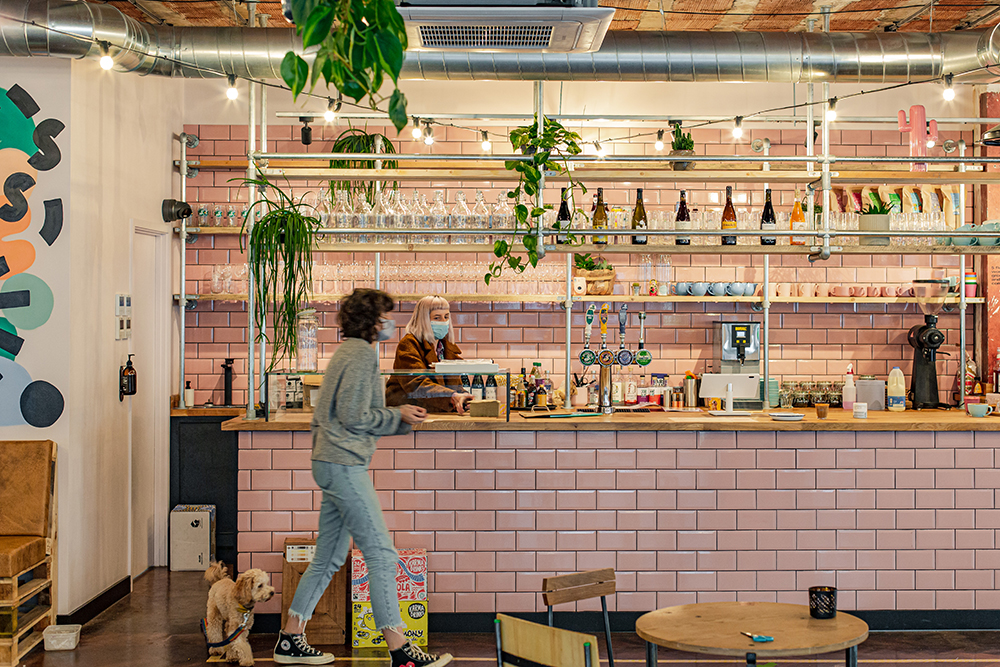
“Take a reception: something that’s traditionally designed to stop people coming into a building,” continues Atul. “We’re doing work where the ground floor says, ‘welcome, come on in’.”
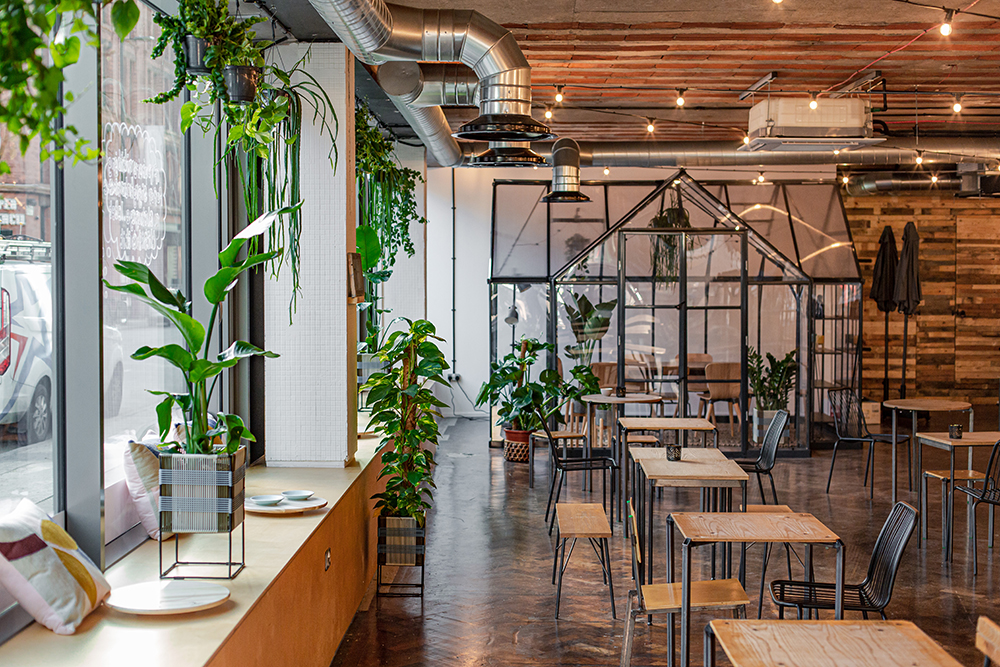
This philosophy can be found at Hilton House, Manchester, where Sheila Bird was instrumental in giving the once drab brutalist building a new identity and purpose. Designed and built by architect Richard Seifeit, the building had remained untouched since its construction in the 1960s. Now refreshed by Buttress Architects and Sheila Bird Studio as a creative beacon in the city’s trendy Northern Quarter, the ground floor is home to coffeehouse-cum-event-space-cum-wellbeing-hub, Feel Good Club, recently awarded Manchester’s Small Business of the Year at the Greater Manchester Business Awards.
“Where I think we excel is finding somebody who has a dream and a passion, and that’s how we brought in Feel Good Club to Hilton House,” says Atul. “They had a brand already, but they didn’t really have the financial muscle to do it the way they wanted to. So, we joined the dots and that’s what has activated that building and made it special. That’s what interior design is about. Not carpet or picking a colour for the wall, it’s about real people.”
The studio has described its work at Hilton House as Kintsugi – the Japanese art of repairing broken pottery with lacquer and powdered precious metals, treating the damage as part of the object’s history rather than something to disguise.
“I’m going to be really honest here, we didn’t tell our client what we were going to do straightaway. We did it in stages over a period, to allow the client to become intrigued with the process and concept,” explains Atul.
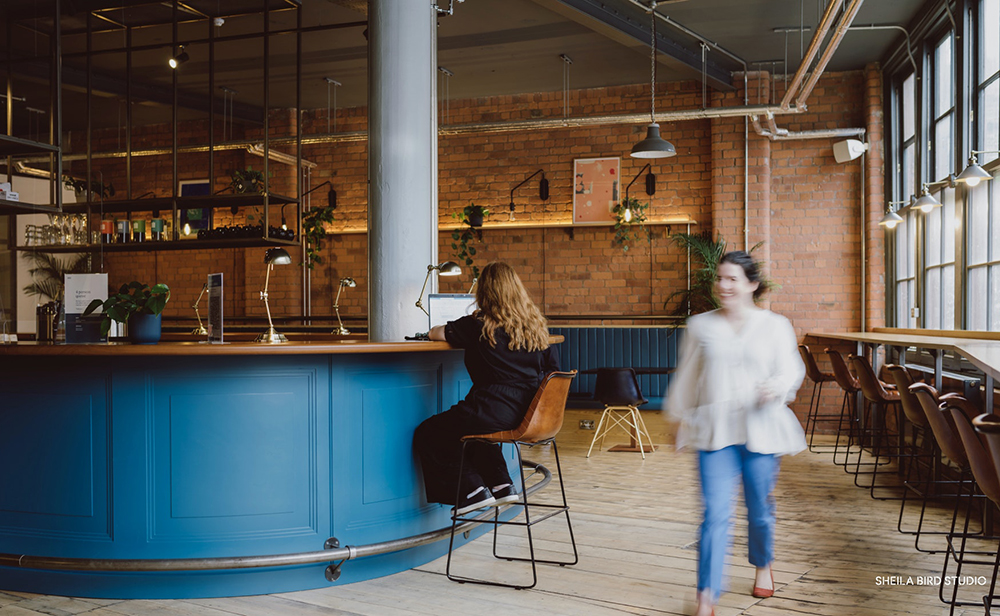
Placemaking is an important part of the studio’s work and the community-enriching space at Hilton House doesn’t stand alone. Acting as creative leads overseeing the development of a six-storey Grade II listed Manchester textile building into office space, Jon and Atul saw an opportunity to create something different in the market. Recognising that an increasing number of ambitious, imaginative companies couldn’t find ‘honest’ spaces that they could feel at home in, Sheila Bird focused its attention on creating an environment where a new community could grow. Its design saw a careful peeling back of the layers of inappropriate development accumulated over the years and proudly displayed the authentic features and materiality that had been hidden for decades. The studio was also instrumental in co-founding a brand-new coworking business, SEE-SAW, to run the communal amenities it had created.
“Our philosophy has always taken the view that people and activity ‘finish’ spaces and if they are over-designed or sanitised, it can become difficult to foster ownership and develop strong cultures. The space plants the seeds for the culture to grow.”
Recent projects with two fast-growing tech companies showcase culture-building and a design agility that underlines the Sheila Bird manifesto. Brought in to design an environment fit for the ambitious growth of cyber security experts Portswigger, the studio harnessed a unique ‘pattern language’, creating a people-first design strategy that focused on the needs of its teams, that could evolve as they grow. These team spaces were designed as nodes, integrated with communal breakout spaces and amenities, including a fully functioning restaurant and gym.
“We listened to the client and how they liked to work – separated into smaller rooms with individual desks and a collaborative space in the middle,’ explains Jon. ‘It reminded me of a story I read years ago about a community in America called the Hutterites. As the population grows, they build another village down the road. They’ve been around for so long because they’ve got their own mechanism for evolution. It’s a sustainable model because they replicate the small, tight-knit communities. That’s what we’re finding with a lot of tech businesses – they have to maintain a certain DNA, but also have a way of enabling them to grow quickly and consistently. Once a team grows to eight, they create another team.”
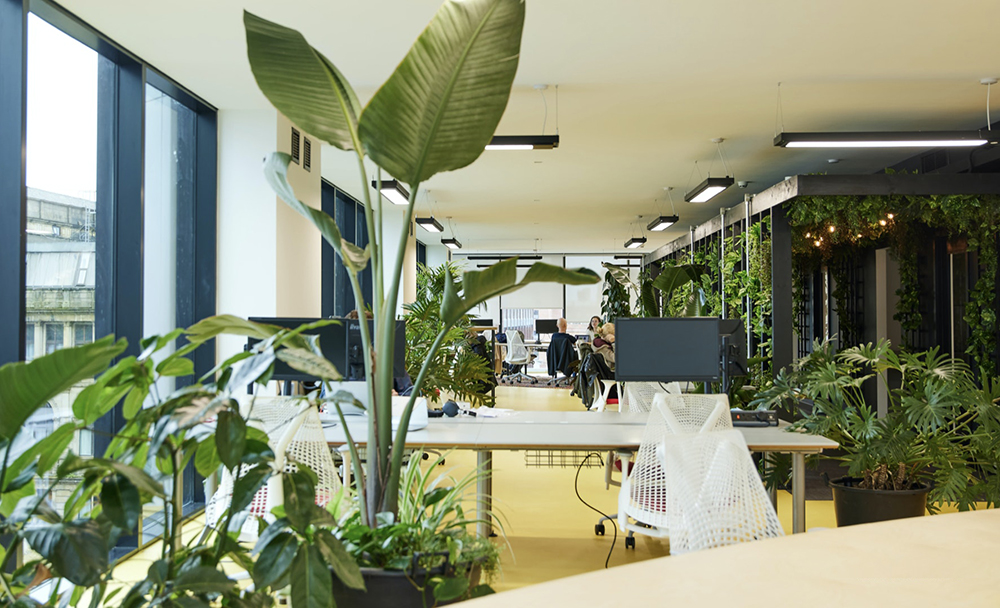
Not only does this approach give the teams a focused and ownable area of their own to operate in, but the spaces between each cell are also the glue for cross-team collaboration. A vibrant colour scheme of zesty yellow and green is designed to bring the outdoors in and create bright pops of colour within the darker spaces deeper in the floorplate. The design strikes a careful balance between open, semi-enclosed and private environments, connected by communal areas and circulation routes around the perimeter of lush, open countryside.
“Luckily we have amazing clients that told us: ‘just go and do what you think is right’. It doesn’t matter if it doesn’t all work because we’re breaking new ground,” Atul says. ‘If you don’t get some of it right, don’t worry, we’ll fix it in phase two’.”
This responsive approach to design has ensured repeat business from loyal clients. In 2016 the studio collaborated with AI experts Peak, to design a workplace that would help break down traditional silos in the business. Following substantial investment and a headcount that has since more than doubled, Sheila Bird was asked back to design a series of flexible spaces that could help strengthen Peak’s brand, culture, staff wellbeing and create a sense of belonging as it continues its growth journey. This involved a transformation of the company’s current space and the addition of a new floor in the building.
“The [2016 design] was revolutionary for Peak and was about breaking the team away from previous habits,’ says Atul. ‘Now they’re growing and need more space, If you’d told them in 2016 what we were going to do in 2021 they would have said no, but because we had that intermediate stage, they were that much braver.
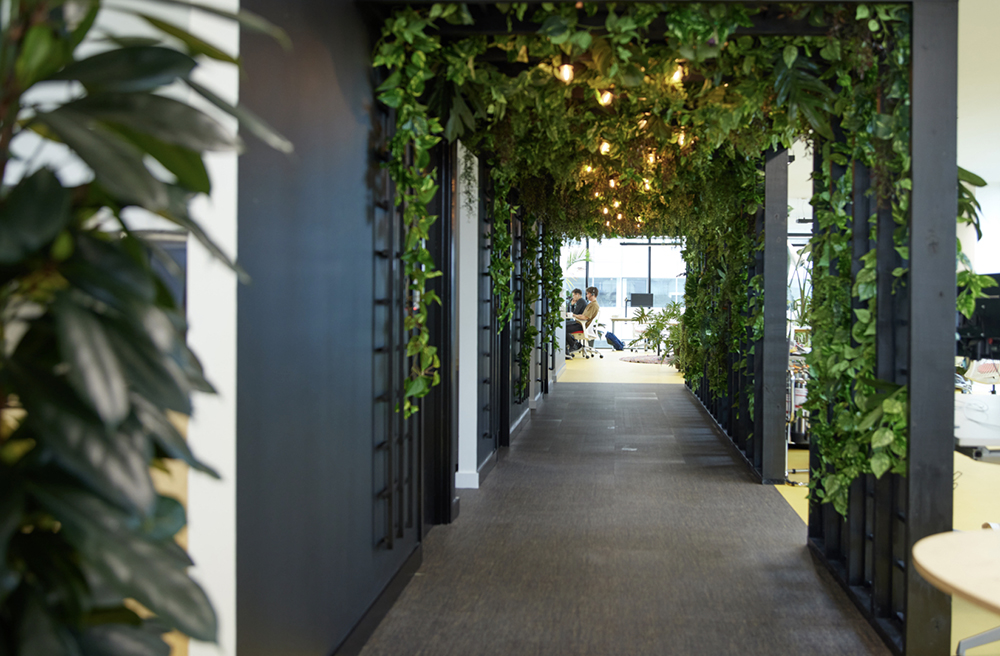
“We developed the concept of the Sky Garden and the Clubhouse, each with a distinct purpose. One floor being dedicated to focused teamwork (Sky Garden) and the other (Clubhouse) to communal functions, meetings and team collaboration.”
The driving force behind the Sky Garden was to make the space as verdant as possible. Both floors are open plan and blessed with uninterrupted 360-degree views from floor to ceiling, so extensive planting helps form soft barriers, natural enclosures and enhance staff wellbeing. The planters are also on wheels, giving employees the freedom to create their own working spaces.
“I’d actually like to make them radio controlled so you can move them remotely,’ Atul muses. “Maybe that’s stage four.”
“What I find absolutely fascinating, is the meaning of life,” says Jon at the end of our time together. “I don’t mean that in a mystical kind of way, but in the way we talk about the life and soul of buildings. What does that actually mean? Life is something that has the ability to reproduce, evolve and grow, it’s not static. I think, in the future, that’s what designers will be there for: not to impose their view on the world, but to question how we use design to manage spaces sustainably over a period of time.”