Improving workplaces with sensor technology
Nathan Lonsdale, Co-Founder of Spacelab, discusses their journey to improve workplaces with sensor technology.
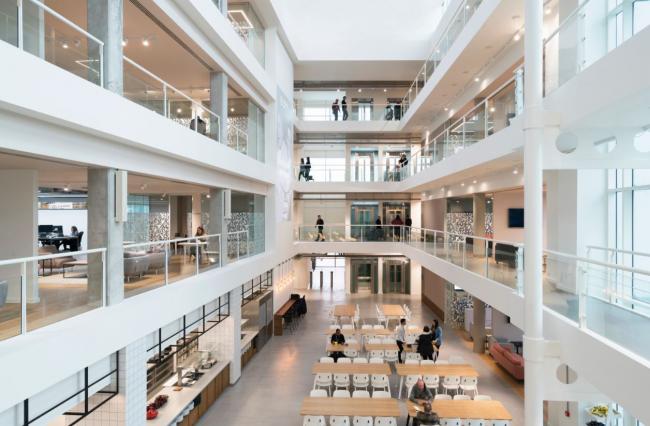 Asos Contact Centre, Spacelab
Imagine a self-regulating space that is kind to the environment and harmoniously connected with nature. Where the architecture has been conceived, designed and created from the inside out. An agile, healthy and sustainable space where everything has been designed around you, so you can be brilliant and get on with what you do best. A utopian dream? Not at all – and certainly not in the mind of Spacelab’s , Nathan Lonsdale.
This is the future – and we are working to make it a reality. We founded Spacelab, back in 2002, with a belief that great design can make a real difference to people’s lives. Despite what most people in the industry believed, for us, people have always mattered more than architecture and design aesthetics. More than the colour of a wall or carpet tile. More than generating big profits. Don’t get us wrong, all of these things do still matter, to varying degrees. But, more importantly, we believe we have a collective responsibility to put people first in order to make a positive impact on the world. And this belief runs true through everything we touch, make and do.
From the start, we realised that to create spaces that put people at the heart of everything, we must first truly understand the people who use a space, and what they need from it. So, we started to gather data to inform us exactly how our clients behave and work, both organisationally and spatially, to develop and deliver human-centred design solutions that really function for the long-term. After all, no two businesses are the same, and so no two spaces should be either.
But we never settled for the approach that we had, and as the world started to evolve into a more technological place, so did we. We continued our research partnership with the Bartlett School of Architecture at UCL, and hired an in-house tech team. We embraced Virtual Reality, changing the way we design, developing a more integrated and iterative approach.
As we progressed, we could see it wasn’t just about delivering great spaces for organisations and the people within them. As businesses grow and evolve over time, their space needs to also. Whether that’s over 10 years, or on a day-by-day basis – spaces need to adapt. Our clients need to know how to manage their space in a sustainable manner, for the long term. We started thinking: how can we use technology to guide them through this and help automate the process?
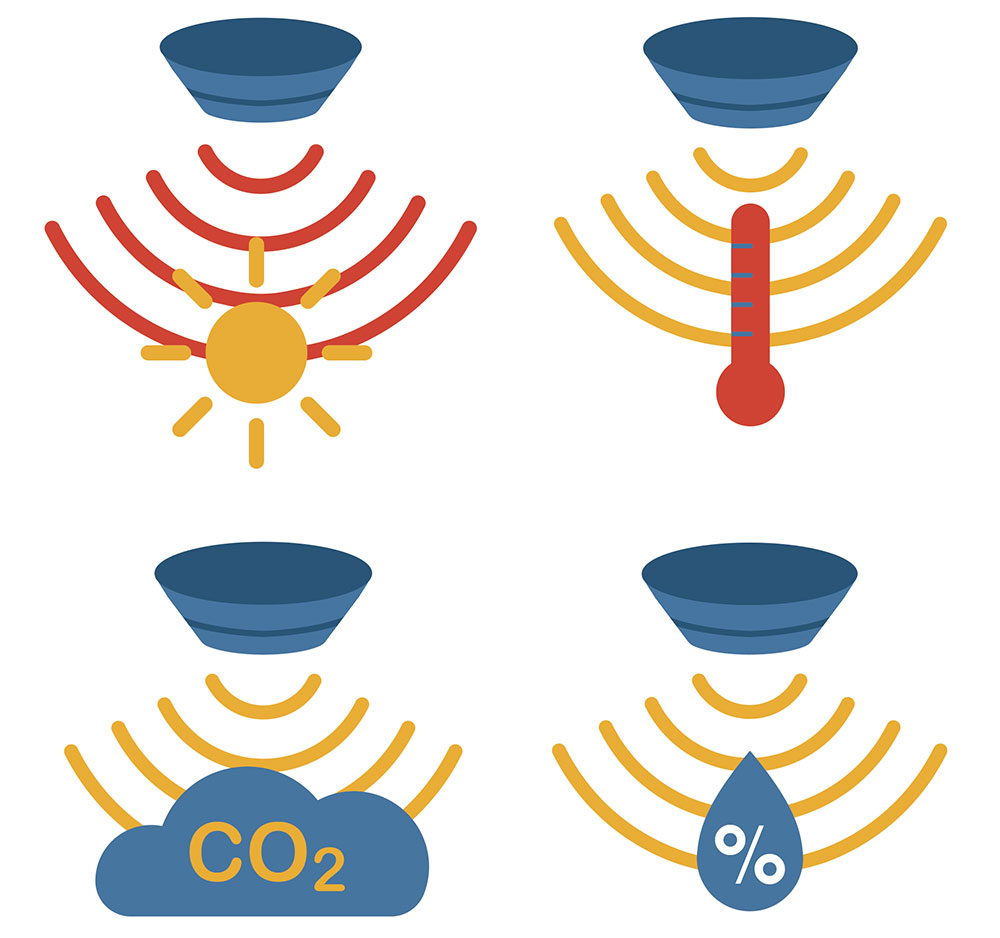
It was around this time that the first sensors started to be used in the built environment, mainly to help control lighting and temperature levels. So, we thought, if sensors can be used to detect and automate these things, then surely we can use them to help clients to measure and automate how spaces physically adapt over time to suit their needs? We realised the huge untapped potential that this technology could have in design and for workplaces, if we continued to push and develop it further. This is where our story about developing our own sensors begins.
As we progressed, it was clear that there was no single technology that was going to achieve all three objectives.
We knew that our solution needed to acknowledge and fully optimise the power that space has for people, organisations and the environment. And we held three key objectives in mind, essential for making space great:
Agility: Great space should be agile and continually adapting to an organisation and its people, as it grows and evolves.
People: Great space should keep people healthy and productive by continually monitoring the quality of its environment.
Sustainability: Great space acknowledges the fact that buildings account for 30% of CO2 emissions and should be run as efficiently as possible.
As we progressed, it was clear that there was no single technology that was going to achieve all three objectives. It was also clear that achieving these objectives would require more than just technology alone. We started building a platform, the foundation of which would integrate ‘best in class’ sensor technologies, our deep understanding of space, and the latest research on workplace culture and agile working. We’re still on the journey. But we are now trialling the first iteration of our sensors and, so far, the response from our clients has been exceptionally positive. We’re now integrating sensors and software into the fabric of our research and design process. Our long-term ambition is to build our technology not only into the new spaces we design, but to retrofit existing urban infrastructure, whatever the function – be it workplaces or residential. We believe everyone should work and live in space that is agile, healthy and sustainable.
It’s been a long process. You could say it’s been 17 years in the making. But we’ve now started to create a solution that truly works, and that, we believe, is going to completely change how organisations operate and use space as their business grows and evolves over time.