How Build-to-Rent offers a template for the way ahead
Chapman Taylor’s Residential Director, Michael Swiszczowski believes that BTR is ideally placed to provide solutions for the challenges thrown up by the recent pandemic.
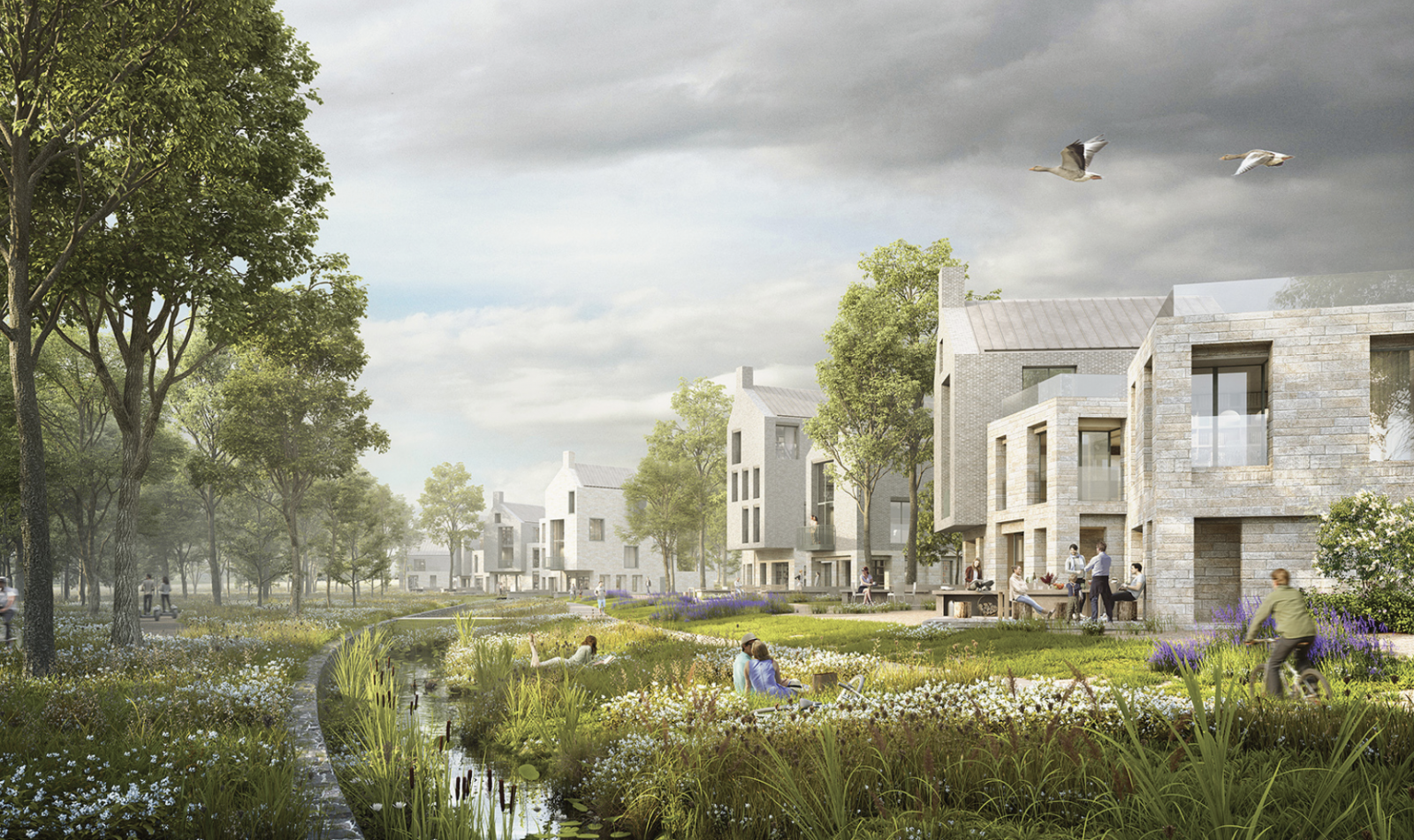 Suburban BTR concept, Chapman Taylor
The COVID-19 pandemic and lockdown has changed perceptions of the nature of work for many, with more people working from home on a long-term or permanent basis. The sudden growth of remote working has required developers and designers to think again about the spaces we create, as demand grows for homes equipped to facilitate the phenomenon. Chapman Taylor Residential Director, Michael Swiszczowski, looks at how the Build-to-Rent format is already well placed to deal with some of the key issues raised by the pandemic, both short- and long-term.
In addition, there is increasing interest in how residential design can improve in terms of health security, decreasing the risk of infections being transmitted from person to person, whether this be COVID or any other pathogen. Related to that, questions are being asked about how suitable our residences are for lockdown or quarantine-type situations – particularly when we consider that many people endured the 2020 lockdown in small apartments without outdoor spaces or suitable areas in which to work.
We believe that one residential format – Build-to-Rent – is ideally placed to provide solutions for the challenges thrown up by the recent pandemic.
The concept behind Build-to-Rent and the requirements of COVID compliance seem on the surface to be contradictory. Build-to-Rent is all about customer engagement, bringing people together, drawing them out of their apartments and breaking down the barriers between landlord and resident, whereas COVID compliance requires barriers to go up.
However, this is not the case – on the contrary. The Build-to-Rent format can provide a great service during times such as the current pandemic precisely because those barriers are going up. The core ethos of Build-to-Rent is about encouraging a sense of community (both digital and physical) and a culture of service – these are vital components at a time when people need to help and look out for each other more than ever.
Here, we look at how Build-to-Rent developments can help their residents to adapt to working from home, lockdown or quarantine situations.
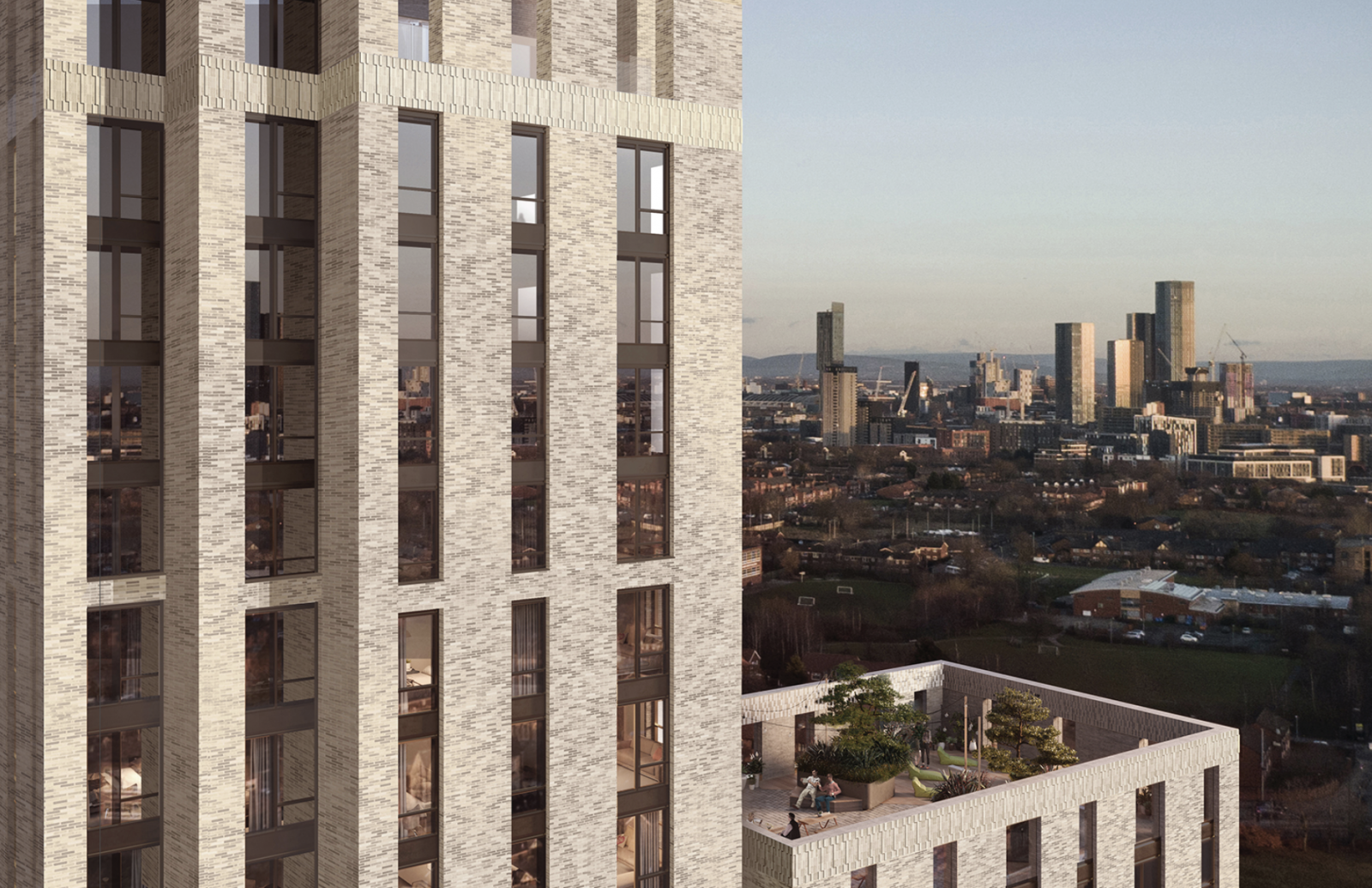 Anchorage Gateway
A home office space and capability is now a crucial consideration for many people when looking for somewhere to live – working from bedrooms or using ironing boards as desks is not sustainable in the long-term. The challenge for designers and developers is to create suitable home working environments without having much, if any, extra floorspace to play with.
One answer is to provide flexible, easily adapted spaces and furniture. The use of open plan interiors allows people to adapt the spaces in which they live in a way that suits their specific needs. A designated space could be designed to adapt for different uses at different times, using, for example, foldable, built-in desks and chairs which can be simply be ‘put away’ when not in use.
Another approach is to rethink how space is used more generally. At our Flax PlaceBuild-to-Rent development in Leeds, for example, one of the key features will be that residents will be able to easily adapt space to use for remote working if they need it. The apartments offer bedrooms with walk-in wardrobes, one half of which is configured so that it can remain as wardrobe space, be used for storage or can be a generous office desk space, well-lit and served by electrical sockets.
We believe that it is psychologically important to disconnect from work in the evening and, where apartment space is used for remote working, a partition to visually close off the space can be a useful means of marking the transition from workspace to rest/sleep space.
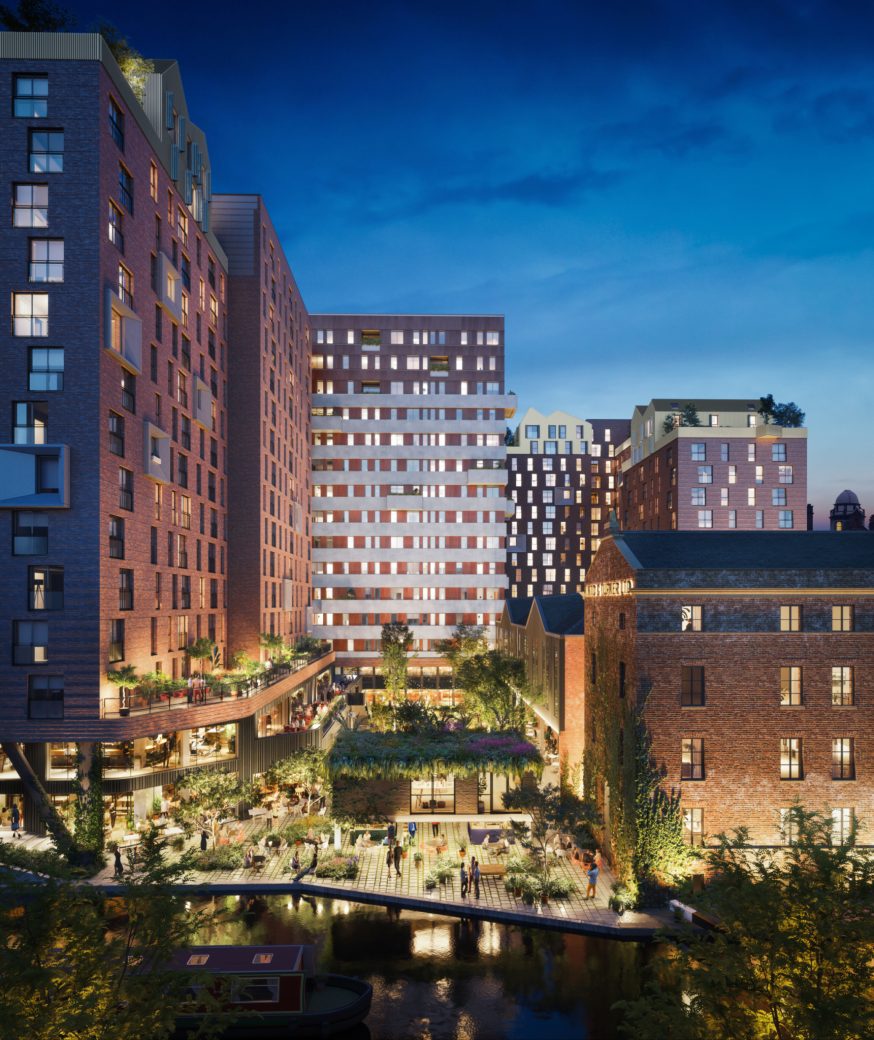 Kampus BTR scheme, Chapman Taylor
Obviously, a prerequisite for successful remote working is excellent digital connectivity, which requires design that facilitates uninterrupted WiFi signal, good mobile phone signal and well placed electrical sockets, often with USB charging. Providing more sockets adds to the capital cost of the development, but we believe that is well worth it because of the flexibility it gives users in terms of when and how they work – an important consideration for people in the market for a new home if they work remotely even some of the time.
In Build-to-Rent developments, there is shared amenity space, and the above principles can be extended to those. Why not provide shared workspaces dedicated to remote working? This would combine the advantages of remote working while recreating the communal element of being in an office with colleagues, with whom you can chat and share ideas. Placing coworking spaces within the amenity spaces of Build-to-Rent developments is becoming a popular option among developers in the sector and we are currently considering such an arrangement for our Anchorage Gateway development in Manchester, where we are creating a flexible multipurpose space, which could possibly be used for coworking during the day and then as a residents’ lounge in the evening and at weekends.
As a response to the pandemic, shared amenity spaces can be adapted for the short- to medium-term to enable residents to use them as coworking spaces. For the long term, such coworking offers could become a permanent
feature, possibly operated by external companies in a branded environment, open to the public as well as residents. Such a move could prove mutually beneficial for residents, operators and the wider community, although it would possibly necessitate a different relationship between the development and the street in terms of branding, entrances and the division of public and private space.
 Castle Park View
When people have to isolate at home, whether individually or collectively, several aspects of life we take for granted can become difficult or impossible. Fitness, for example, can be hard to maintain when you are forced to stay at home without access to outdoor spaces or commercial gyms in which to work out.
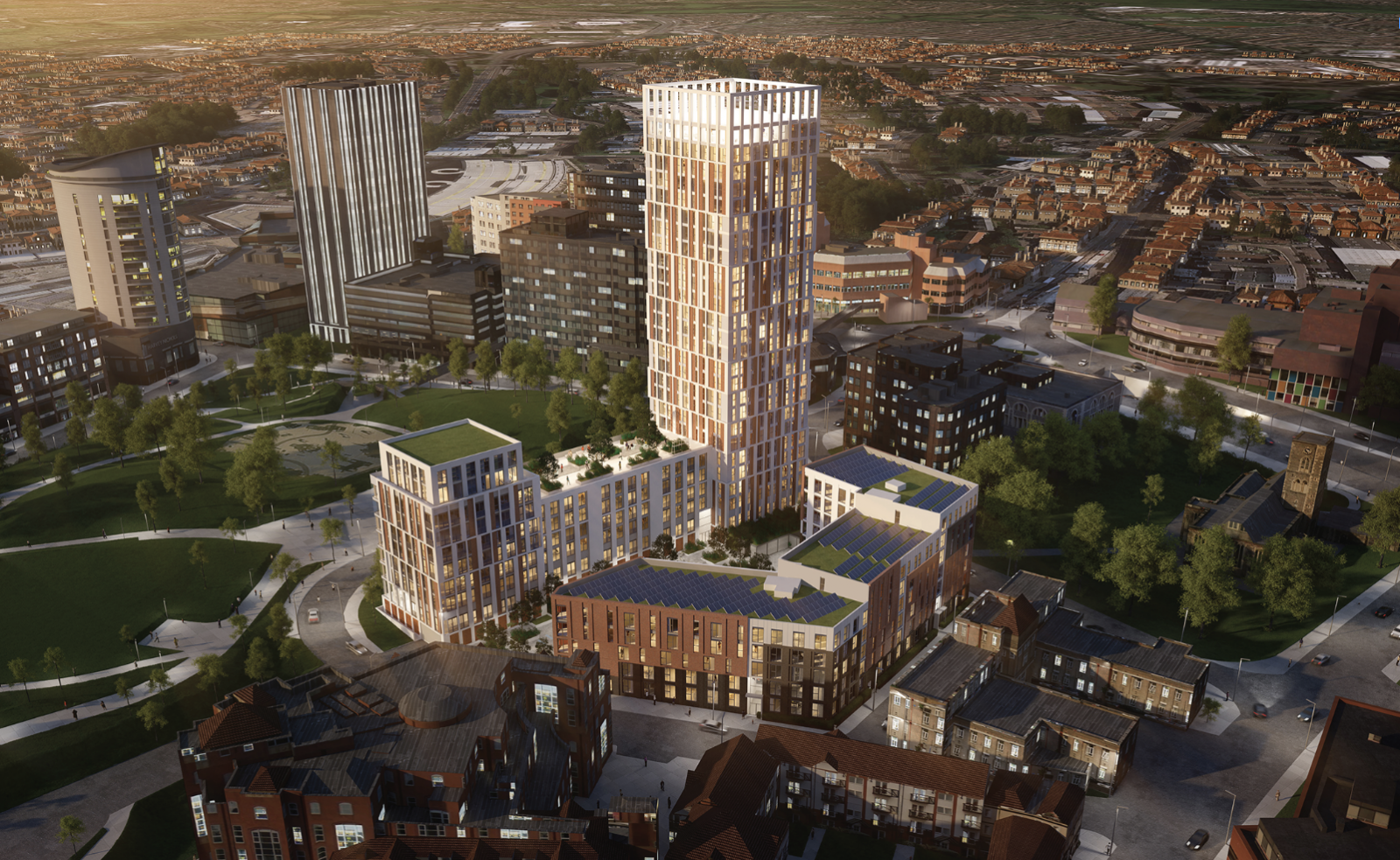
Access to a home gym or a space for exercise can therefore make a crucial difference in such situations. Build-to-Rent developments have a major advantage here because shared amenities, such as gyms, can be accessed and used safely without having to leave the building, so long as rigorous health security protocols are followed. Our design for the much-anticipated Castle Park View residential development in Bristol city centre, which includes a mix of Build-to-Rent and affordable homes, provides just such a gym for residents to share securely.
In any lockdown-type situation, Build-to-Rent operators can be in constant contact with residents to ensure they are able to manage, particularly those who are more vulnerable. They can allocate informal spaces where management can interact with residents, with distancing measures in place when necessary. In this way, an aspect of the Build-to-Rent experience which was initially set up for convenience – the digital and physical interfaces between residents and operators – has taken on a much more important function, providing crucial help, security and peace of mind at a difficult time.
Residents can be made to feel connected with each other and with the management as part of one community ecosystem, with a concierge on hand to assist 24-hours-a-day and the use of residents’ apps becoming a norm for many. Whole buildings, if well designed, can be managed by a skeleton crew of as low as three but, when support is needed, it’s there – for example emptying rubbish for isolating residents or bringing food, shopping and deliveries straight to their apartment doors rather than residents coming to the delivery reception area as they normally would (the latter is a convenient function for residents which means that they are not required to be at home to collect deliveries!)