Five for five: Conran and Partners
We speak to the design and architecture studio’s longstanding principals and new owners, following a recently-completed buy-out.
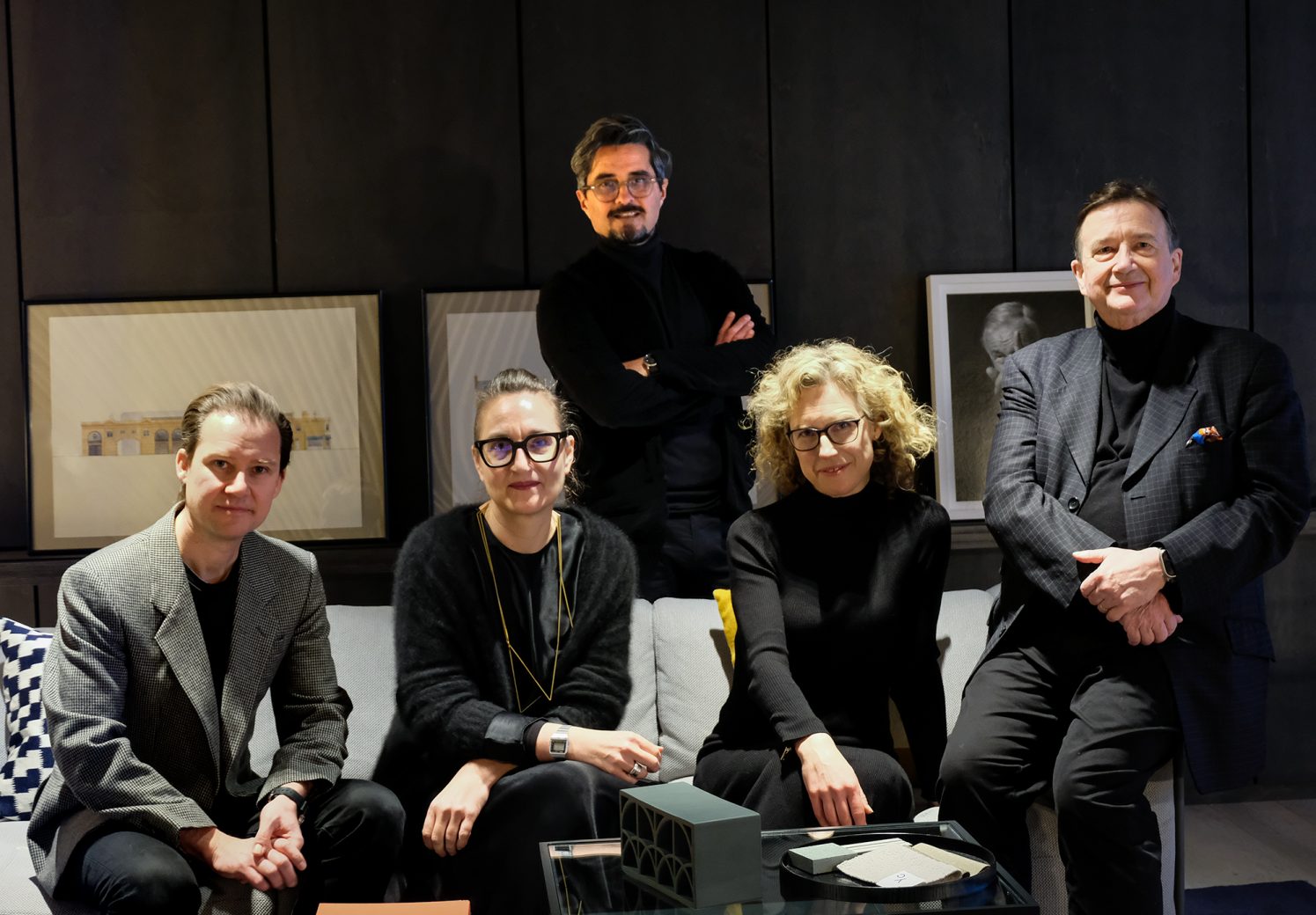 From left: Simon Kincaid, Tina Norden, Tim Bowder-Ridger, Katy Clark, Sebastian Conran
Photography: Taran Wilkhu
Representing a fresh chapter in Conran and Partners’ story, five principals recently completed a management buy-out of the over-four-decades-old, internationally celebrated practice. Founded by Sir Terence Conran, the ownership is now shared between Tina Norden, Simon Kincaid, Sebastian Conran, Katy Clarke and Tim Bowder-Ridger – all of whom have been instrumental in shaping the studio’s success over years of combined service.
With a new ownership team, how will the practice evolve to reflect our changing times?
Tina Norden: Taking over the ownership gives us the opportunity to continue building on our story to date, whilst also having the freedom and nimbleness to adjust and innovate, and to respond to changing times. We have always had a fluidity between the disciplines and will continue to see design as creating spaces and places for people – no matter at what scale. Our work is all about storytelling.
Tim Bowder-Ridger: As architects and designers, we are faced with a world that is changing ever faster, not least as lifestyles are becoming more and more flexible and ‘designing by sector’ is slowly disappearing. But, fundamentally, the collective response to the climate crisis will define our generation. Our focus has always been to avoid waste and our buildings have always quietly responded to very high environmental standards, simply because it was the right thing to do. However, the urgency of the challenge is now not just daunting, but also an exciting opportunity, as solutions become increasingly innovative and central to the essence of contemporary architecture.
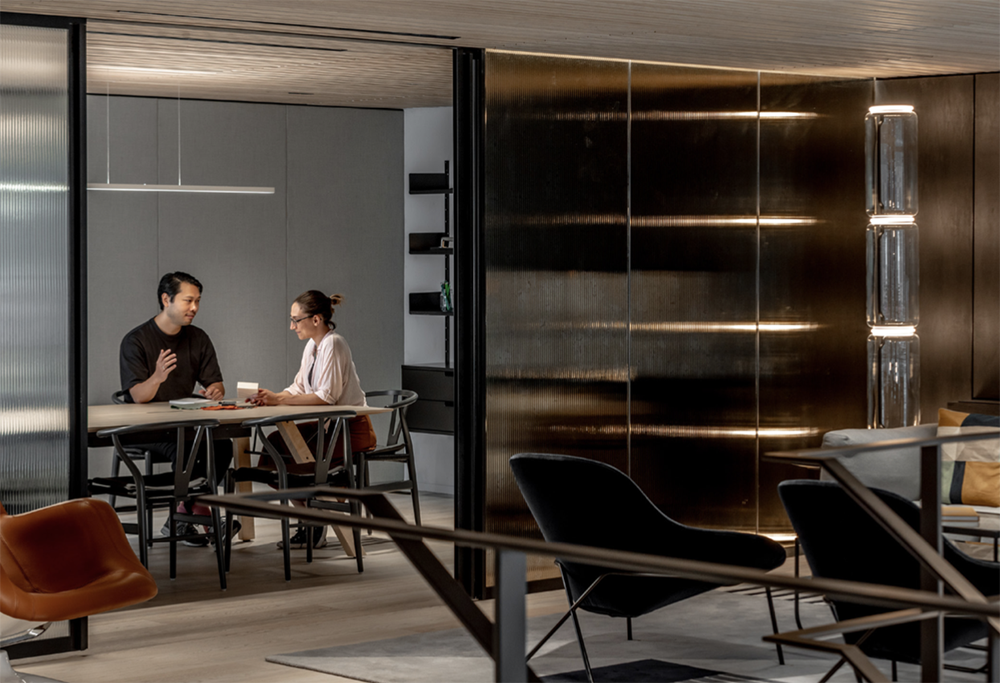 Conran and Partners Office Clerkenwell
Which elements will stay consistent and how will you build on the established Conran and Partners DNA?
Tim Bowder-Ridger: We were always strongly supported by Terence and the Conran family. Terence gave us opportunities not many architects and designers get, so we will always be very grateful to him. We will continue Terence’s legacy of designing complete, blended and desirable experiences that reflect how people now live and want to live. We will continue to design for the user, whether our scope is as architects or urban or interior designers.
Sebastian Conran: Whilst Terence originally established the influential Conran design ethos, for the last 30 years Conran and Partners has been implementing it, keeping it contemporary and relevant to the now and the future, by being enterprising and innovative. Whether it is the sensitive and ingenious rejuvenation of existing heritage buildings, such as Centre Point, or the creation of new spaces, the emphasis is on creating an enjoyable experience in a practical and efficient manner, without losing sight of the human narrative.
We all believe in design over disciplines.
How would you describe your individual perspective and what it brings to the new collective vision for the studio, or its approach?
Sebastian Conran: Although the partners have worked with one another for over 20 years, we are experiencing somewhat of a renaissance at present, not least because of the new challenges bought on by the ever-changing way we live and work. Now we also have the independence to select the work we feel we can be most effective and impactful with.
Tim Bowder-Ridger: As an architect, I’ve often been asked to also undertake the interior design of the building we are designing or repurposing. This has become second nature to us and is a great opportunity too few architects are offered. But as a collective, it enables us to create a complete and coherent narrative across our portfolio, whether designing a neighbourhood or a single room.
Tina Norden: Design for me is always about the user, both front and back of house, creating a journey with a story for each project. Three-dimensionality and a spatial approach always comes first, before we layer in texture and materiality. We all believe in design over disciplines. We had the privilege to work in many countries over the years, including setting up our second home in Hong Kong, which has given us a very wide perspective but also an understanding for individual and cultural sensibilities. We still thrive on this cultural exploration.
In the studio we endeavour to empower, encourage and inspire our talented team to think sideways, mine deep, explore wide and aim beyond.
Simon Kincaid: The rebirth gives us breadth and space. We’re using it to strengthen, enrich and personalise our creative, open and trusted relationships with clients. In the studio we endeavour to empower, encourage and inspire our talented team to think sideways, mine deep, explore wide and aim beyond.
Katy Clarke: Our design team helps make us who we are as a studio and are so vital to our creative success. For me, what’s important is continuing to provide the team with a stable and supportive environment in which they can thrive and grow, and go on to build long-term careers with us.
What are the greatest factors shaping the design landscape today?
Tina Norden: Hospitality has always been at the forefront of exploration in design – for better or worse – due to its more transient and experiential nature. In a way, hospitality has always been about that Instagram moment, long before Instagram even existed. But we are seeing a number of new considerations coming into design that are not just about looks and moments. Sustainability is a huge task for this industry and a challenge when you have many guests with high expectations coming through the doors. It’s exciting to see the developments and ideas coming into the market to make our world a greener place.
Guests expect hospitality spaces to be welcoming and comfortable yet stylish and exciting, and feel of its place. Personality counts and even the large brand names are very much looking for individuality in each hotel – we no longer design for everyone, but target a specific tribe that we can mould a project to. A design with attitude that hits its target audience is much more likely to be appealing to a wider audience than spaces that try to please everyone.
Simon Kincaid: Within commercial spaces we are exploring the duality and synergy of public versus private, social versus focused, corporate versus casual and bold versus calm. We’re also using spatial and experiential design practices to deliver the ability to find peace and focus within active, engaging and stimulating environments. Homeliness, warmth and togetherness are informing interior design choices.
We find that through encouraging great diversity and inclusivity in the team, we can deliver the best possible creative outcomes.
It’s been said that the buy-out represents an opportunity to take the business forward “with clear purpose”. What does that purpose look like?
Tim Bowder-Ridger: Over the last two decades, we were encouraged to spread our wings and the build on the Conran legacy. Now, having practical and emotional ownership of the practice and our work, we are motivated to be even more ambitious in our creativity and expand our ability to design for modern ways of living around the world. Simultaneously, we need to protect our spirit of being a flexible practice, capable of taking on large projects, whilst the partners are still able to stay in contact with the smallest projects that often inform our creative development.
Katy Clarke: As we enter this next exciting chapter, in my role, having the best possible creative team and process is fundamental and we find that through encouraging great diversity and inclusivity in the team, we can deliver the best possible creative outcomes for our clients. Our intension is always to work smart, without losing sight of our narrative and storytelling.