
Fast Forward: Designing with bacteria
As they start to become powerful allies in the field of design, we explore how these microscopic organisms could be the key to a healthier, more sustainable and more beautiful future.
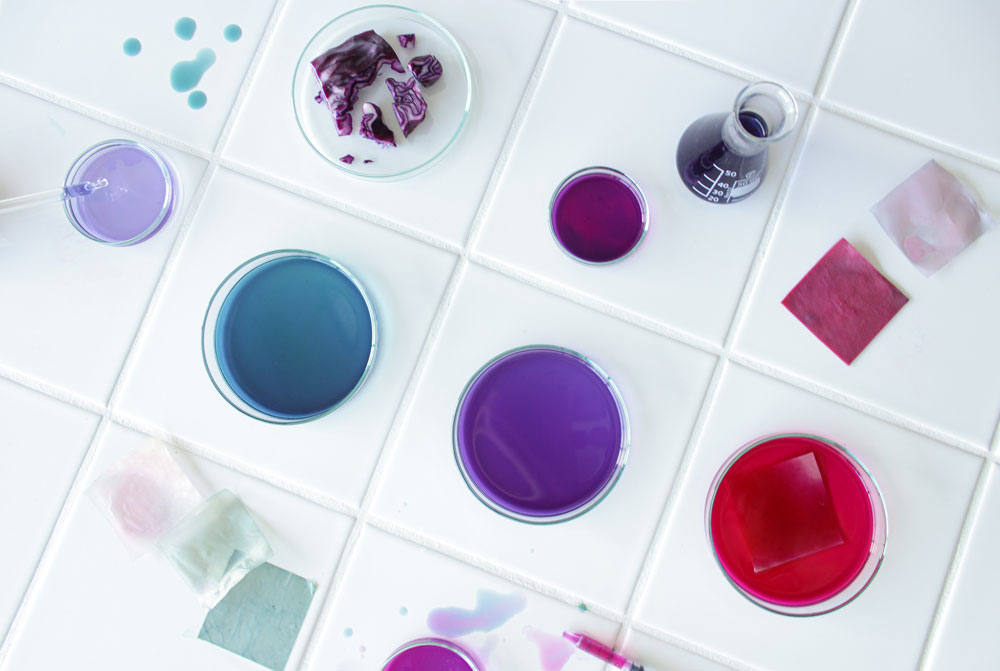 Studio Lionne van Deursen
This article first appeared in Mix Interiors #230
Words: Rima Sabina Aouf
For decades, we spoke mainly of how to eradicate them. Now, we realise that not only are several strains of bacteria beneficial to our health, they’re powerful allies in the field of design. Fabrics dyed with bacteria, leather alternatives grown by bacteria, and ceramics and masonry hardened with bacteria have all emerged from design schools and labs in the last decade and are now starting to enter the supply chain.
The processes used by the makers in this space range from the lo-fi and craft-like to the industrial and scalable — but they’re not altogether unfamiliar. There’s designer Lionne van Deursen, who makes her bacterial cellulose textiles in containers, feeding the microbes sweetened green tea and mindfully watching them grow over weeks in a procedure not unlike making home kombucha. The bacteria produces a type of cellulose as it grows which, when it’s dried, has a similar feel to leather. The products she’s made include a lamp, inspired by the mottled way the translucent material diffuses light.
Log in to Mix to view this content
To access this content please sign up or login to your account.