Coworking Spotlight – Office Space in Town
It is all too easy to get carried away with the juggernaut that is coworking. Although coworking will continue to grab a lot of the headlines, we should forget these alt-multi-occupancy office providers at our peril. We’ve talked to Niki Fuchs, MD & Co-founder of Office Space in Town, a leading ‘MOOP’, about their flex offering.
Today’s generation of workers want variety and flexibility in the places they work, while employers benefit from the ability to easily adjust their space requirements – that’s not just limited to start-ups
What does coworking mean to you?
The demand for coworking is growing and the trend clearly indicates an increasing need for flexibility and ease of collaboration by employees. Put simply, workers like variety in their office space and a choice over how they work. To support this demand, our offices are designed to make accessibility to communal areas as simple as possible.
How has coworking’s shift from incubated work environments for start-ups to flex space for established companies influenced your offering?
It is no surprise that a greater variety of businesses are taking advantage of flexible workspaces. Today’s generation of workers want variety and flexibility in the places they work, while employers benefit from the ability to easily adjust their space requirements – that’s not just limited to start-ups. At OSiT, we work closely with our clients and prospective clients to ensure the space we offer suits their needs – quality and tailored service remains at the heart of our business. Combine this with high-standard and technologically advanced offices, and we can accommodate organisations ranging from SMEs to much larger blue chip organisations.

What is your USP?
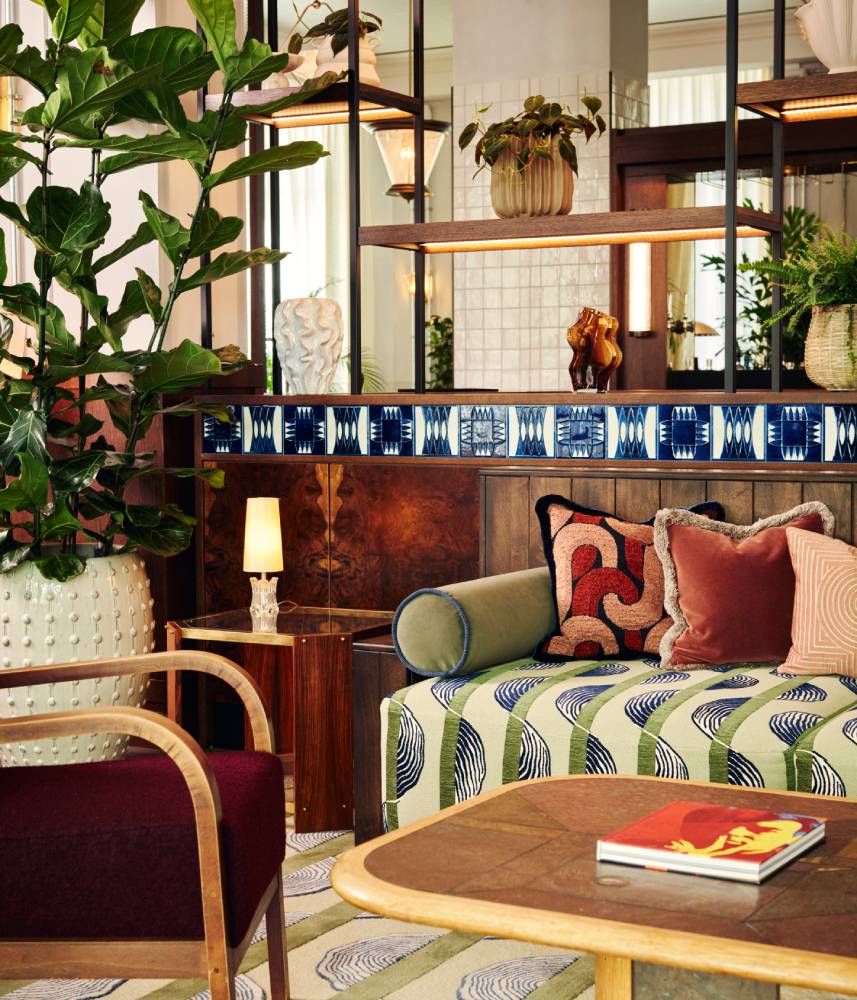
We firmly believe in space as a service, where simply offering a desk and basic facilities just won’t cut it anymore. Today’s workers spend more time in the office than ever before, so our offices blur the lines between work and home life to deliver a rounded offering that meets all the needs of a busy, modern day worker. We provide private desk spaces in an integrated, luxury building, incorporating restaurants, rooftop bars, beauty salons, gyms and even serviced bedrooms. Of course, our clients also benefit from state-of-the-art technical services and a close community environment in our buildings, but for us, our workspaces have to go even further to meet the demands of today’s workers.
Currently, how many locations do you operate in?
We are currently operating in seven locations across central London: Monument, Euston, St Paul’s Waterloo, Mayfair, Liverpool Street, and Blackfriars, along with five others outside of London, in Edinburgh, Northampton and Cardiff.
Which trends influenced the design of your space?
Our offices are each uniquely themed, often drawing from the building’s location and history. Our St Paul’s office, for example, is located at Little Britain, a road in central London with a rich history of booksellers. To honour this, our St Paul’s office celebrates English literary figures, including Dickens, Tolkien and Shakespeare.
Our most recent office, Blackfriars, was designed around the theme of happiness because positive mental health and productivity go hand-in-hand. When designing the Blackfriars office, we asked ourselves ‘what does happiness mean to me?’ The team drew on childhood imagination and fictional fantasy to help ensure the office design uplifts our clients, visitors and staff.
As work and home life blend for the always-on generation of workers, incorporating natural design features and prioritising the wellbeing of employees will become very much a priority for businesses of all sizes
Describe what you think workplaces will look like in 20 years’ time.
Flexible working is in its early stages. As businesses begin to acknowledge and understand the added value it can bring, the landscape of office property will be increasingly dominated by flexible and coworking. As work and home life blend for the always-on generation of workers, incorporating natural design features and prioritising the wellbeing of employees will become very much a priority for businesses of all sizes.
Given the accessibility we have to the internet from home, would it be extreme to say that office spaces will soon become completely redundant?
This is a theory often put forward, but we’re confident that office spaces, while changing, will never be redundant. While technology has allowed us to work independently, it has also brought us together. Workers enjoy the ability to work flexibly, but they also tell us time and again that they value a dedicated space away from home for work and the ability to collaborate and socialise with their colleagues needed.