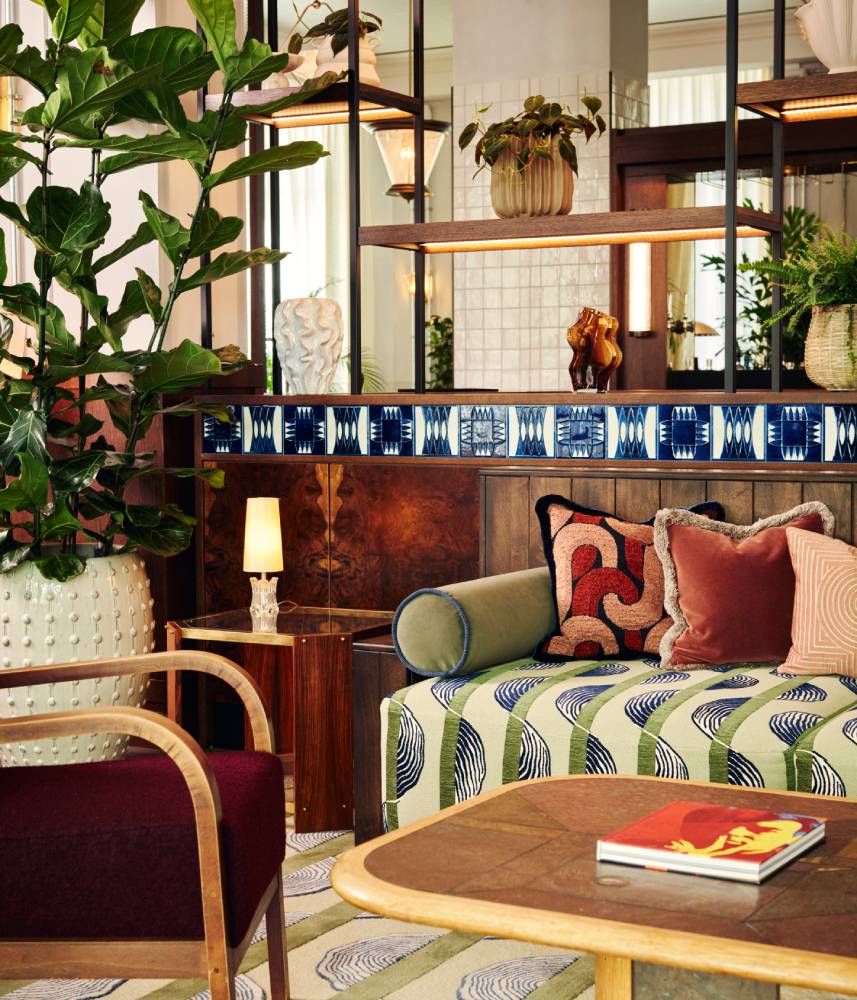
Mix Roundtable: How can nature inspire our spaces?
We explore biomimicry, the emerging role of thoughtful technology and ask how the natural world can meaningfully influence commercial interior design to deliver healthier, more sustainable spaces.
Feature in partnership with Dyson
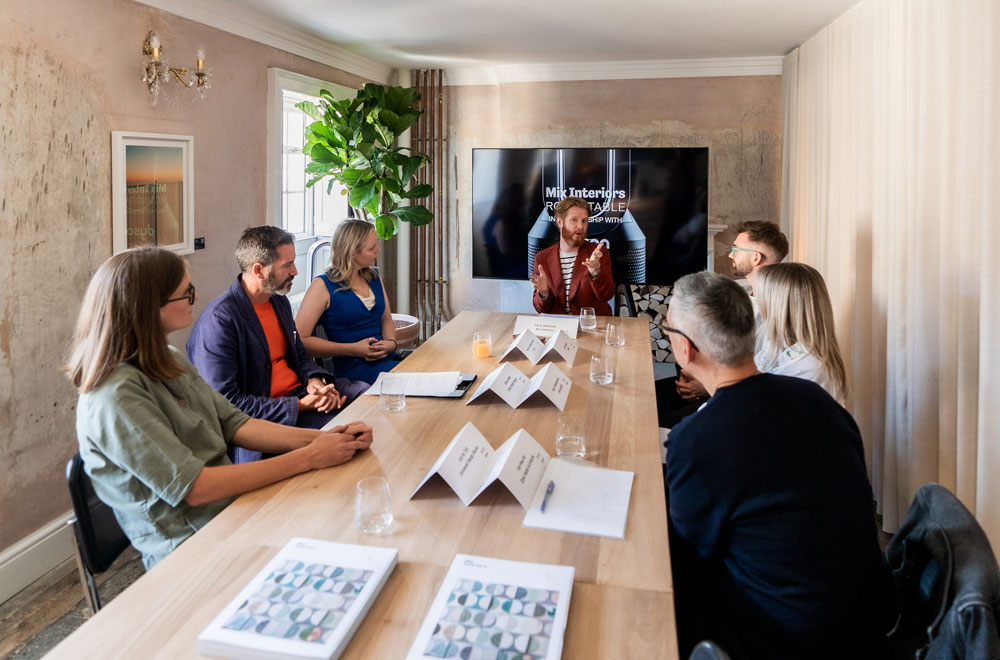
See the highlights
Meet our guests
This article first appeared in Mix Interiors #228
Words and moderated by: Harry McKinley
Understanding how nature can inspire commercial spaces means shattering misconceptions
For many, ‘nature inspired’ interior design means the introduction of certain tropes: a green wall perhaps, or an assortment of foliage. And while there’s nothing inherently misguided in this approach, it does render the natural world down to its most superficial and one-dimensional guise. For our assembled experts, truly understanding the benefits of nature and the design blueprints it can provide, means looking at its systems in a more fundamental way.
Ekkist’s Ben Channon pushed back on the notion that meaningful nature inspired design is rooted in aesthetics or, as he described, “that it has to be soft and curvy.” Similarly, Zaha Hadid Architects’ Kar Hwa-Ho riled against a shallow definition, one defined by ‘using lots of timber, straw and mud’. “We have to explore this in a modern way,” he explained, “by first considering function and how nature can be adapted architecturally and spatially. It doesn’t have to be ugly.”
Agreeing, Perkins&Will’s Maria Papadopoulou emphasised the value of drawing from nature’s mechanisms, not simply its looks: “Nature manages to be resilient, sustainable and grounded in health and wellbeing.” While, for Oliver Heath, of Oliver Heath Design, a misconception that warrants dismantling is that, as human beings, we sit apart from the natural world. “We’ve forgotten the interconnectedness, the circularity and the delicacy of the web of life that surrounds us,” he described. “We’ve forgotten how dependent we are on it and the role it should play in how we look at spaces, products and buildings.”
Technology and nature together offer value and solutions
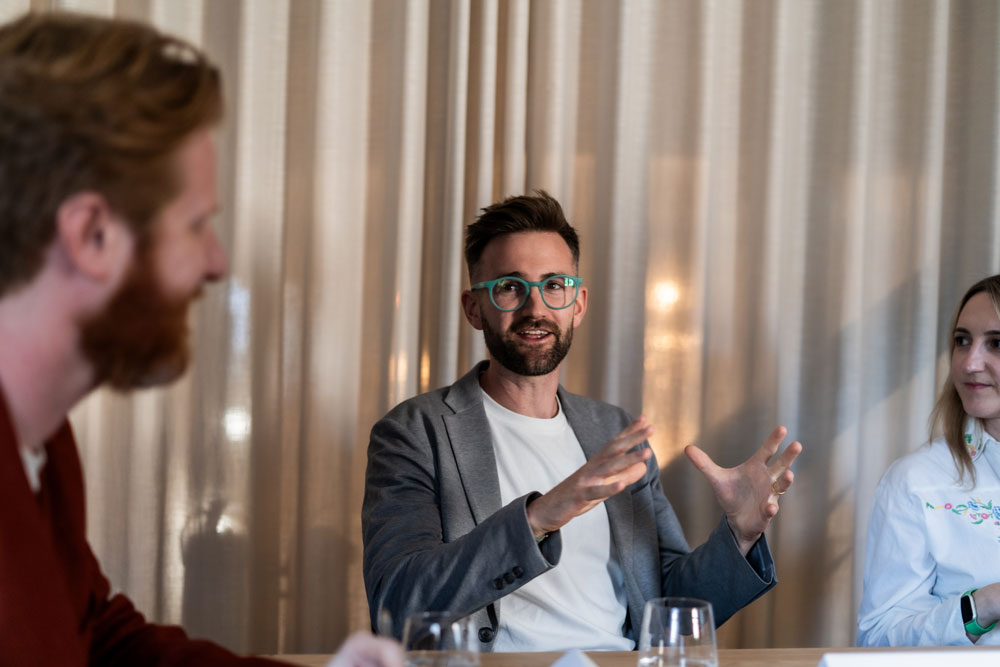
“Technology is sometimes seen as the big bad wolf; something that isn’t sustainable and which doesn’t support a natural environment,” opined Dyson’s Kathryn Nicholson-Brown. “But actually, there’s an important marriage of the two that is necessary within environments, to make sure that technology is supporting what nature in some instances can’t.”
On this sentiment, there was tangible consensus at the table, all acknowledging that while technology – and its artifice – may seem at odds with nature-founded design principles, it’s often a vital tool, and one which will only grow in relevance and importance.
“Technology can help us gather data, observe how people work and design systems that can be easily adapted and react more readily to change,” continued Papadopoulou. “Nature responds to shocks and this is something we’ve mostly removed from design, as we saw during the pandemic.”
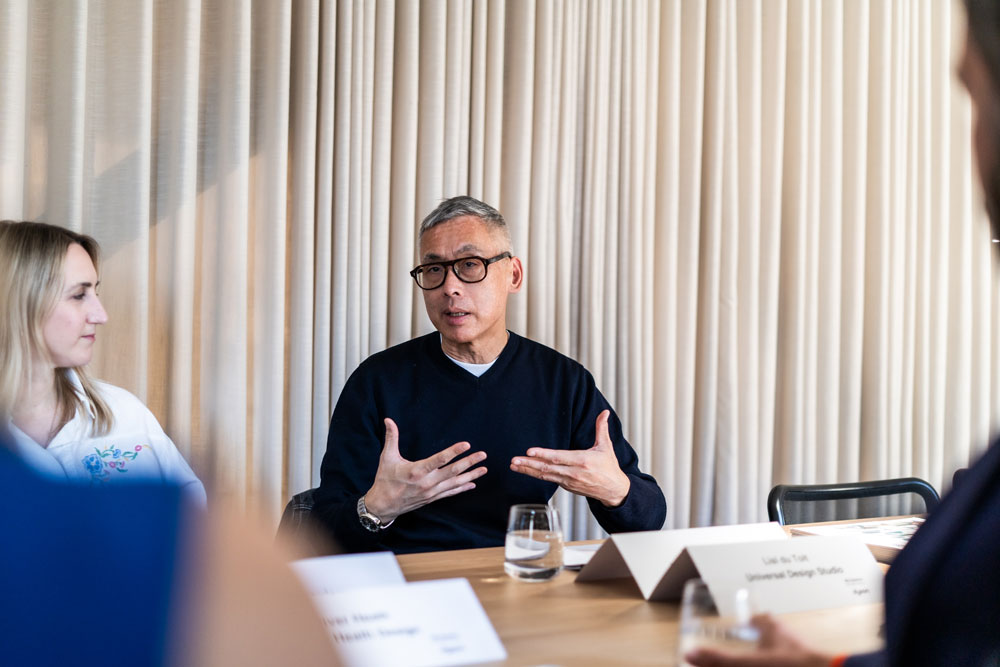
As Universal Design Studio’s Lisl du Toit highlighted, much of the perceived disconnect between technology and the natural world has been its traditional or historic ‘failings’, even if we didn’t recognise them as failings at the time.
“Spaces used to be lit in a certain way, for example, that simply wasn’t good for us and which disrupted our circadian rhythms,” she said. “So technology was once disruptive. But it doesn’t have to be that way and technology has advanced to help us control elements, such as lighting, in a much more subtle way, that better mimics the natural world. In turn, that supports health and wellbeing throughout the day, and so technology is a solution and not the problem.”
“Nature already has the answers to many of the problems we’ve created in the built environment,” continued Nicholson-Brown. “We just need to find them in those natural systems.”
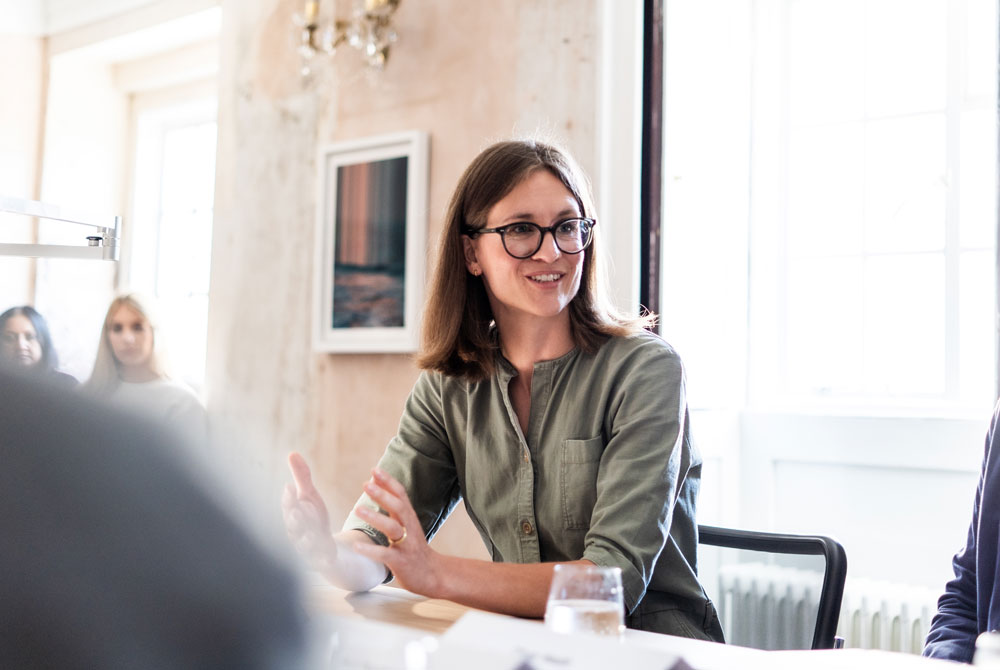
Expertise is key: we need greater levels of knowledge and more people leading the charge
While our table undoubtedly represented specialists in the field, their expertise isn’t necessarily something evidenced across the broader spectrum of design – and amongst designers at large.
“We do need to educate people on why all of this is important, both wider design teams and clients. The knowledge is out there to share with them and we have the data – which shows biomimicry creates healthier, happier spaces and is good for business, because healthier people, in workplace settings for example, are also more productive people,” explained Channon. “We need innovators. We need companies like Dyson. We need architects who are trying to push the boundaries and we need to make the case to developers and to the general public as well.” Plus, “every project should have a healthy building consultant!” interjected Ho.
“Having scientifically backed design is vital,” said Nicholson-Brown, “as it allows designers to make informed choices, and to develop and adapt as the knowledge we’re equipped with evolves and grows.”
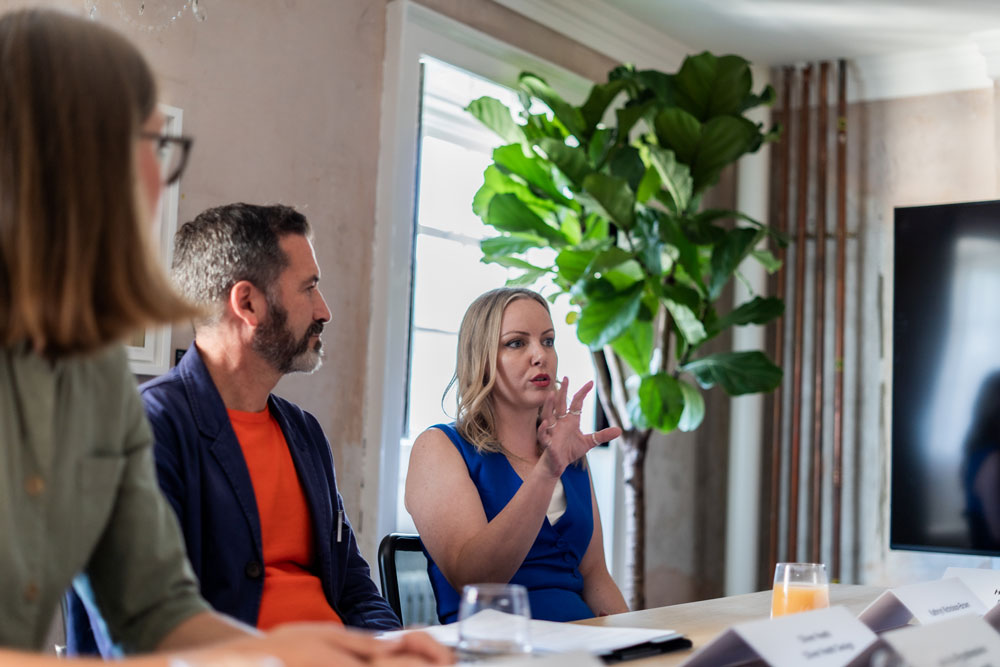
Designers need to consider the invisible, as well as the visible
“There is an issue fundamentally, that a lot of interior design is seen as an extravagant layer to lavish on top of a building. It’s seen as something that’s relatively surface level; about expressing power, wealth, identity or other extrinsic messages,” enthused Heath. “Good design requires an understanding that, actually, the quality of the air, views to the outdoors and the lighting are all natural forces that need to be considered and incorporated; either utilising nature itself or counteracting potential issues through the use of product. We’ve got a connection with nature that can have a tangible benefit to physiological and psychological wellbeing that will, as Ben mentioned, represent a return on investment.”
It poses the question as to what responsibility designers have to consider layers of experience, and the impact spaces have on their users.
“It’s a difficult arena, because the impact of commercial spaces is often invisible and intangible. The connection between a person’s exposure to daylight and their sleep at night isn’t direct enough for us to always make the connection, when making these design decisions,” offered du Toit. “We can’t see air quality, so it’s really important to seek out and interrogate data, and then to connect that with design in an emotive way. Again, technology has a role to play there, such as visualising the invisible impact that our environments have on us, so that we can better understand it – both pragmatically and emotionally – and then respond to that in how we design spaces.”
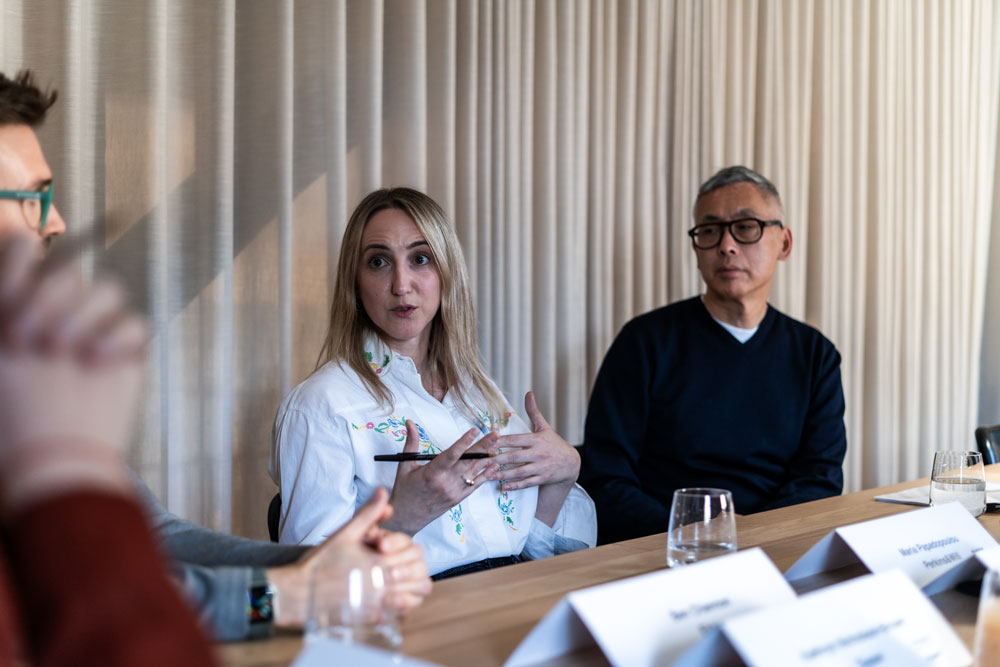
Nature influenced design is ultimately good for the planet as well as people
Though the benefits to individuals and communities by drawing from natural systems is established, the table agreed that these benefits are rendered redundant if this same design approach cannot help mitigate our impact on the environment – cities, and the spaces they host, arguably the places where there’s the most opportunity for change.
“We’re at a powerful moment where we are assessing our resources and looking at how we can use them efficiently; how we can reuse elements,” said Papadopoulou.
“Yet the whole idea of the climate crisis strikes real fear into us, because it’s all about scarcity. But if we look at how nature deals with reciprocity, then there’s enough to go around,” continued du Toit. “In commercial design we have to draw inspiration from that idea of circularity and using only as much as we need, not too much.”

“Which is where authenticity is key,” explained Nicholson-Brown, citing plastic plants, as an egregious example. “We need to find ways to utilise technology and design to support human wellbeing, while not simultaneously destroying the nature that inspired this approach to design.”
For Kar-Hwa Ho, the discussion, in all of its breadth, comes down to our willingness to upend orthodoxy and embrace change: “I think the real question is, are we open to accept
these ideas? I mean, they’ve been with us forever. Why haven’t we made biomimicry an established design principal across the board, with all the beautiful stories it can create? I think that’s because of our mindset. And perhaps now that we’re more aware of sustainability and our impact on each other, the world and the climate, we’re beginning to open up to taking cues from nature and using them to find solutions. They’ve been there all along.”