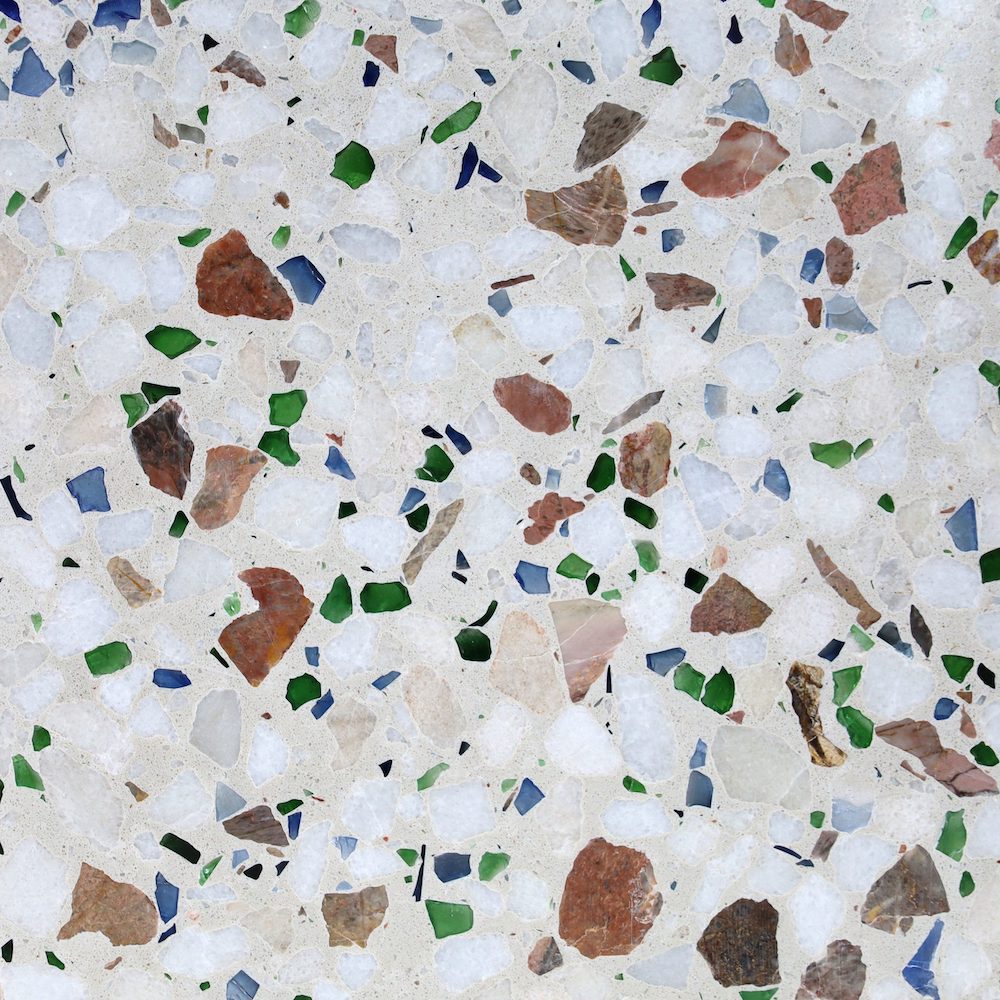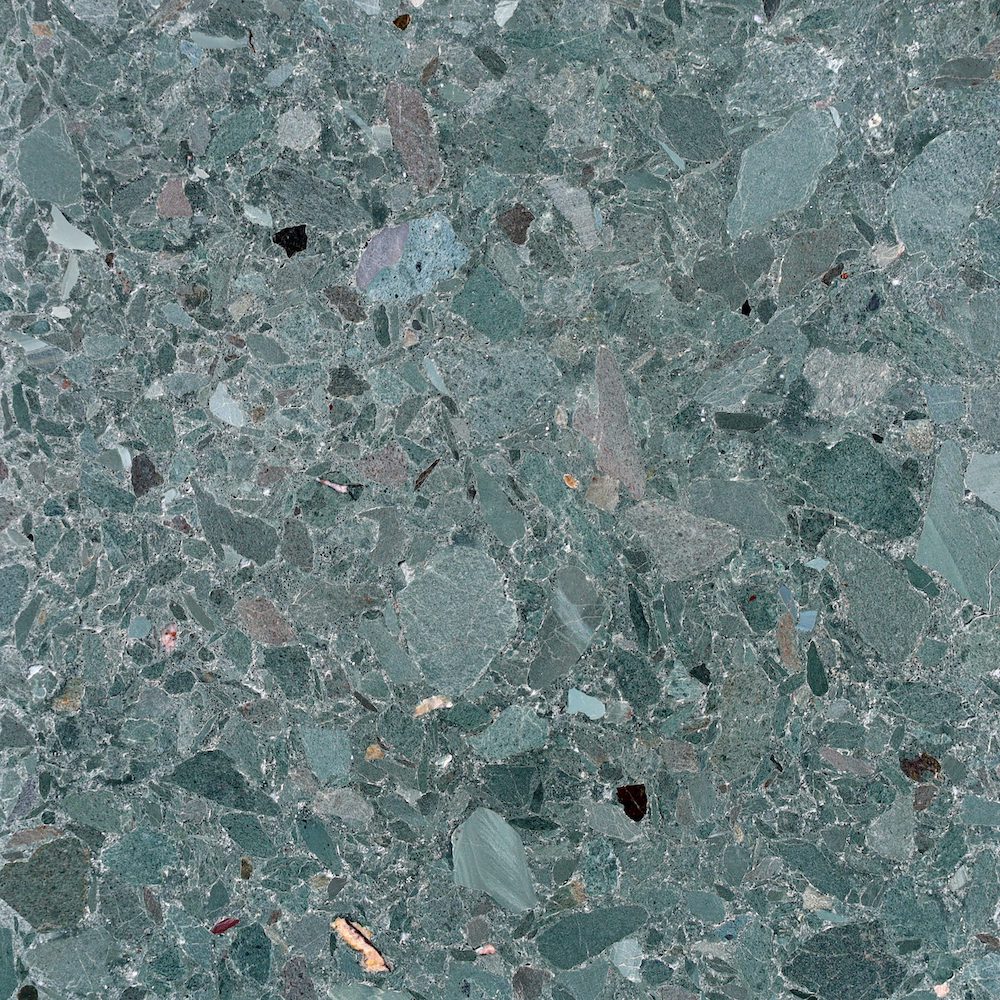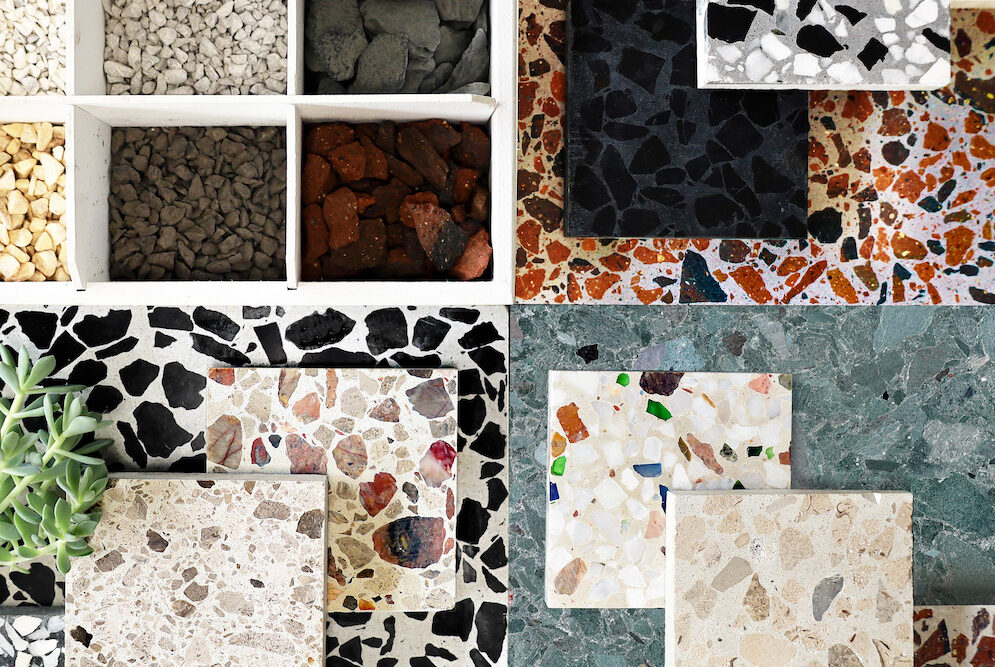
Using old bricks and natural stone from across the British Isles and a low carbon alternative to OPC binder, Ethical Stone Terrazzo is the Manchester made terrazzo floor tile with a significantly lower impact than European origin terrazzo. Making Ethical Stone in Manchester means a reduced transportation carbon footprint for UK-based tile specifications u2013 over 90% of the UK market is within a 200-mile radius u2013 and also brings low carbon innovation to an 80-year history of terrazzo manufacturing in the city. The result is a terrazzo tile that supports UK industry in producing low carbon materials.
Finding new life for old building materials and localising production within the UK’s second largest city, Manchester Brick is a highlight of the low impact approach of Ethical Stone Terrazzo and is made with 85% recycled materials. And it’s not just old brick that can be reused: glass, metal, concrete, stone and even timber can all be materials used in production. Ethical Stone also uses a low carbon alternative to traditional Ordinary Portland Cement (OPC), the most used construction material in the world. By utilising a by-product of the steel industry, this alternative reduces reliance on OPC by up to 50%. This ground-breaking low carbon technology means a lower CO2 footprint.