Interface
United KingdomHow has Interface committed to absolute emission reduction efforts to solve the climate crisis?
Interface is all in on tackling the climate crisis, and absolute emission reduction is the only way we’ll achieve this – as a business and as an industry. We’ve made great progress so far at Interface, achieving a 96% reduction in greenhouse gas emissions since we began our sustainability journey in 1994.
We’re doing this by constantly evaluating and improving our product development and manufacturing processes and incorporating more recycled and bio-based materials. In 2021, this culminated in the creation of the world’s first carbon negative (cradle to gate) carpet tile, Embodied Beauty. This was a huge step for us, and it coincided with third-party validation of our Science Based Targets to reduce our Scope 1 and 2 emissions and halving absolute Scope 3 emissions from purchased goods and services by 2030. This will also see us reducing business travel and employee commuting emissions by 30% from a baseline set in 2019.
Back in April, we took another big step centred squarely on absolute emission reduction. As a result, we’re discontinuing all our programmes that invest in carbon offsetting projects and instead reallocating investment into direct carbon reduction and storage initiatives.
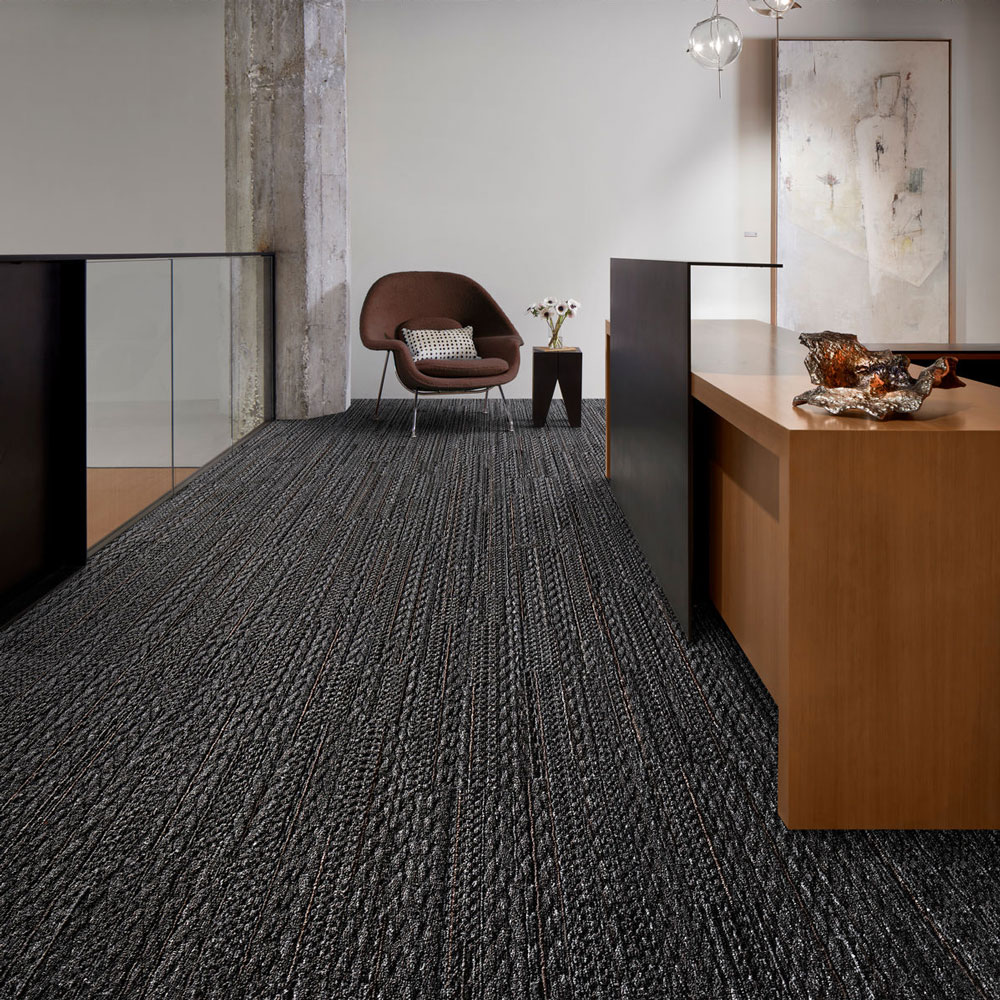 etched and threaded
Can you outline the progress Interface has made on its 30-year sustainability journey?
The journey started with a “spear in the chest” epiphany for Interface founder Ray Anderson in 1994, when he was asked what his business was doing for the environment. In the following decades, sustainability has been woven into Interface’s DNA, and we’re now an industry leader in sustainability.
Flooring manufacturing is an inherently carbon-intensive industry, and carbon emissions from raw materials present a particular challenge, but we have made significant progress in decarbonising our products and operations. We’ve cut the carbon footprint of our carpet tiles by 82% since 1996, our rubber flooring by 26% since 2019, and our luxury vinyl tile and other resilient flooring by 26% since 2018.
Operationally, we’ve reduced our greenhouse gas emissions by 96%, the amount of water we use by 86%, and we’re now using more than 50% recycled or bio-based raw materials. Whilst we’ve made substantial progress, our sustainability journey is far from over. With our Science Based Targets, we’re committed to becoming a carbon negative enterprise by 2040.
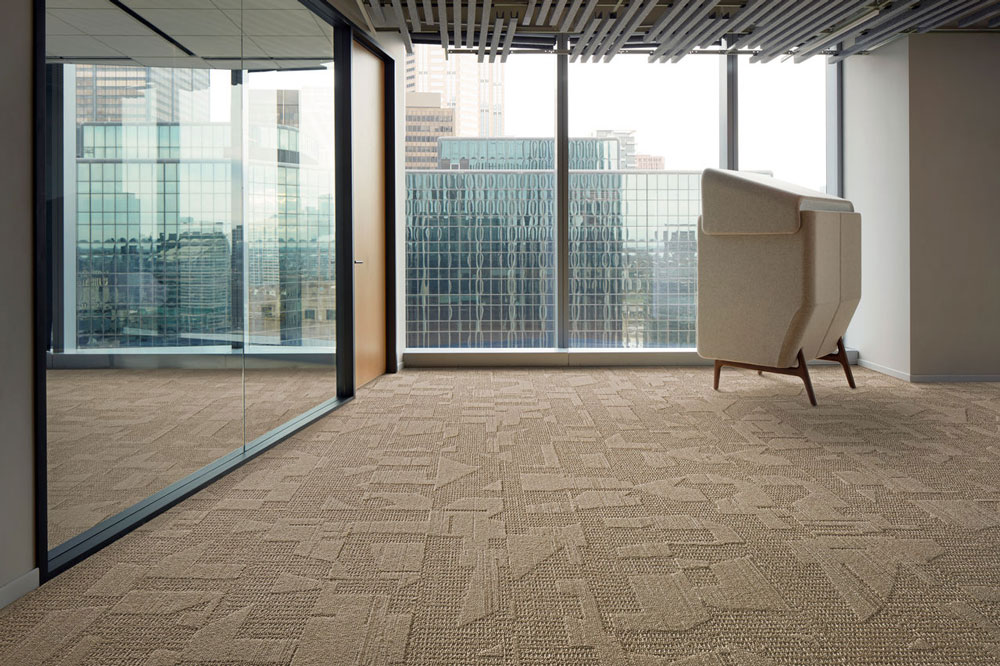 etched and threaded
Why did Interface discontinue its Carbon Neutral Floors and Carbon Neutral Enterprise programs in April?
We discontinued these programmes to allow us to focus our investments on direct carbon reduction and storage while moving away from initiatives involving offsets. Our Carbon Neutral Floors and Enterprise Programmes were huge achievements, but we’re looking to now accelerate our transition towards becoming a carbon negative enterprise.
We know the targets that we’ve set are ambitious, and we’re expecting obstacles along the way, but we’re motivated to achieve these to solidify our position as a market leader in sustainability and innovation. The entire business is ‘all in’ with our efforts to make a real difference to the climate crisis and we hope to inspire others across the industry to join us and to ensure a wider, collective impact.
How are Interface’s calculations and carbon footprint data third-party verified?
Interface has been calculating and publishing sustainability results and greenhouse gas inventory since 1996. Today, our carbon footprint data – including Scopes 1, 2 and 3 emissions – is third-party verified by the Greenhouse Gas Protocols and is publicly available as part of our annual Impact Report.
Our products are responsible for around 85% of our organisation’s carbon footprint, so this is a priority for us when it comes to carbon reduction. All of our standard products have Environmental Product Declarations (EPD), which ensures our customers have access to transparent carbon footprint data that is also third-party verified.
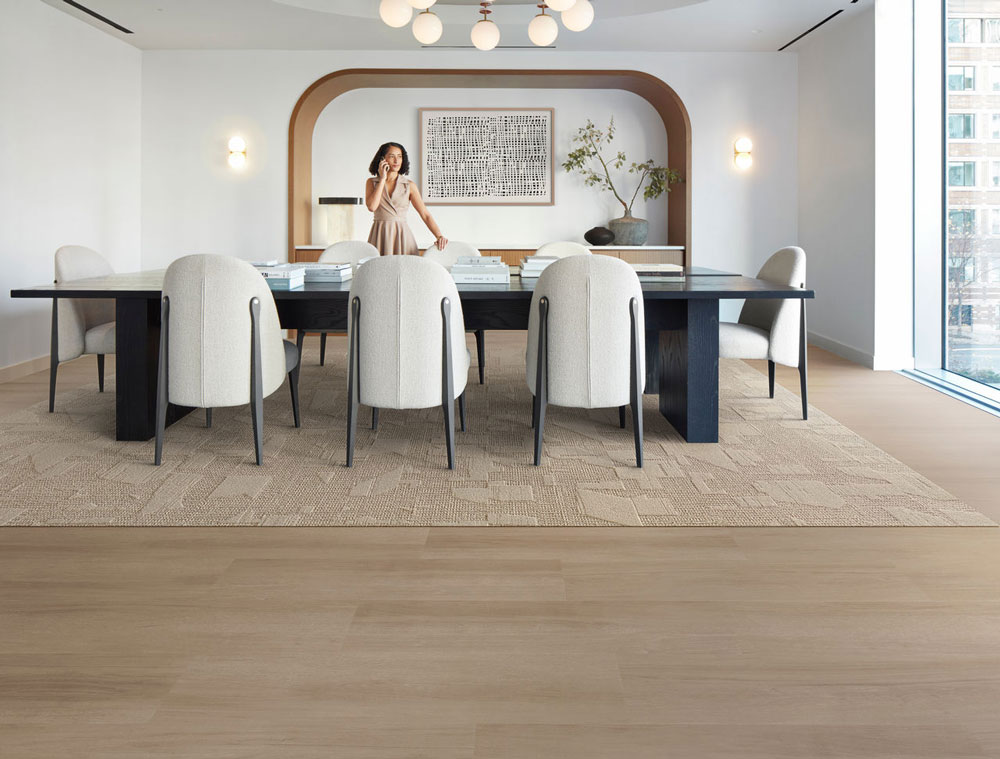 earthen forms
With so many claims and accreditations in the market, what sort of data should architects and designers be asking for?
If a specifier is looking to understand the carbon impact of an individual product, EPDs should be the first port of call. Where available, an EPD should provide the most comprehensive view of a product’s data and credentials exclusive of offset usage. If a manufacturer is using offsets, this data is often disclosed as part of the ‘Additional Environmental Information’ within the EPD document itself. However, if this is not the case, annual sustainability reports and supplier websites are another good resource.
Specifiers also shouldn’t be afraid to ask suppliers directly – we all need to work together to reduce the environmental impact of the built environment. Transparency is usually a useful indicator of good practice, and a supplier wanting to do the right thing should be willing to work with customers.
What is your advice to A&D already working with suppliers who do use offsets? Is there anything they can and should be doing to improve both their own and their clients’ sustainability credentials?
The key to making spaces as sustainable as possible is to design for longevity and to consider the full product lifecycle. Look at the recycled and bio-based content of the materials, ask manufacturers about required maintenance and life expectancy of products, and, crucially, discuss end of life options. For example, Interface’s ReEntry programme helps to stop used carpet tiles ending up in landfill and to date has collected over 70 million lbs of used carpet. Again, it’s all about communication – the opportunities to improve are always there, it just takes a bit of research and collaboration with the supplier.
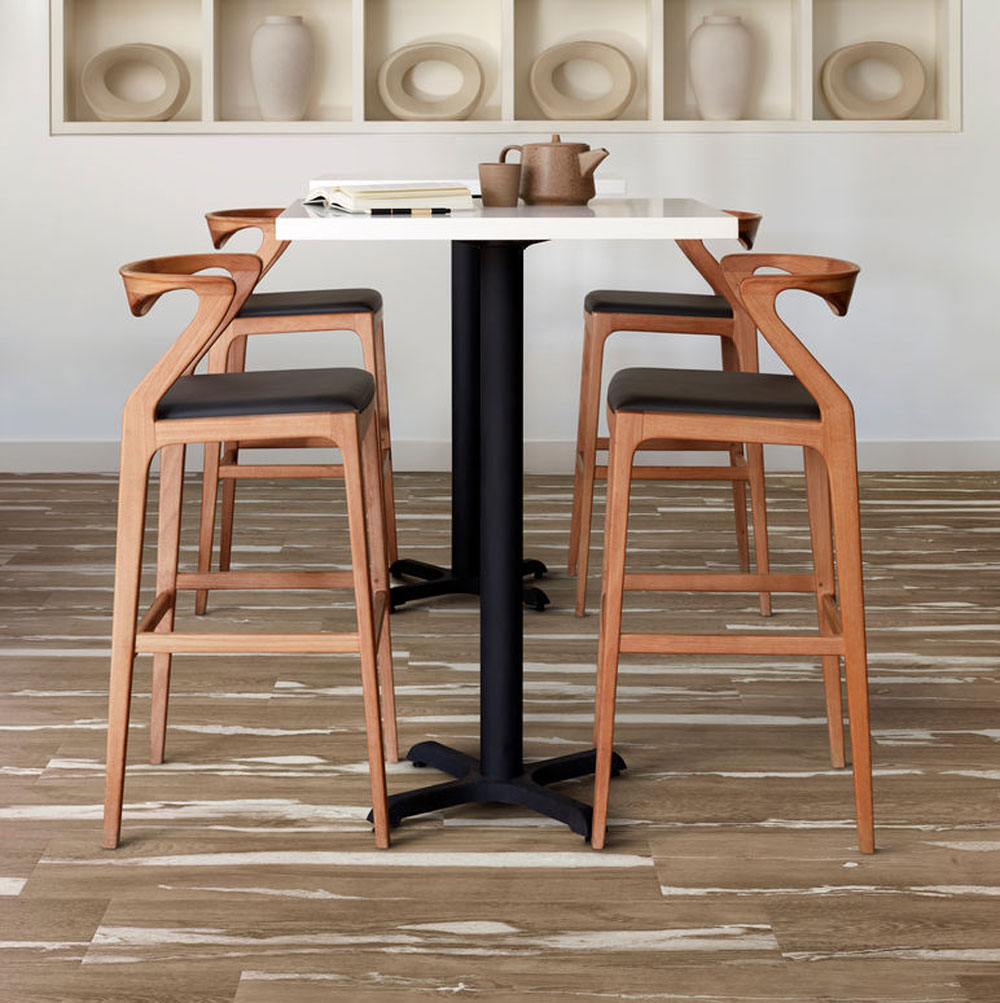 earthen forms
How does Interface hope to inspire the industry to join it in making an even bigger impact through collective action focused on absolute carbon reduction?
Interface is leading the collaborative drive towards a more sustainable industry. For example, we created a Global Sustainability Council, a cross-functional team that looks at climate change from a wide range of perspectives to find new opportunities to expand circularity, and the Procurement Impact Initiative, a group which helps drive sustainable procurement within the business.
We’re also prominent voice on manufacturing and industry bodies, including the Materials Climate Action Network, CLG Materials taskforce, UK Green Building Council and Environmental Association for Universities and Colleges.
But it’s not just talking the talk. Interface has worked with other manufacturers to pioneer new materials and remain committed to sharing our knowledge and expertise with the built environment professionals of today and the future. We are undeniably stronger when we collaborate and work together!
Find out more about Interface at interface.com