Flokk
UKThe way we perceive and use our spaces has transformed entirely in the last few years. One-use, fixed spaces are losing favour – replaced by options that infinitely more flexible to support all styles and modes of working, learning, socialising and retreating. The answer to this fluidity lies in creating systems that can be easily adapted and reconfigured to suit our ever-changing space requirements.
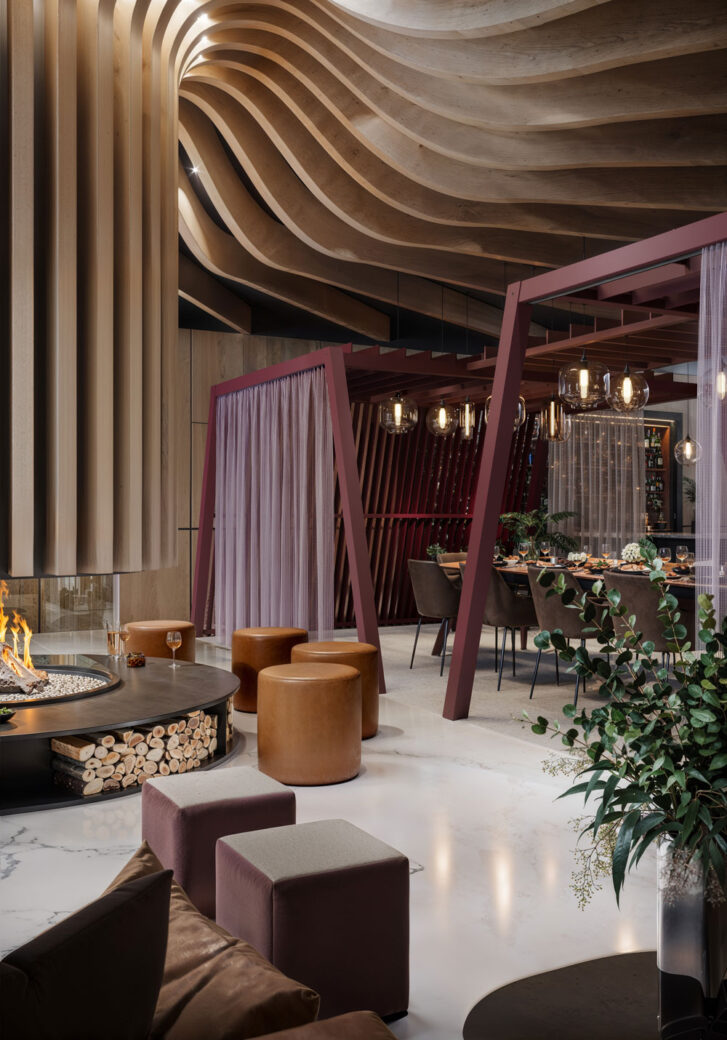
The new Spaces system by Flokk-owned brand Connection is designed to provide a progressive solution for future-proof spaces, from workplace to education and hospitality. Created with both interior designers and architects in mind, Spaces provides a simplistic – but never limiting – modular furniture system to create customisable and adaptable spaces for all.
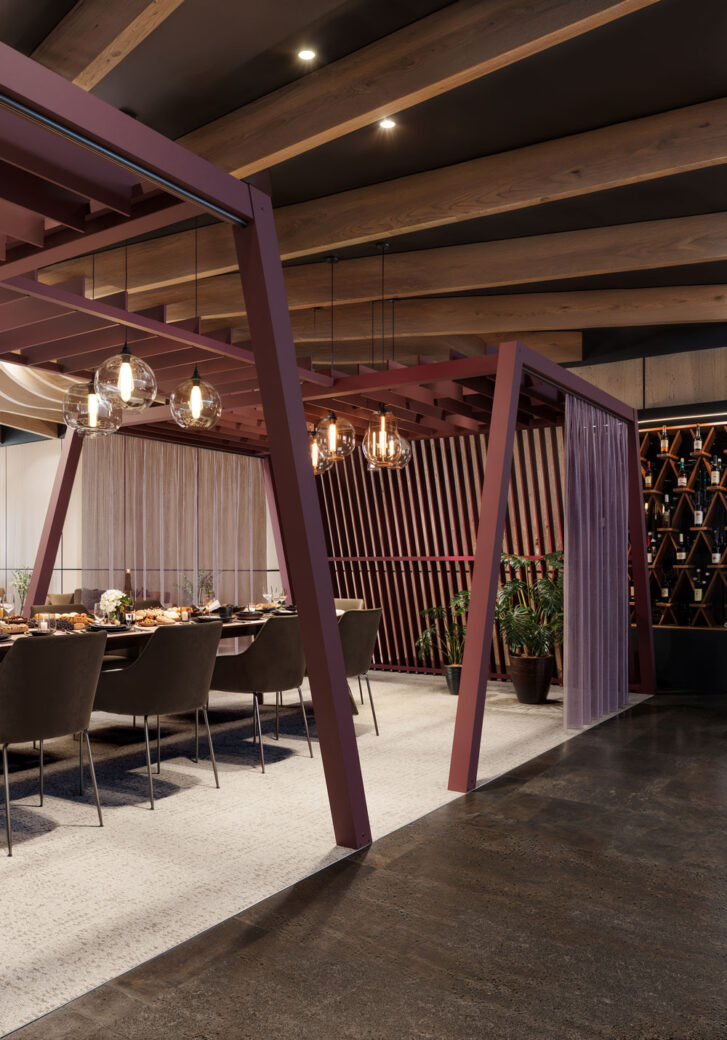
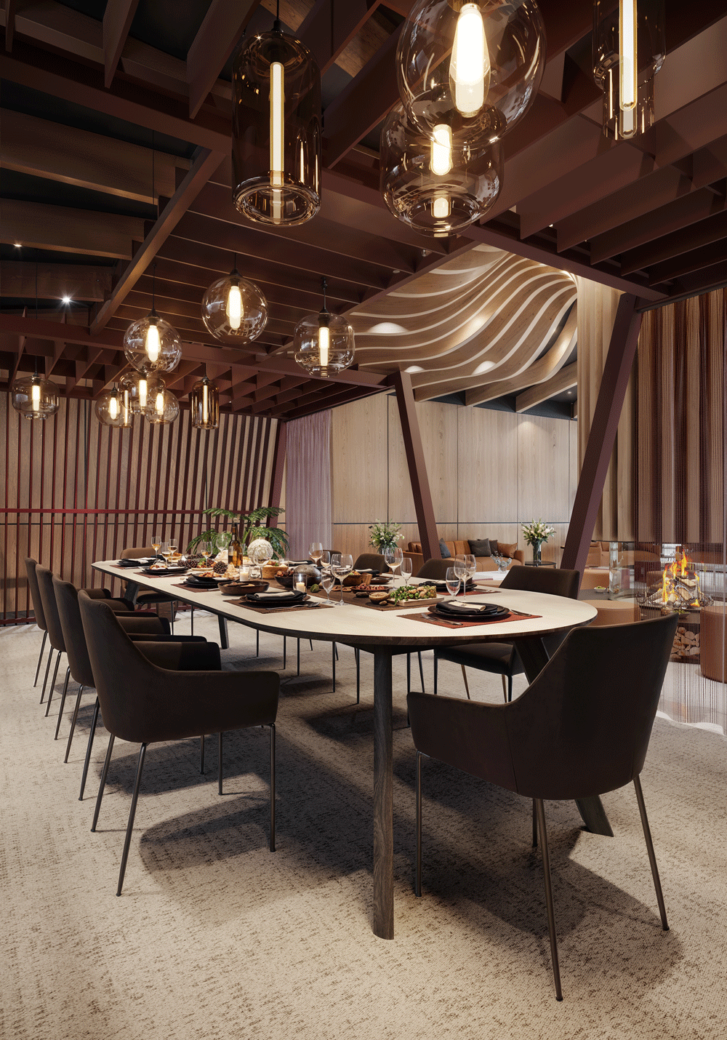
Inspired by primitive structures, traditionally used by nomadic cultures to define areas of shelter, escape or dwelling, Spaces by Connection champions these same principles to create a demarcation of space within a broad range of settings. Simplicity is core to the furniture system, with each configuration sharing a common design specification that builds up from the core aluminium structure. Custom configurations are shaped by adding multiple walls, ceiling, screens, and extension options, and the extensive breadth of material options allow designers the creative freedom to conceptualise and personalise their ideal space.
We sat down with the designer of this interior architecture system, Tony Hindmarsh (Director of Inspired Design), to find out more.
Tell us a bit about your background and beginnings in the industry.
“I have been in the furniture industry for over 20 years, but even before that, I designed and built my first desk at 17. The school had placed their computers on a row of mid-height cupboards and I was tired of banging my knees on the cupboard doors. So, I designed and manufactured a split-level desk that gave me an appreciation for materials, shape, size, finishes and, especially, ergonomics.
“My first relationship with Connection was when I was working with local office furniture manufacturer Godfrey Syrett. We used to specify their products on projects when our in-house products weren’t quite right – their portfolio was a great balance between aesthetics, durability and cost. The relationship grew and grew, and I was later asked to help with some freelance design work. They bought into the ethos and aesthetics of Spaces immediately as it matches perfectly the company’s values of connection and Flokk’s 5-III corporate principles.”
Flokk’s 5-III Principles
1. Low weight
2. Few components
3. Right choice of materials
4. Long life span
5. Design for disassembly
I. Climate – Reduced carbon footprint and energy consumption
II. Resources – Reduced use of materials and minimised waste
III. Health – Reduced chemical use and no hazardous materials
How does your design process work – what influences and inspires you?
“My design process always starts with a dog walk. I will have the initial concept idea in my head but then need to start to thrash it out as I walk along the riverside. I take design inspiration from lots of different places, what I see, what I experience, but mostly from mother nature. She has been evolving designs for thousands of years so take aspects of nature and incorporate them into what I am doing if possible.
“The initial concept for Spaces came to me in 2017 as I had been researching acoustics and the simplification of design, and I strongly felt that there wasn’t a product on the market that offered what I look for when I go to work in an open plan space. Some days I am very sociable and want to mix in a group scenario, whereas other days I want to hide away, concentrate and have privacy. We needed a way to define a space depending upon how you feel or what you want to achieve that day – in pursuit of ‘feeling-based working’ as well as activity-based working.
I researched the properties of glass & sound waves and found a number of scientific journals that suggested putting walls at a slight angle to direct sound waves away from source was key ensuring it wasn’t reflected back. Just one re-direction will ensure the wave doesn’t return to source and hence, the shape of Spaces was tested and found to be ideal.”
In your opinion, what are the key challenges – and opportunities – facing the industry? How does Spaces respond to these?
“The biggest issue facing all of us is sustainability, and whilst many people focus on the type of materials used in a product, one issue that I see commonly in lots of products is over-engineering. Over-engineering is the friend of complexity and is the silent combatant to carbon footprint. The ethos of Spaces is to use the minimum number of components, but still provide the product with the correct strength and stability it needs to achieve its level of performance.
“The other main challenge is neurodiversity. We take notice of our mental health more now than ever before, and if a product can nurture your mental health so you perform at your optimum during the working day, then it achieves exactly what is desired from an employer. Forcing someone who is feeling vulnerable to work in an open plan office with distractions and chaos surrounding them cannot be good for their wellbeing, or the quality of their work they need to complete. Depending upon the configuration of Spaces, it can cater to all these different scenarios, achieving that ‘feeling-based’ working environment we all aspire to work in.”