Chasing net zero: can reuse initiatives transform manufacturing for the better?
As the 2050 Net Zero deadline looms closer, we unpack how the manufacturing industry can help reduce global emissions alongside Interface’s regional sustainability manager, Becky Gordon.
Paid feature by Interface
Interface
United KingdomWith the manufacturing industry unfortunately remaining a leading contributor to global greenhouse gas emissions, it’s time for manufacturers across all sectors to take action and play their part in national decarbonisation efforts. We are approaching another year closer to 2050’s Net Zero goals, and while many in the industry are striving to come up with more innovative, environmentally conscious products, we must remember that there are a host of other sustainable changes that can be made beyond product-level and make a real difference.
Priding itself on being a leader in low-carbon manufacturing, we sat down with global flooring solutions company Interface – specifically, regional sustainability manager Becky Gordon – to explore its holistic approach to sustainability that doesn’t stop at product design.
Decades in the making
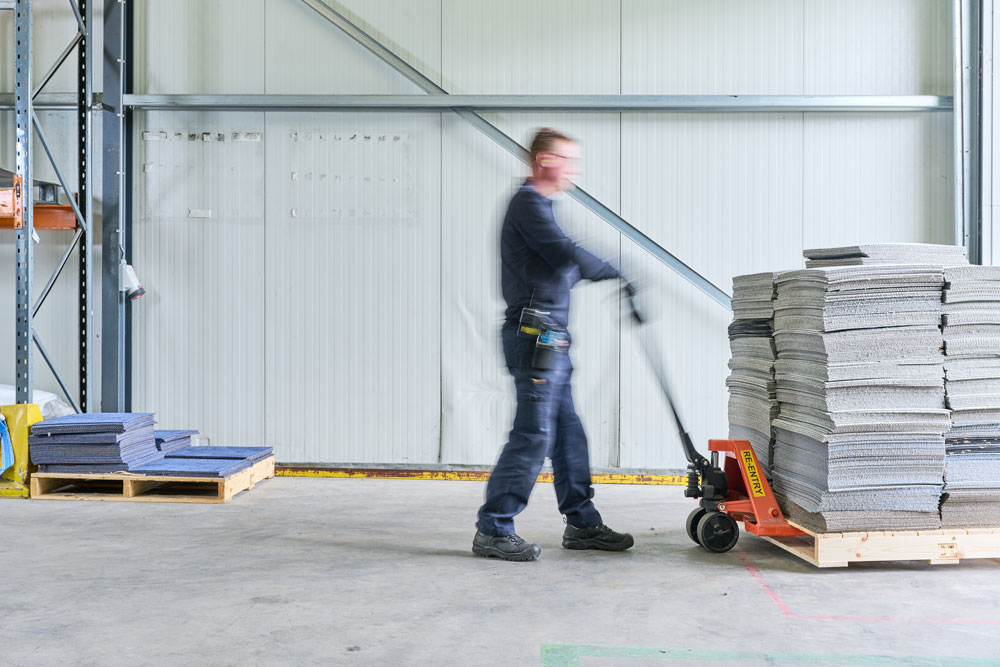
“Our sustainability journey began back in the 1990s when our founder, Ray Anderson, experienced a ‘spear in the chest epiphany’ upon being questioned on what his organisation was doing to tackle the climate crisis,” explains Gordon. “Moving forward, we introduced a range of innovations that would reduce our carbon footprint, including our ReEntry recycling and reuse programme which was established in 1995.”
The provision of reuse and end-of-life solutions is a primary way for manufacturers to reduce their environmental impact and tend to operate by taking back post-consumer products – such as used office furnishings and flooring – for further use or repurposing. Not only do these initiatives actively contribute to and promote a circular economy, but investing in such schemes can also boost an organisation’s company-wide sustainability credentials beyond just manufacturing.
Innovation and investment
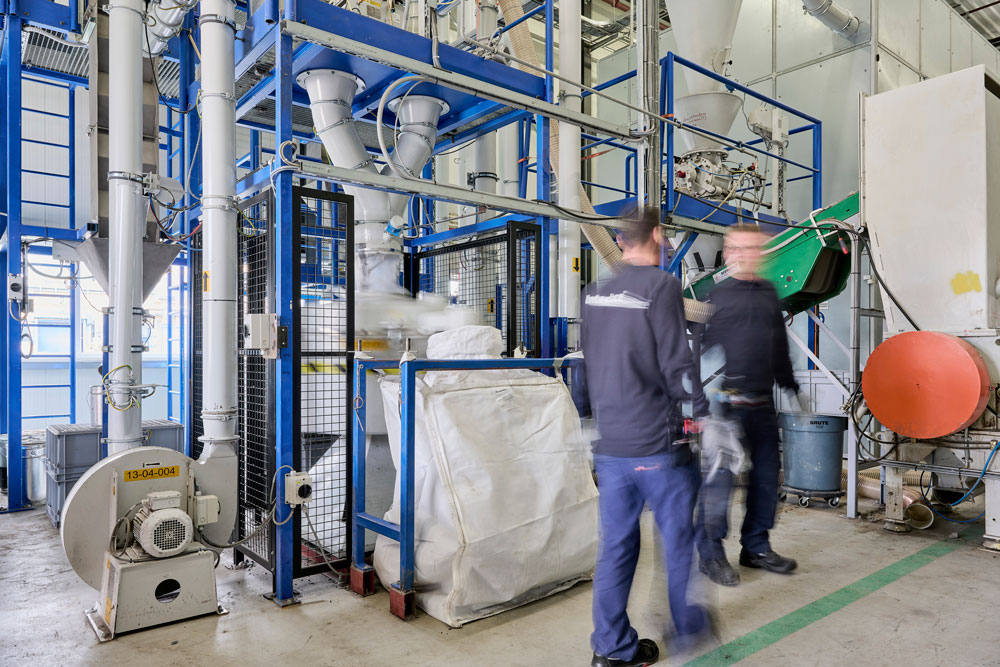
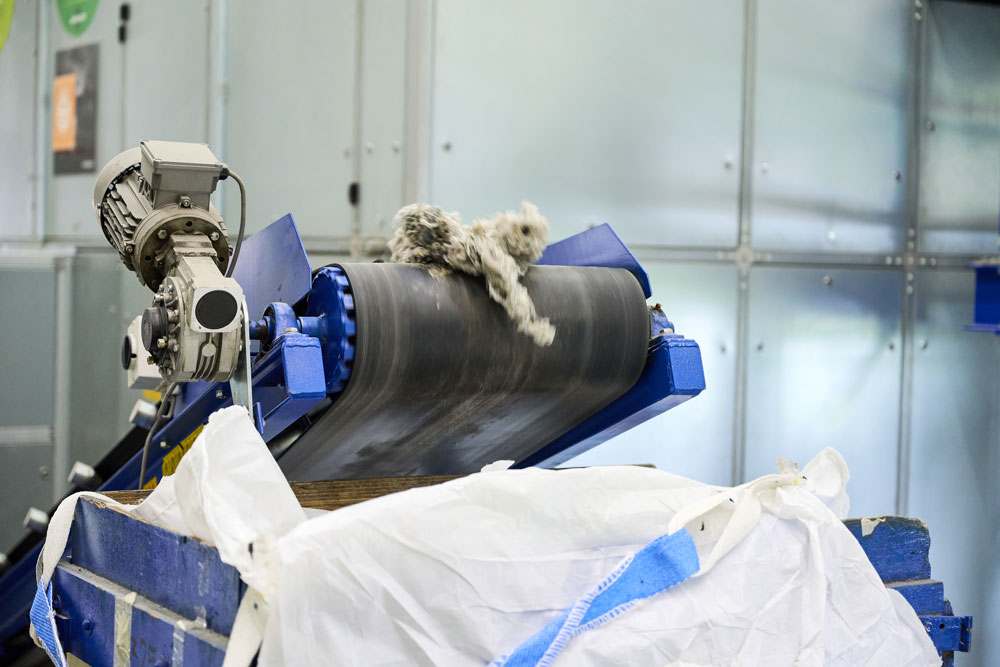
“As part of our sustainability journey, we have continued to invest in and improve our programmes,” comments Gordon. “We recently announced the expansion of our European recycling facility to grow our offering for customers across Europe and support them on their own sustainability journey.” As a result of this expansion and investment, Interface’s dedicated plant in Scherpenzeel, the Netherlands, now boasts a new process that can recycle post-consumer carpet tiles containing the brand’s bio-based backing, CQuest™Bio. This means that the used products can be immediately returned to the production cycle, making it easier for manufacturers to operate in a circular economy and encouraging customers to opt for more sustainable business models wherever possible.
As well as expanding its recycling initiatives, Interface has also announced the discontinuation of all carbon offsetting programmes in pursuit of becoming a truly carbon negative enterprise – without relying on offsets – by 2040. “This comes as we look to boost investment in direct carbon reduction and storage both internally and throughout our supply chain,” outlines Gordon. “The climate crisis is now at a critical point, and as sustainability continues to guide our operations and decision-making, achieving absolute emissions reduction is paramount for us to make the biggest impact possible.”
Creating a brighter future
With time decidedly not on our side, it’s important that manufacturers are both ambitious and transparent with their sustainability plans if they are to make a real, tangible contribution to decarbonisation efforts. This is where clear targets and measurable data play a key role, as they help us better understand the impact of our actions and build upon positive change through innovation. Practicing this approach, Interface is the first manufacturer to have its targets ratified by the Science Based Targets initiative (SBTi), demonstrating how setting objectives and ambitious, data-driven goals can hold companies accountable in their efforts to address the urgent climate emergency.
“At the same time, it’s crucial that designers also demand more from manufacturers when it comes to sustainability – for example, how transparent they are with product data and the availability of reuse options,” Gordon concludes. “The onus is now simultaneously on manufacturers and architecture and design professionals to drive change and action across the sector.”